Posts in It happened today
It happened today - June 24, 2015

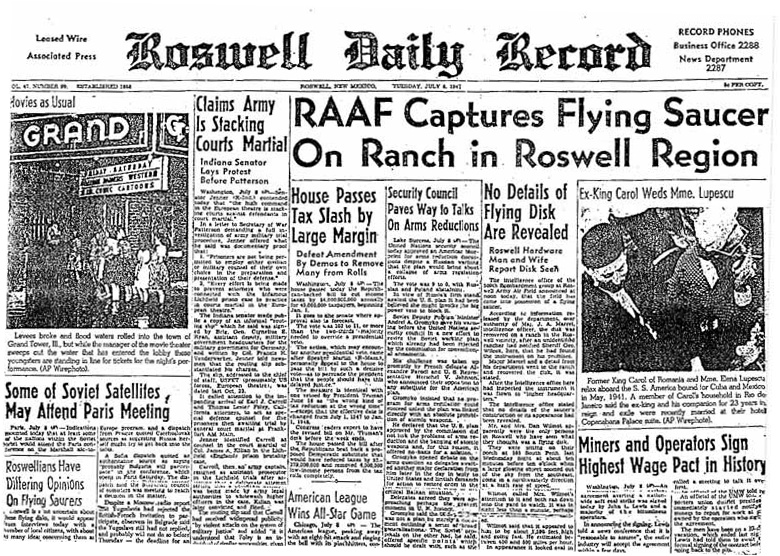
Roswell aliensOn June 24 of 1997 the U.S. Air Force actually released a report on the UFO that didn’t crash in Roswell, NM back in July 1947. It sounds utterly ridiculous. But then we live in enlightened times. Not like those superstitious chumps back in the Middle Ages who believed in God and thought the Earth was flat. Ha ha ha Looooosers. We read our horoscopes and are so sure aliens visit Earth and governments deny it that we make governments deny it again. It’s called progress.

For the U.S. government to say it didn’t happen is just more modern idiocy since the conspiracy theorists know the government says it didn’t happen and has been saying so all along and they think it’s lying so they think it’s lying again. It doesn’t even rise to the “That just proves how clever they are” level because it’s too obvious; in a proper conspiracy the government would have had a panel of “independent” experts say it and too late you’d find they had cabbage leaves on the backs of their heads or something. Frankly if I was the U.S. Air Force I’d have told the UFO paranoids to go jump in a Martian canal. You can’t reason with these idiots and a less feeble age would have had the sense to say so. And then I’d have moved on to something more interesting. Like why we aren’t being visited by aliens.

One possible reason is that because they became aware of us through early TV broadcasts they’ve been avoiding our planet on aesthetic and intellectual grounds. Grown-up aliens might lecture their green teen offspring “Don’t go to Earth; it rots your brain.” Or maybe the aliens came here to eat us but discovered we were unhealthy. The way we’re eating these days, if that is true we’re probably safe for a while. And I guess the government might not tell us because it was afraid we’d be offended. But speaking of broadcasting I Love Lucy to the cosmos and wondering why it never calls, the really interesting question is why it never calls.

Visiting might be out of the question for all kinds of reasons including excess baggage fees. If aliens look anything like they often do in movies they’d need some kind of clothing and toiletries. Mind you, the ones in the Predator series didn’t seem to wear a lot of clothes but they had big intergalactic collections of trophy skulls to shlep around. But why don’t they call?

Back in 1950 noted physicist Enrico Fermi, after discussing with colleagues the number of planets on which life could theoretically exist, the evolutionary processes that ought to have led to intelligent life (again, a category that at least sometimes involves humans, smart enough to invent television and dumb enough to watch sitcoms), and the enormous amount of time during which it could have happened multiple times, asked “Where is everybody?” Why aren’t we picking up their transmissions? The question has only become more pointed in the two-thirds of a century since.

Apparently I Love Lucy has washed over some 6,000 star systems by now. Yet I Love Lxzygtq hasn’t been picked up coming back from any of them even though our radio telescopes stare beadily out in all directions.

It’s not obvious what conclusions to draw from the apparent absence of technologically advanced alien civilizations. Maybe life is rarer than we think, even miraculous. Maybe man is alone in the universe. But whether it proves that there is a God and He goes in for elaborate stage settings, or that the universe is even colder and more hostile than anyone this side of H.P. Lovecraft believed, the central puzzle remains.

Not why aliens crashed in Roswell. Why they didn’t, and why we haven’t picked up any radio chatter from anyone, even just a brief insulting travel advisory that Earth is “mostly harmless”.
It happened today - June 23, 2015

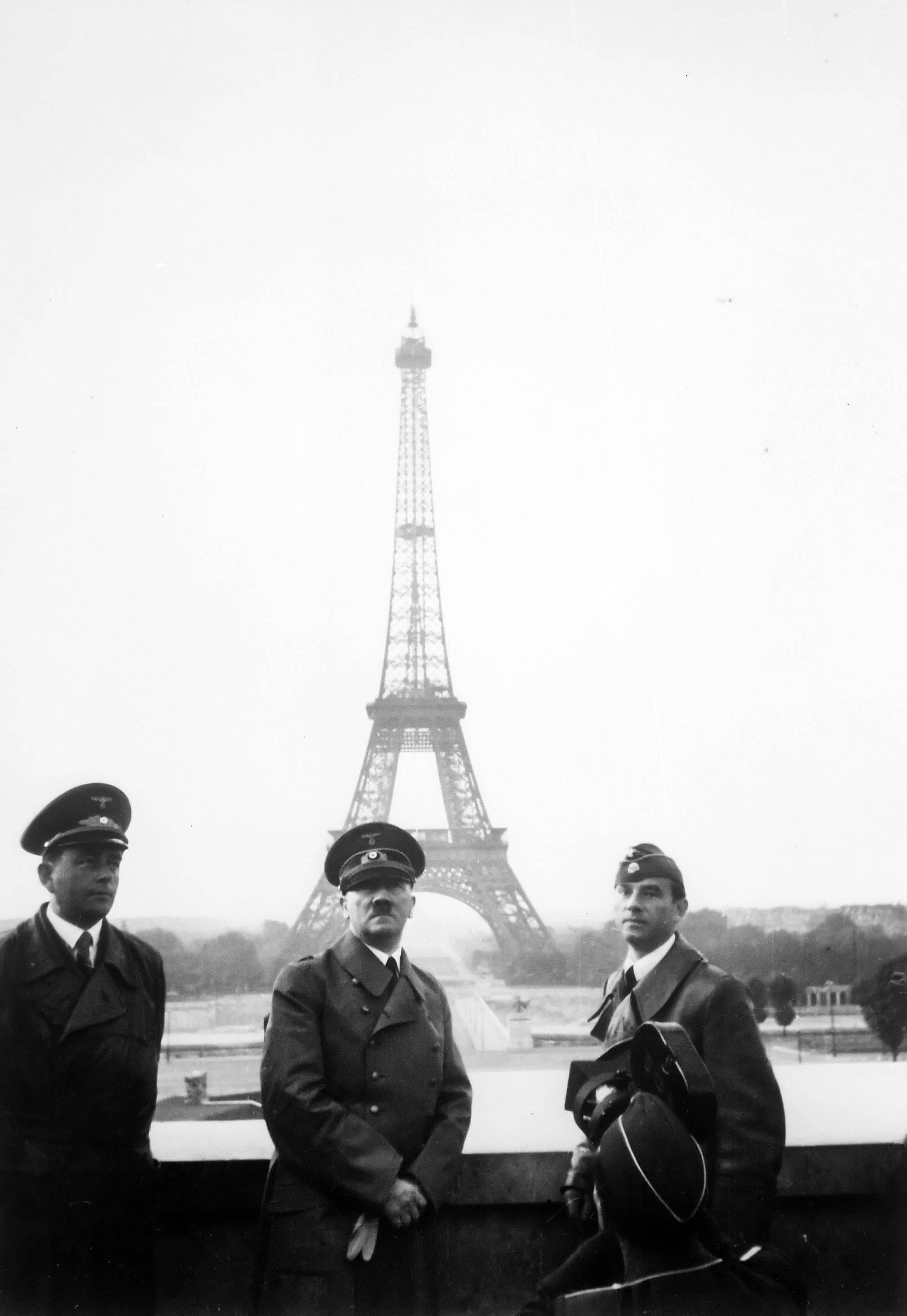
Hitler in Paris If you’ve seen that iconic image of a gloating Hitler in front of the Eiffel Tower you know what happened on this date back in 1940. The Nazi tyrant made his only visit to Paris and did the world a curious favour by creating such searing, lasting images of the sudden collapse of civilization before frenzied barbarism. Yes, it really could happen and yes it would matter if it did.

Actually Nazism was even worse than barbarism. In Hitler’s philosophy, and yes he had one, there was something far more perverse, cruel and decadent than the savage vigor of Huns or Vandals. Not that you’d want to be caught by a bunch of them on a rampage either. But Nazism was the product of an advanced culture and economy, capable of exterminating millions through sophisticated railroad logistics and industrial chemistry and Nazi potentates stole and savored advanced art rather than just smashing it or setting it on fire. In some sense the Huns didn’t know better. The Nazis knew it, and rejected it proudly.

Incidentally while in Paris Hitler visited Napoleon’s tomb and commented as he left it “That was the greatest and finest moment of my life.” Like a surprising number of admirers of the Corsican tyrant and military genius, Hitler didn’t seem to notice that Napoleon actually lost. But that’s not the main thing.

The main thing is that pictures of Hitler strutting amid the shattered ruins of “decadent” French democracy are worth thousands of words about how getting too caught up in petty partisanship, evolving exotic theories of “rights”, obsessing over minor flaws in one’s own culture, transvaluing all values and succumbing to moral relativism and its grotesque loss of proportion in geopolitics can hollow out open societies blithely convinced of their own superiority and unwilling to listen to criticisms from those on solid mental and moral ground until the panzers squash them as they protest, gesticulate and deconstruct patriarchal narratives of hegemonism.

It’s an argument that needs to be made every generation or so because malice, like ignorance, is a renewable resource. But it’s some considerable help, oddly enough, in making the argument to be able to display pictures of Hitler in Paris and ask whether the possibility of a modern equivalent isn’t sufficiently plausible and sufficiently grim as to demand our consideration.

It happened today - June 22, 2015

https://www.youtube.com/watch?v=Skpu5HaVkOc Good heavens. Can it already be the 14th anniversary of the first installment in what became the blockbuster Fast & Furious movie franchise? So it seems.

The latest, I gather, has used the amazing star power of Dwayne “The Rock” Johnson to reboot the franchise. Which is all I know about the subject. And more than I wanted to. Oh, except it was used as the code name for some horribly bungled U.S. government anti-Mexican-cartel operation for which Eric Holder inexplicably managed to shed the blame.

A commentator must of course be up on trends. He or she must know everything about everything and have an opinion on it. And it’s not chic to be ignorant of things that are extremely cool in the eyes of people who know that other people think so.

One advantage of being a curmudgeon, which in my case is not a function of advancing age as I was pretty much like this as a teen too, is that you’re allowed to dislike things that are popular. You can do it as an affectation or with unmitigated sincerity. But simply to ignore things, to dismiss them unexamined, can strike people as not merely closed-minded but as unqualified to pronounce upon them.

I respectlessly disagree. William James once said “The art of being wise is the art of knowing what to overlook”. And to me this is the perfect place to start practising.

I say that even I’m actually a big fan of “The Rock,” despite having first seen him in a wrestling event a puckish editor forced me to cover. (Pro wrestling was another thing I had been pointedly ignoring since Haystack Calhoun retired and frankly seeing it again simply confirmed my belief that it was very well worth ignoring.) Johnson can make even a really bad movie worth watching (for instance The Mysterious Island, the main mystery in question being who approved that script). I admire his determination and judgement in thinking he could go from a typically absurd wrestler to a huge box-office draw and in being right. If I met him I don’t think I’d even manage to dislike him for being richer, better looking, more successful and younger than me. He even won a national college football with the Miami Hurricanes in 1991. But The Fast and the Furious?

Like some social media trends that I ignore on the theory that if they didn’t exist no one would begin to suggest we need them, I think this whole franchise is such unutterable rubbish that I’m not going to bother proving myself right. I accidentally discovered in Googling for this piece (to confirm that there are already six sequels and it’s Universal’s most lucrative franchise ever) that it involves “the underground world of street racing in Southern California”. In theory such a premise could be the basis of a good movie; surprising things can and some amazingly lame-sounding plots have been made into memorable films (Big Trouble In Little China and Terminator being classic illustrations). But the ambiance of it is too pro-wrestling, too much testosterone, too little judgement and too much thinly-veiled admiration for the bad guys. And six sequels is too about seven too many.

Anyway, that’s my unconsidered opinion and I’m sticking to it.

It happened today - June 21, 2015

ConstitutionOn June 21, in 1788, the U.S. Constitution became fundamental law when New Hampshire provided the necessary 9th ratification for it to come into operation. Which was no big deal.

Why, then, am I writing about it? Simple. It illustrates the remarkable genius of the Constitution, its seamless combination of practical and theoretical wisdom in nearly every area except race.

Clearly a simple majority of states would be insufficient for ratification to have legitimacy. To replace the Articles of Confederation, defective as they were, with an effective national government seemed to many people to threaten their newly-won liberty. Yet to require unanimity would have invited blackmail from the most recalcitrant state, big or small, perpetuating the paralysis that the Articles had created. So nine, two-thirds, was a sensible compromise.

For all that, getting New Hampshire was no big deal because New Hampshire, though a fine place, is no big deal. Everyone understood that the Constitution would fail if it did not attract the larger states, especially the big two, Massachusetts in the north and Virginia in the South. The Constitution had to speak for more than numbers. It had to speak for regions, for political cultures, to command sufficiently broad support to have fundamental legitimacy.

The Constitution attracted five ratifications in rapid succession at the outset: Delaware, Pennsylvania, New Jersey, Georgia, and Connecticut. But nobody would have mistaken those for the nucleus of a nation although Pennsylvania was a lot more important in those days and New York a lot less so than each would later become. Promises of a Bill of Rights to make limitations on the federal government more explicit then secured the ratification of Massachusetts, then Maryland and South Carolina. But only with the addition of Virginia soon after New Hampshire (and New York shortly thereafter) was the deal really done.

It is not pleasant to compare the process whereby the Constitution Act, 1982 became fundamental law in Canada, or by which Meech Lake and then the Charlottetown Accord were handled.

Now the U.S. Constitution turned out to be flawed in some of its mechanics, for instance respecting presidential elections. The Founding Fathers, for all their worldliness, did manage to underestimate the power of partisanship. And it went badly wrong when it came to slavery. I understand the motives of northerners who compromised on a subject on which the South was unbending in order to secure union, though I hope if I had been there I would have had the clarity and courage to oppose that bargain. But I really do not think it is realistic to think I would have been wiser than those who, despite their egregious stumble on race, managed to be so practical and so deep at the same time.

Including on arranging the mechanics of ratification in such a way as to create underlying legitimacy.

It happened today - June 20, 2015

https://www.youtube.com/watch?v=ucMLFO6TsFM Well, that bites. On this day in 1975 Jaws was released and it was never safe to go back in the water again. Seriously. Some people have never recovered from that film when it comes to the vexed scientific question whether the Caribbean is ¾ salt water and ¼ ferocious shark. I know. I married one.

The highest-grossing movie in U.S. history until Star Wars came along (a story for another day) it really was an instant classic. Unlike the sequels.

Now what’s remarkable is that when it comes to special effects… OK, ordinary effects… Jaws is a bit lame. “Bruce” the mechanical shark was so unrealistic they had to revamp the movie to focus more on the hidden menace of the beast than on something swimming in a straight line like a fiberglass boat rather than exhibiting the lithe sinister side-to-side motion of a shark. Of course it’s easier to forgive clunky special effects in a pre-Star Wars movie. But it’s also clear that while cool special effects are, well, cool, they’re not central to a great film.

Obviously the movie spoke to people’s deepest fears. But it spoke in a convincing way. And as must happen to achieve cinema greatness, it turned on the individual performances and even more on the way they work together. Roy Scheider and Richard Dreyfuss are a perfect odd couple and Robert Shaw the perfect foil. (Can you believe he’s the same guy who played the villain in From Russia With Love? It must be odd to be an actor who excels at playing out-of-control characters). I’m not sold on the mayor, a cardboard cutout, but the big three are superb.
Incidentally, I’ve always loved the scene where Scheider’s working-class stiff cop Martin Brody discovers that Dreyfuss’s Matt Hooper has his own boat and research gear. I was going to quote from memory because IMDB unaccountably doesn’t have it in their memorable quotes but I found a plausible version online: “You rich?” Brody asks, “Yeah,” Hooper replies tersely. “How much?” “Personally or the whole family?” I think that exchange all by itself settles the apparently apocryphal but memorable exchange between F. Scott Fitzgerald (“The rich are different from you and me”) and Ernest Hemingway (“Yes, they have more money”) in favour of Fitzgerald. A rich person has a different life. They have a larger wake, though it doesn’t make them happier or better. Or more shark-proof.

Speaking of which, IMDB does have their classic final exchange: “I used to hate the water...” “I can't imagine why.” And some people didn’t use to until they saw the film and now, four decades on, they still do. It’s the mark of a great movie that it can change your life, even with a fiberglass shark.

It happened today - June 19, 2015

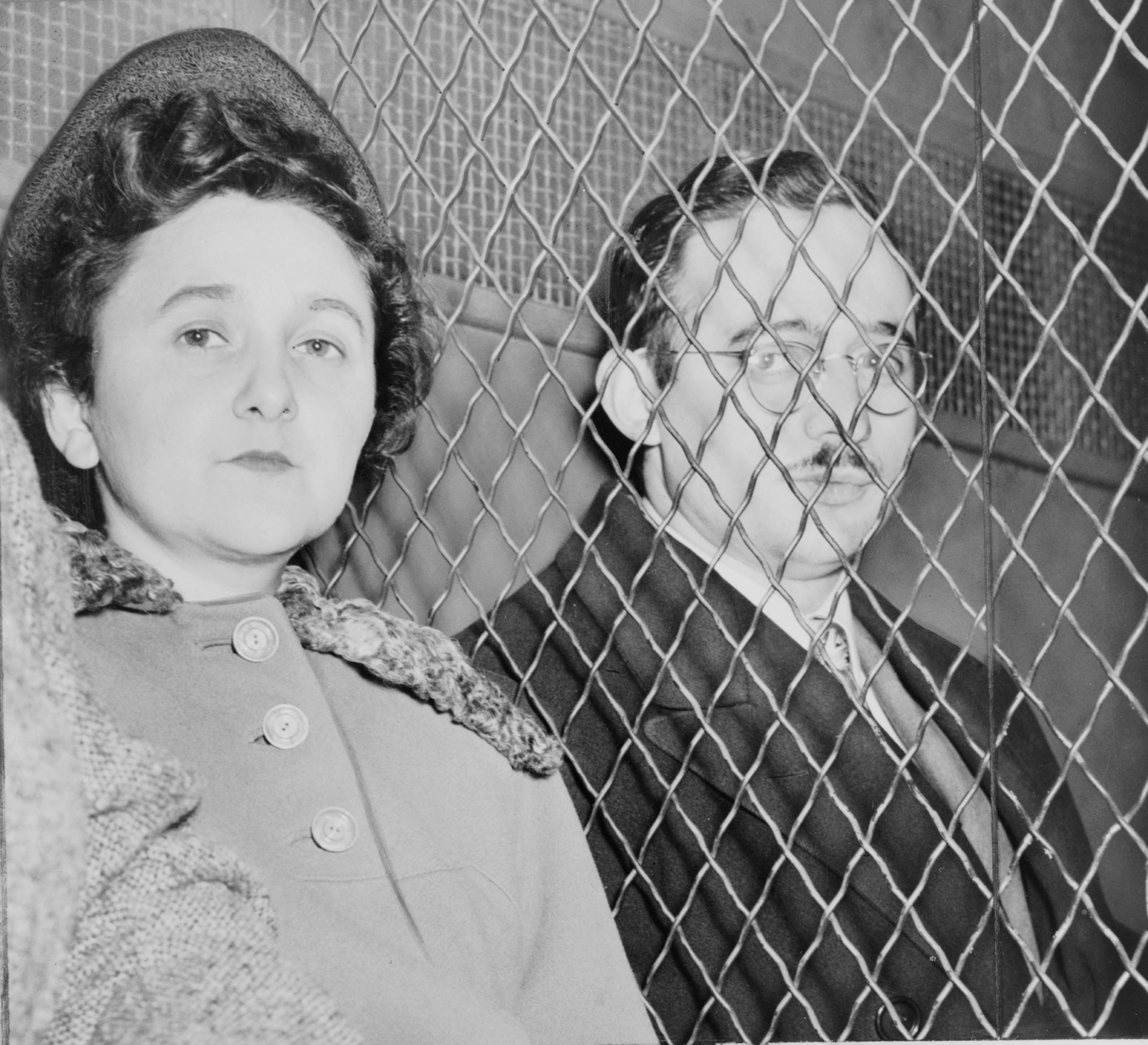
Ethel and Julius RosenbergOn June 19 back in 1953 the Rosenbergs were executed for nuclear espionage on behalf of Joseph Stalin. Liberals long insisted that it was a gruesome miscarriage of justice driven by mindless McCarthyism. To this day the case is described as “controversial”. I don’t see why.
I get that some people strongly disagree with the death penalty period. I can see calling capital punishment “controversial”. And the fact that the Rosenbergs were the first Americans ever executed for espionage in peacetime might cause controversy although the “Cold War” was, as its name suggests, a singularly tense form of peacetime. But what is strange is that there is really no doubt about their guilt, especially that of Julius. Nor is there really any doubt that Stalinism was monstrous in every dimension and that anyone who was deliberately trying to help it defeat freedom was behaving horribly. So where’s the controversy?

Well, there’s this weird lingering liberal affection for the goals or spirit of communism or something. For instance, I’m still amazed that in February 2006 Maclean’s devoted its back page to a glowing obituary of “Robert ‘Doc’ Savage 1911-2006”, a lifelong member of the Communist party. I’d love to see them do it with a lifelong Nazi. But then, in 2000 revered U.S. news anchor Peter Jennings had delivered an on-air eulogy for American Communist Party leader Gus Hall, in which he said “Even after his friends… abandoned the cause, Hall never wavered.” Again, one cannot imagine him saying such a thing about a Nazi. And it’s still cool to have fought for Communism in the Spanish Civil War in a way that having fought for the other side is not. And yet Stalin was surely as bad as Hitler while Franco, a seedy dictator to be sure, wasn’t even a Mussolini.

The same impulse that led liberals to swallow Walter Duranty’s reporting in the 1930s and to defend Alger Hiss is still at work in calling it “controversial” that two people who betrayed their nation to Stalin in an important way paid a high price for it. It’s possible that Ethel did not spy, and that the secrets Julius passed to Moscow were not terribly important. But she knew what he was trying to do, and what he was trying to do was commit treason.

Capital punishment may be controversial. But the only really controversial thing about the Rosenberg case is why anyone still calls it controversial.

It happened today - June 18, 2015

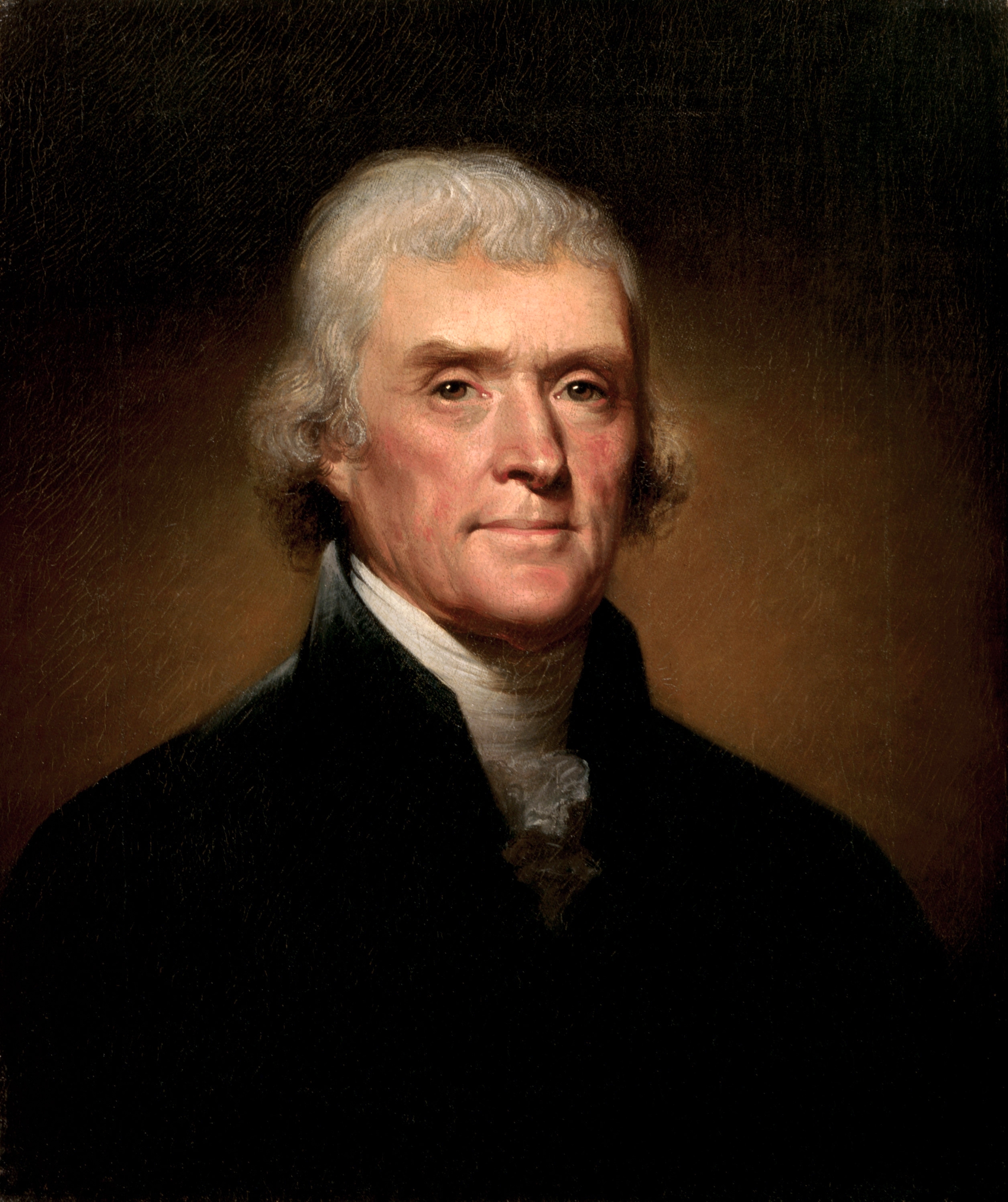
Thomas JeffersonOn June 18, 1812, the imaginatively named War of 1812 began. I have commented elsewhere on the surprisingly positive strategic impact of this war, begun under such unpromising circumstances for no good reason. But today I’d like to let off a little steam on the subject of Thomas Jefferson.

I’m no great fan of his. Highly intelligent, capable of writing wise and moving words, he was a hypocrite and a monster on race relations and frequently frivolously irresponsible in public affairs. Including blundering into war with the British in 1812 because of a ludicrous sympathy for Napoleon and the legacy of the French Revolution and an irrational hatred of Britain. Jefferson was of course out of office by the time the war started under James Madison, but it was Jefferson who set the course that led to conflict.

To be sure, many Americans were leery of the nation that, under George III, had tried to take away their freedom in the 1760s and 1770s. Many thought the War of 1812 represented a second effort toward the same goal under the same long-lived, fairly wretched monarch. Popular American mistrust of Britain would linger into the 1930s, when isolationists would mock the “Brutish Empire” as it haltingly tried to oppose Hitler. But Jefferson’s actions were far more irresponsible.

John Adams, the man he narrowly defeated for the presidency in 1800, was accused by Jefferson’s partisans of being unreasonably favourable to Britain and irrationally hostile to France. And clearly Adams saw through the French Revolution’s high-sounding rhetoric in a way Jefferson never did. But when Adams was given a prime opportunity to bring the U.S. into Britain’s war against France by the “XYZ Affair” of 1798 he turned it down, at enormous political cost, because he thought it neither wise nor just.

Jefferson the pacifist, by contrast, drifted into war with Britain on behalf of Napoleon without bothering to arm his nation, exhibiting the classic liberal tendency to “combine the unready hand with the unbridled tongue” as Teddy Roosevelt would later put it. And thanks to Britain’s common sense in managing the conflict his party never paid the price Adams’ had for his statesmanship.

Historians have generally taken Jefferson’s side against Adams, minimizing his racial sins, buying the Jeffersonians’ line about Adams being a crypto-monarchist friend of plutocrats and Jefferson the champion of the common man whose “Revolution of 1800” saved America from elitist rule threatening to democracy.

While we’re on the subject of democracy and the common man, surely it’s worth noting that Jefferson would have lost the 1800 election to Adams had the white voters of slave states carried excessive weight in presidential contests due to the obnoxious constitutional rule of counting slaves as 3/5 of a person for purposes of representation in Congress and the Electoral College. Had Adams won, it is highly unlikely the War of 1812 would have been fought. And while that war turned out remarkably well geopolitically, there was no reason to suppose it would. It was a stupid conflict and one that wiser men than Jefferson would rightly have avoided.

It has always bothered me that Adams has never received proper credit for avoiding a war his partisan instincts favoured on behalf of British liberty against French revolutionary mania, and Jefferson has never received suitable blame for blundering into a war his partisan instincts favoured on behalf of tyranny.

It happened today - June 17, 2015

Bartholdi's patentOn June 17 back in 1885 the pieces of the Statue of Liberty arrived in New York, a gift from France. Which alone can seem incongruous given the foreign policy quarrels the French and American governments have had in recent years. In his 1996 book Rants Dennis Miller wrote “the French hate our guts. I cannot believe they actually gave us the Statue of Liberty. They must’ve been throwing it out anyway. Because these people detest us. They look at us and we are one, big, collective Jethro bearing down on them, rope belt and all.”

Indeed some French statesmen, like snobs everywhere, do look down on America, despising it as a land of hillbillies. And to some extent it is, but in a good way. An important strand of American popular culture, as David Hackett Fischer explains at great but highly entertaining length in Albion's Seed: Four British Folkways in America, comes from the “Borderers” who settled not just Appalachia but much of the backcountry from Pennsylvania to Georgia, bringing with them plain speech, plain manners and a rough-hewn sense of social equality, opportunity and pragmatism that the world not only needs more of, it frequently admires.

Which is the amazing thing about the Statue of Liberty. It was assembled (from some 350 pieces in 200 crates – I guess you had to like jigsaw puzzles and not fear heights) and dedicated in 1886. Which wasn’t necessarily a great time for America. Barely two decades away from the fratricidal slaughter of the Civil War, divided politically, economically and above all racially, suffering the “Great Depression” that lasted from 1873-96, uncertain of its place in the world, its politics corrupt and mediocre, its culture mocked… well, you get the idea. And yet the statue immediately became a globally famous emblem and remains one to this day. During the Tienanmen Square protests of 1989 the “Goddess of Democracy” holding, um, a torch was deliberately designed not to look too much like the Statue of Liberty, an effort that speaks volumes about just how far the light of the “Statue of Liberty Enlightening the World” is clearly visible. And clearly the Chinese regime today fears the example not of Canada, or of France, but of America, which despite everything remains the land of liberty and opportunity the statue symbolizes, as indeed it did in 1885.