Posts in It happened today
It happened today - July 2, 2015

La AmistadOn July 2, in 1839, slaves on the Cuban ship Amistad, which incongruously means “friendship,” seized control of the vessel and headed for the U.S. After many troubles most reached American waters, though some died en route. In the land of the free they were promptly imprisoned and their Cuban prisoners released. But they did end up getting their freedom.

The original idea was to have them sent back to Cuba for trial and a certain gruesome fate. But American abolitionists managed to get them tried in the U.S. instead, in Connecticut, where Judge Andrew Judson ruled they were unlawfully enslaved and should be freed and sent back to Africa (all were African-born) rather than to Cuba. U.S. Democratic President Martin van Buren appealed the ruling all the way to the Supreme Court where former president John Quincy Adams joined their legal team and they won again.

It’s a remarkable story in all kinds of ways, beginning with the daring of the slaves who, seeing a narrow window of opportunity, seized it with both manacled hands. I think we all like to imagine that if we were slaves we would dare to revolt and manage to pull it off. But it’s easy to say when you haven’t been there; successful slave revolts were rare and clearly the dictates of prudence deserved careful consideration. Still, looking back, or simply in from the outside, there’s a vindication of the human spirit every time a slave or group does manage to cast off the fetters.

Then there’s the belief that the United States, then a major slaveholding nation, would live up to its ideals rather than succumb to the widespread violation of them (of course it would not have worked had they been taken to the South not New England). Their final legal victory in 1841 came two decades before hundreds of thousands of white Americans would lay down their lives to free people most of them, frankly, didn’t like very much (and over a hundred thousand more would die trying to keep them slaves). And the end of slavery in 1865 was far from the end of bigotry in the United States. And yet, when forced to the wall morally, Americans would side with liberty time and again.

It’s tragic that it took so long. But it did happen, and along the way episodes like the Amistad ruling do shine out in the murk that envelopes too much of the American past.

It happened today - July 1, 2015

Plains of AbrahamHappy Canada Day! On July 1 we celebrate our nation’s independence and its glorious history… apart from the stuff we think isn’t really compatible with modern sensibilities, like the wars and tradition of British liberty and particularly where the two intersect like um the Plains of Abraham.

Now it has been objected, including by me, that Canadian history has a certain dullness, highly desirable when living through it but less riveting to read about. We have no battlefield in Canada to rival Gettysburg and I sure wouldn’t trade our peaceful recent past for the American Civil War to get one. If you believe as I do that our history stretches back way before 1867 and includes great struggles and great men like Stephen Langton and Alfred the Great (and incidentally I just discovered that my grandfather gave a series of radio talks on “Stories from Canadian History” in the latter part of World War II that included such people without embarrassment) then we do have some humdingers but they of course are far from our home and native land and hard to visit.

Which brings to mind the words Macaulay puts in the mouth of Horatius as he and two companions hold the Sublician bridge against the Etruscans: “And how can man die better/ Than facing fearful odds,/ For the ashes of his fathers,/ And the temples of his Gods”. For it strikes me that, all else being equal, it is best for your national heroics to be performed far from your hearths and homes rather than with the enemy at the gates.

Canadian history is partly dull because, through a combination of luck and sound geopolitical judgement, those Canadians who fought and died for our freedom and security did so overseas. Not always, of course; some Canadians in both World Wars died close to home, including in training accidents that lack glory but are part of successful defence, but also fighting U-boats in our coastal waters and in the St. Lawrence. Still, by and large if we want to celebrate our version of Little Round Top we must go abroad and, all things considered, it’s better that way.

There is much to celebrate in Canada’s non-violent success. Our construction of a prosperous economy based on property rights and the rule of law, our general observance of free speech and free assembly until recently without needing to take up arms, our tradition of civility and self-restraint, make for good living if dull reading. But we should be patriotic about it no matter how old-fashioned it might sound.

Back in 2005, can it really be a decade since his 21st birthday, Canada’s Prince Harry (yes, Canada’s, as well as Britain’s) said that his military training at Sandhurst had not been pleasant but wasn’t meant to be. And he said that like his older brother William he intended to serve actively. Then he added that he’d told William “’There’s no way I’m going to put myself through Sandhurst and then sit on my arse back home while my boys are out fighting for their country.’ That may sound very patriotic, but it’s true. It’s not the way anyone should work.’”

How extraordinary that even the grandson of the reigning Queen should feel obliged to apologize for sounding patriotic. If nothing else, it proves he’s very Canadian. But we should be patriotic and not apologetic about it.

That Canadians fought their most glorious battles far from home is good fortune and good geopolitics and better by far for the nation. But they are no less glorious for having held off the Nazis and others far from the last bridge into the city.

It happened today - June 30, 2015

Gone with the windOn June 30, 1936, Margaret Mitchell published Gone with the Wind. Admit it. You haven’t read it. But you’ve seen the movie.

Or maybe you have read it. It was an immediate and enduring success. It was the top American fiction bestseller in 1936 and 1937, the fastest-selling novel to that point in U.S. publishing history, selling 50,000 copies in one day and more than a million and a half in its first year. It has been translated into dozens of languages. And an Ottawa Citizen story in June 1999 said it was one of the three top selling novels of all time, along with To Kill a Mockingbird and, of all things, Valley of the Dolls

On the face of it, its popularity is puzzling, especially as it has endured to this day despite its mawkish sentimentality and total lack of political correctness (and for once I’m with the politically correct on its outrageous depiction of the antebellum South). Yet there it is. In a 2014 Harris poll, was Americans’ second favourite behind the Bible. In 1998 the Radcliffe Publishing Course, at the Harvard affiliate then merging with Harvard, put it 26th on its list of 100 best novels of the 20th century, behind The Color Purple and Ulysses but ahead of Native Son, One Flew Over the Cuckoo's Nest, Slaughterhouse-Five, Brideshead Revisited, The Wizard of Oz (incidentally not a good novel) and a host of other sound and eccentric entries.

An Indigo Books online poll of Canadians in 2005, it placed fourth, behind To Kill a Mockingbird, Pride and Prejudice and The Da Vinci Code and just ahead of The Return of the King. And apparently the Modern Library’s Top 100 Novels of the 20th Century had it in first.

Clearly its popularity was hugely enhanced by the 1939 movie adaptation with its classic closing line which adjusted for inflation is the highest-grossing movie of all time and, like the novel, continues to rank high in “best-of” lists by people with no sympathy for its treatment of race. Though it is a sign of the vanished times that there was considerable controversy (though not, despite persistent folklore, a $5,000 fine) for Clark Gable’s final word “damn”. Nowadays you’d be more likely fined for a movie that didn’t contain an obscenity. But speaking of signs of the times, it is curious that the book should remain so popular despite its preposterous depiction of a culture we all now despise, the slave-owning elite of the antebellum South, complete with unflattering stereotypes of blacks. Even if the movie did include among its 10 of 17 Oscars that year a Best Supporting Actress for Hattie McDaniel, who was black, it is weird that this novel and the enduring affection for it could emerge from the same nation that made Uncle Tom's Cabin an instant best-seller and keeps putting To Kill a Mockingbird high on its lists of best novels… and rightly so.

Besides, most of the characters are annoying. Scarlett O’Hara herself strikes me as a vain, spoiled and petulant brat. And if her personal development is meant to be part of the movie’s appeal, well, obviously I do not share the taste of the cinema-going public. (As a side note, the original name of the heroine was Pansy O’Hara, a salutary reminder of the value of that infuriating breed known as editors. One wonders how much that small change contributed to this enormous phenomenon.) Even her actual last line in the movie, “Tomorrow is another day,” strikes me as a rootless and irresponsible declaration of pseudo-independence, a disavowal of responsibility for all she has done to that point in her life.

Also, the great romantic love between her and Rhett Butler is something of a puzzle. Mind you, great capital-R Romantic love is always a puzzle. It seems to depend on an irresistible attraction between two people who don’t like one another, have nothing significant in common, and aren’t happy together. There I think lies part of the appeal of the story: its inherent adolescent quality. And to be fair at least Scarlett and Rhett don’t end up marrying.

There is also the strange lingering attraction of the Confederacy, even among people with no use for bigotry, let alone slavery. To this day, Civil War reenactors generally prefer to be Confederate, to the point that there is sometimes a requirement to do the Union side a few times before you can switch.

There are reenactors in Europe as well as the United States. There seems to be a certain inescapable romance, especially in our modern materialist age, about unselfish, uncalculating adherence to a clearly lost cause even when the lost cause itself is not terribly attractive and has nothing to do with one’s own. Indeed one odd detail of the book that has stuck in my mind since I first read it nearly a quarter-century ago is that it was read around campfires by both sides in the Spanish Civil War.

Still, I have to admit that personally I prefer the lost cause of Gondor, which not only deserved to win but did. And if you don’t think Tolkien a greater novelist than Mitchell, or James Joyce, frankly, I don’t give a hoot.

It happened today - June 29, 2015

Flight patchSo here’s a great pseudo-event in world history. Or if you prefer out-of-this-world history. On June 29 1995, exactly 20 years ago, the American space shuttle Atlantis docked at Russia’s Mir space station to form the largest artificial satellite ever to orbit Earth.

It was technically impressive, of course. Space exploration always is; the margin of error is very small and the energy required to get things into space means you can’t take a bunch of spare stuff to fix problems even if you get time. But that’s not the point.

The point here is that a propaganda stunt is just that. It was done to show how warm and cuddly everyone was feeling, even though not everyone was feeling that way, because those who were and those who weren’t both found the image useful.

The problem is, they didn’t find it useful in similar ways. Western politicians were busy spending the “peace dividend” from the unexpected end of the Cold War so they rather needed peace to be the normal condition in international affairs, the past few thousand years since writing was invented a regrettable but temporary exception, and harmony the rule.

Everyone else needed the West to let down its guard so they could regroup. As too often, there’s a curious temporary converge in the short-run aims of liberal politicians in democracies and illiberal ones in non-democracies. But there’s no long-run convergence and we should beware of the temporary ones, because for separate reasons both wish to deny that the latter are actively plotting against the former.

True, when Atlantis met Mir Vladimir Putin had not yet risen to supreme power in Russia. But his rise did not take place in a vacuum and despite the genuinely well-meaning Boris Yeltsin, much of Russia’s political class was, and remains, profoundly anti-Western. And the fact that American and Russian engineers can bring two spaceships together when the politicians want them do doesn’t mean the two societies and cultures are converging in ways that make such events happen spontaneously as an expression of their common bond.

It’s like those hockey series we used to stage so we (Canadians) could show friendship and they (the Soviets) could crush us to prove the superiority of their system. We weren’t so much being played for suckers as playing ourselves for suckers. And that never ends well.

It is of course an old-fashioned view. But then, the Gods of the Copybook Headings lie in wait for those who abandon old-fashioned views.

Incidentally I'm so old-fashioned I still prefer Earth’s natural satellite, and am sorry a space station is frequently now the brightest object in the night sky. And I don’t believe stunts contribute to world peace, or space peace.

It happened today - June 28, 2015

Ferdinand's blood-stained uniformOn June 28, 1914, a Serbian nationalist named Gavrilo Princip assassinated Archduke Franz Ferdinand, heir to the Austro-Hungarian throne. Given what followed, namely World War I, he should not have done so.
Apparently Franz Ferdinand himself was no great shakes. That this cold, choleric man loved his wife (also assassinated that day) is about the only positive quality I’ve ever seen attributed to him. But you don’t shoot a man for being obnoxious.

Princip and his associates were steamed that Austria-Hungary had completed its slow-motion seizure of Bosnia and Herzogovina from the crumbling Ottoman Empire back in 1908 (it took 30 years), believing Serbia should have had it instead. Which might be true to the limited extent that any regime in Eastern Europe in 1908 had any legitimate claim to anything. But again, you don’t shoot a man for that, even a rather unpleasant one.

The reason the conspirators wanted to assassinate the archduke, oddly, was that he was seen as a reformer. He apparently planned to create a tripartite Austro-Hungaro-Serbia that would reduce discontent among Serbs within the Hapsburg domains and make it less likely they would insist on the glorious path of joining Serbia in the Balkan snakepit.

The assassins may also have felt that in a showdown Russia would side with Serbia against Austria-Hungary. If so they were correct that far. But whatever else they may have envisioned, neither they nor anyone else could have foreseen the scale of carnage that would erupt, killing millions of men, destroying the Austro-Hungarian Empire, the Russian Empire that opposed it, the German Empire that backed Austria-Hungary and the Ottoman Empire they had been busy carving up, and sowing the seeds of an even more brutal war a quarter-century later.

Had they foreseen it, one hopes, they would have decided to find something else do to than plot seedy assassinations on behalf of dubious causes. But then, they weren’t the sort of people to shy away from unpleasantness.

In that sense, Princip was unlucky that the consequence of his action was as enormously awful as it turned out to be. (He himself botched suicide twice right after firing the fatal shots, was caught, sentenced to 20 years in jail, and saw most of World War I unfold before dying of tuberculosis on April 28, 1918.) But his action was itself quite awful regardless. So if he had been a better man, he would not have done what he did including accidentally plunging the world into World War I.

As a footnote to this story Franz Ferdinand, a fanatical hunter, was evidently very nearly killed by an accidental shotgun discharge at Welbeck in England in 1913. The Duke of Portland, himself present and narrowly missed, later wrote, “I have often wondered whether the Great War might not have been averted, or at least postponed, had the archduke met his death there and not in Sarajevo the following year.”

His reference to its being delayed rather than prevented reminds us that Princip’s actions triggered rather than caused the conflict and it is highly probable that the geopolitical instability of Europe by 1914, or its excessive stability allowing tensions to build to catastrophic levels, might well have precipitated the catastrophe fairly shortly anyway. But again, the fact that we cannot foresee all the ends of our actions does not mean we cannot choose wisely between good and evil by sticking to certain basic principles.

It may not be wrong to assassinate a man thus triggering The Great War, in that we cannot reasonably anticipate triggering The Great War, any more than one might murder Adolf Hitler in 1920 to prevent World War II. But it is wrong to assassinate a man for being a reformer in a decadent regime. So Princip should not have done it regardless of its geopolitical consequences.

It happened today - June 27, 2015

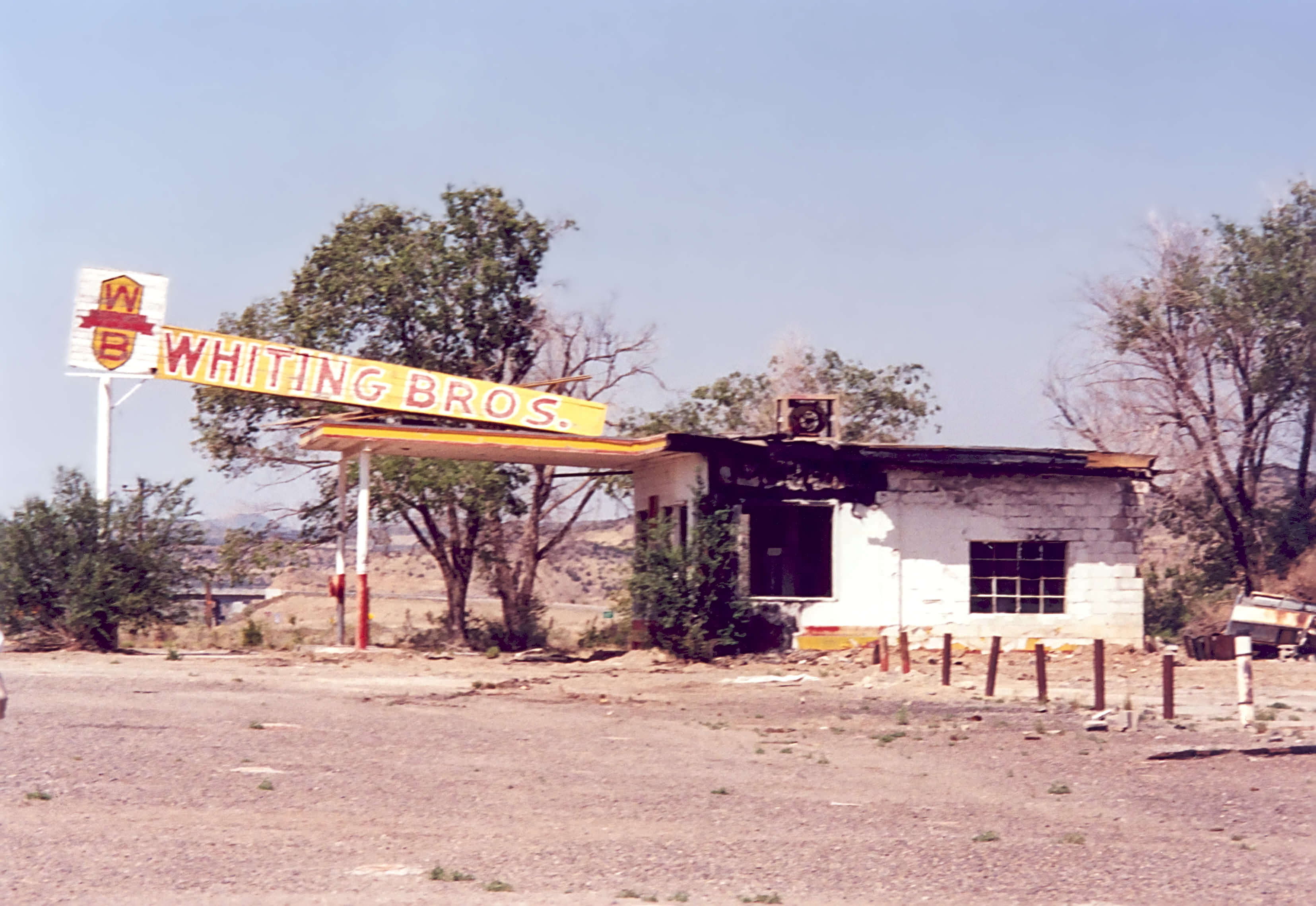
Abandoned gas station on Route 66Exactly 30 years ago, on June 27 1985, the American Association of State Highway and Transportation Officials (it’s OK, I never heard of them either) decertified the famous Route 66. Yes, famous. And not just for a fundamentally unwatchable 1960s TV show I only know from the Mad Magazine satire. It was an economic and social thread running through the American heartland, from Chicago to Santa Monica, formally the Will Rogers Highway and informally the Main Street of America or the Mother Road.
It was established in 1926. But it didn’t even get signs until the next year. Those were simpler, less bureaucratic times. It was how you went west for decades, for a better life, as a tourist or just for fun, in some shiny product of the world-beating North American automobile industry.

I know, I know. Nostalgia ain’t what it used to be. And in those simpler days all people had to worry about was, you know, the Great Depression, Hitler, Stalin, the bomb. Today we face food additives, tattoos and ear buds.

Still, there is something appealing about the heyday of Route 66. And part of it has to do with what happened as it was supplanted by the vast social engineering project called the U.S. Interstate Highway System that left Radiator Springs stranded. Driven in part by President Eisenhower’s long-ago experience leading an experimental convoy across the United States, back in 1919, the Interstates were also a major engine of suburban sprawl, homogenization and modernization generally.

Now you may be tempted to respond that I would be horrified if forced to drive anywhere on the old Route 66 instead of a modern interstate, and doubly horrified if forced to do it in one of those old “classic” cars that lacked modern ergonomics, suspension, fuel efficiency or seatbelts, eating in dubious greasy spoons instead of utterly standardized purveyors of fast semi-food. And you’re half right.

Because I’m used to the effortless comfort of the modern world I would feel ill-used experiencing what struck people back then as a futuristic miracle. But that’s where the argument against nostalgia breaks down. Either every person who ever thought something was cool until a decade ago was a blithering fool, or technology cannot make us happy in ways we expect because as soon as it arrives we get used to it, take it for granted, and focus on its drawbacks not its advantages.

I knew a guy who fought in World War II and, when he came back, bought a car whose tires would deform overnight, getting a flat level part where they rested on the ground, so that when you started driving it went thunka thunka thunka until they warmed up and regained their proper round shape. If that happened today you’d be outraged. And yet humankind didn’t even have cars until a century ago. So who has the real problem, the people who think a 1950s car was amazing or those who couldn’t abide driving one?

Even down Route 66.

It happened today - June 26, 2015

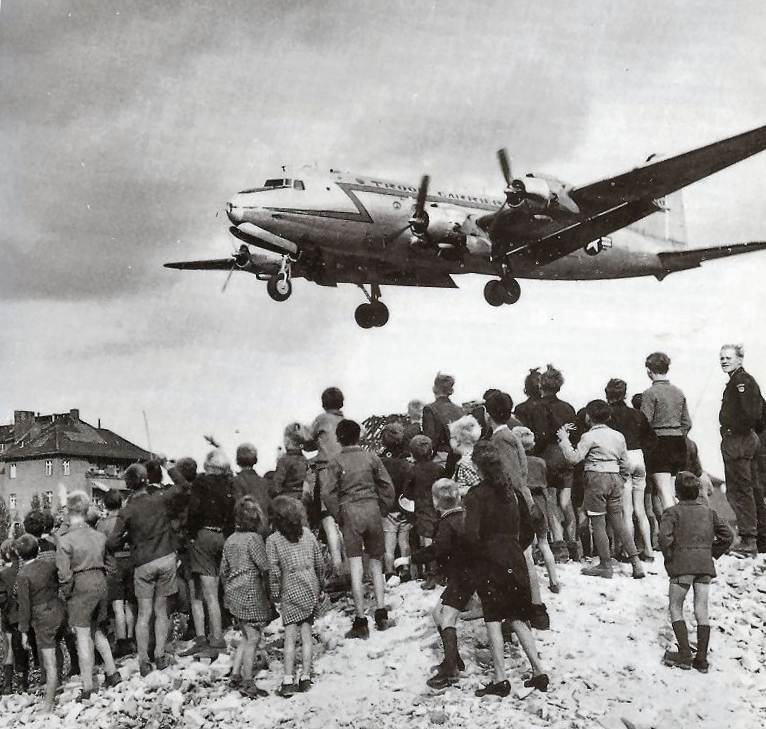
Operation VittlesOn June 26 of 1948 the Western Allies began one of the most significant, improbable and slow-moving victories in the entire Cold War: the airlift that broke Stalin’s Berlin Blockade. It was patient, shrewd, determined and showed the awesome economic power of freedom.

The rather complicated background hinges on the total breakdown of cooperation over conquered Germany. When the U.S., Britain and France decided to allow the economic recovery what would become West Germany the Soviets duplicitously cut off all land and water access to the Western occupation zones in Berlin, the city being divided into four zones like the whole of Germany but entirely inside the Soviet zone of Germany proper.

The blockade was especially awkward for the Americans because they had basically disarmed after World War II. I remember when I was in university including grad school there was this strong “revisionist” line of thought that the U.S. had basically caused the Cold War, even wanted it, had failed to accommodate Stalin’s legitimate security concerns in Eastern Europe (as if Stalin had or could have any legitimate concerns about anything), had used “atomic diplomacy” to frighten the Bolsheviks and so on.

I always thought it an odd argument since the Soviets gave no sign of being intimidated. And I thought it very odd that the U.S. would have sought to throw its weight around by reducing its forces in Europe to 12 ill-equipped divisions whose battle plan in the event of a Soviet attack was to flee to the French-Spanish border and wait for help, and to practice “atomic diplomacy” without building nuclear weapons. But as late as the summer of 1948 the U.S. had very few atomic bombs and no bombers in Europe capable of dropping one.

For an aggressor, the U.S. sure hadn’t given itself many options. But Washington had one small thing going for it. The Soviets had expressly promised to allow access to Berlin by air. So despite having limited aircraft on hand the Americans determined to launch “Operation Vittles” and somehow bring in not just the food but the incredibly bulky and heavy coal needed by inhabitants of what would later become West Berlin.

I like the name “Operation Vittles”. I don’t entirely approve of the general American habit of giving military operations grandiose names and this one has a homespun quality I appreciate. But I like the strategic thinking even more.

To try to resupply Berlin by ground risked humiliating confrontation. The Soviets, who had never promised land access anyway, had already turned back a train and it was easy to declare a highway closed, or simply block a truck convoy, and leave the West the unpalatable choice of starting shooting in the Soviet zone or slink away. But flying in supplies put the onus on the Soviets to escalate, radically and very publicly (you can’t stop a plane in midair for inspection), or stand back and see if they could pull it off.

They chose the latter, partly because it seemed almost certain that it was logistically impossible. And here’s what I find most impressive. The Americans had calculated that they would need to deliver some 5,000 tons of supplies per day (around 1,500 of food and 3,500 of gas and coal) each and every day. And by golly they did.

The Allies, mostly the Americans, managed to supply Berlin by air for more than a year. In fact even after the Soviets lifted the blockade on May 12 1949 they kept it up for a while just to poke Stalin in the eye logistically and say ha ha we’re not even tired (and to build stockpiles in case the Soviets reimposed the blockade). And by the time it officially ended on September 30 of 1949 the U.S. Air Force had delivered 1.78 million tons of supplies, and the RAF more than half a million tons more (the Australians also chipped in, in a smaller way). In total the supply planes flew over 92 million miles, almost the distance from Earth to the Sun, and at the height of the airlift a plane reached West Berlin every 30 seconds.

The Berlin Blockade was a fairly unusual demonstration of Western cleverness in the conduct of international affairs as well as of determination and clarity. But it was also based on the astounding productivity of free societies that give them considerable leeway when it comes to strategic thought because they are so resourceful and resilient when they do put their minds to something.

It’s not an argument for carelessness, of course. But it is a vindication of liberty.

It happened today - June 25, 2015

Little Big HornOn this date back in 1876 George Armstrong Custer bit the dust. At the Battle of Little Bighorn on June 25 he and his Seventh Cavalry were slaughtered to the last man. It’s hard not to cheer.

Military enthusiasts debate every detail of the battle from when exactly Custer died to what kind of idiot he was. A dead one is the basic reply. Custer may have been a pretty good officer through most of his career, despite graduating from West Point last in his class, though he certainly achieved permanent fame for his disastrous last battle. But I’m not cheering because of any particular animus against Custer. Indeed, I rather admire the way he annoyed President Grant because he exposed corruption. But my goodness, in the long and dismal history of American Indians being cheated beaten and driven off their land how can you not be happy that for once they won a major victory?

It doesn’t matter whether you’re a pacifist, or someone who thinks the emergence of the free societies of North America has been hugely beneficial to the course of world history. It doesn’t matter how much you admire the American military tradition. The fact remains that the Indians were treated miserably for centuries and never seemed to get a break and so when they win this one it’s got to make you happy.

To be sure, it didn’t help. Nothing could have. The fate of aboriginals in the Americas, as I have argued elsewhere including the National Post, was basically sealed when the first Europeans arrived in the late 15th century.

I’m no fatalist, but in this case (see Jared Diamond’s Guns, Germs, and Steel for more on this point) the gap in technology, the clash between literate and non-literate ways of life, and aboriginal susceptibility to European diseases bred in long centuries of intensive agriculture including animal husbandry, and of urbanisation, would have spelled doom for the traditional societies of the Americas regardless of human agency.

No amount of military heroics by Indians, or stupidity by cavalry commanders, could have changed the result. Indeed from the earliest resistance to the settlements at Jamestown and Massachusetts Bay to the final skirmishes in the late 19th century, individual battles just couldn’t alter the general trend. And so any enjoyment you derive from the victory at Little Big Horn is undermined by the fact that you know that what follows the battle is as dismal for the Indians as what went before.

Still, at least they won big once. How can you not cheer?