Posts in It happened today
It happened today - July 19, 2015

The execution of Jane GreyPoor Jane Grey. On this day in 1553 she was deposed and, seven months later, executed. I’ve always found the story of this beautiful, naïve teen strangely poignant.

What? You never heard of her? In a way it’s fitting. And to me it’s part of what makes the story so sad. A great-grand-daughter of Henry VII, Jane was supposedly Queen of England for nine entire days before going to the Tower of London and then the executioner’s block. But it wasn’t her fault; she was only 15 and, though renowned as one of the most educated women of her era, she was a pawn in various religious and dynastic power struggles that were, frankly, way above her head.

First she was married to the son of a powerful and ambitious noble and courtier, John Dudley, Duke of Northumberland. A month later the sickly Edward VI evidently named her his heir to keep his Catholic half-sister Mary off the throne.

She was never crowned. Instead the populace supported Mary, Dudley’s army deserted him, he was arrested and executed and the hapless Jane was booted out and locked in the infamous Tower of London. She and her husband, Guildford Dudley by foppish name, were both sentenced to death for treason but Mary spared them because they were young and hapless.

Then Mary agreed to marry the Catholic king of Spain, Philip II, Jane’s father joined a rebellion, lost ignominiously, and Mary decided she’d better eliminate potential opponents and sent Jane and Guildford to the scaffold two hours apart on Feb. 12, 1554.

Apparently the executioner held Jane’s head aloft and declared: “So perish all the queen’s enemies! Behold, the head of a traitor!”

On the contrary. Behold the head of a sad, pretty, lost soul who never had a chance, aware that she was being manipulated and betrayed by inept schemers to whom she was not a person at all but just a thing they could use in their incompetent plots, and tragically powerless to make it stop.

It happened today - July 18, 2015

So, how about that Mein Kampf? First published 90 years ago today, it’s quite a book.

What’s that? You haven’t read it? You should.

A few years back I actually assigned it as a textbook in an upper-division University of Ottawa course on the Cold War. I thought it would make a great headline: “Right-wing prof assigns Hitler book”. Instead of a PC outcry the result was total silence. Including from the students, most of whom I think ducked it because it was long.

The thing is, Hitler is a reality thing and, as Philip K. Dick said, “Reality is that which when you stop believing in it, it doesn’t go away.” All kinds of people brushed Hitler off in the 1930s as a comic opera would-be dictator, a buffoon with a weird moustache, strange gestures and weirdo followers, just another Mussolini on the other side of the Alps. Then he took over Germany, launched World War II and carried out the Holocaust. Apparently he needed to be taken seriously.

The odd thing is, even experiencing the massive evil destruction he unleashed generally did not make people take him seriously and still doesn’t. The general verdict was he was stupid and ugly and his mother dressed him funny. Ha ha. Imagine that clown doing anything important.

The reason I asked my students to read Mein Kampf was partly technical. We were studying totalitarianism as part of our effort to understand the origins of the Cold War, both the general course of the 1930s and the specific question whether Stalinism was totalitarian. As I insisted at the time and still do, it cannot be an example of totalitarianism unless there is such a thing; if there is, Stalinism might or might not be an instance but if there isn’t it can’t be. But I had a more general motive.

Profoundly evil and insanely aggressive philosophies do attract adherents, gain power and do enormous harm in the world. They do so even though most normal people ignore them or laugh them off. And so it’s important to look at them closely and try to understand why and how they can have wide appeal despite being at once ludicrous and sinister.

Naziism is no longer really a going concern despite some journalists’ obsession with it as a major threat to decency. I worry a lot more about radical Islam these days. But for precisely that reason, it’s possible to study Naziism without a covetous eye on current events, and ask yourself how could Hitler ever have persuaded anyone he was a great man, a chosen leader, a secular saviour. If you can figure that out, you might have a slightly better idea why apparently normal Westerners suddenly join ISIL. It’s not because the radicals are dullards, whatever else the reason may be.

In fact I found Mein Kampf to be fairly well written, sometimes funny, with an unmistakable if evil logic. Some people concede that in its pages Hitler did at least reveal much of what he planned to do, while insulting his writing style. But in fact he also revealed much of how he planned to do it. And he showed some of the tools that let him inflict such horror on the world, including the charisma that allowed him to bewitch enough of an advanced European nation to put his demented plans into effect.

So here’s the deal. Hitler was a profoundly evil man. But he was also very talented, with elements of genius especially in the field of public relations and political theatre, he could be charming when he wanted to be, he was exceptionally brave and he was utterly determined. If he were not, he’d be just as evil but we wouldn’t know his name.

Since we do, and can’t forget it, I suggest you read his book. Evil is loose in the world, including in public affairs. You should take a close look at it so you’ll recognize and understand it next time.

It happened today - July 17, 2015

DisneylandIt has been exactly 60 years since Disneyland opened in Anaheim, California. Only in America.

After a rocky start due partly to mass counterfeiting of opening day passes and sticky asphalt, the park itself became a huge success, today hosting over 14 million visitors a year. Who spend almost $3 billion. And its success inspired the even larger Disney World in Orlando in 1971, plus Disneyland Tokyo in 1983, Disneyland Paris (a.k.a. “EuroDisney”) in 1992 to the general horror of European intellectuals, and most recently Disneyland Hong Kong in 2005. Which might make you question my “only in America” premise. But in vain.

The whole Disney story is the kind of entrepreneurial triumph unique to America. Disney himself was born in humble circumstances, with a remarkable talent, unquenchable drive and fanatical devotion to quality, went from inventive success to inventive success, shrugged off failures, and created a global icon in Mickey Mouse. And the theme parks too are unmistakably American in their exuberance, their optimism (for all its nostalgia there is nothing conservative about Disney’s parks, stunningly progressive in their conception and animating spirit if you look and listen carefully), and their total immersion saved from vulgarity only by the perfectionism that extends to getting every knob and knickknack just right on the rides, in the hotels and throughout the enterprise.

When EuroDisney opened, some French commentators sniffed that it was a “cultural Chernobyl”. One journalist endorsed the metaphor and added that it “will contaminate millions of children (and their parents), castrate their imaginations, paw their dreams with greenish hands. Green, like the color of the dollar.” Dude. Calm down. It’s just a mouse and some rides.

Well no. It’s not. It’s a total vision, an imaginary world brought to life by drive, determinism and daring. If that upsets you, don’t blame Walt Disney.

One French journalist wrote in context of EuroDisney that “At the core, America gives us the same effect as ice cream. It makes us sick, but we keep asking for it.” The thing is, ice cream only makes you sick if you lack sufficient self-control to stop when you’ve had an appropriate amount.

Now it might seem, especially given the current obesity crisis, that Americans are the last people to know when to stop. Indeed, America strikes a certain type of intellectual as a land of excess, and Disney stands as a symbol of that excess. But when you start pressing them, they can’t quite explain what the excess is. As Mark Steyn wrote twelve years ago, “The fanatical Muslims despise America because it’s all lapdancing and gay porn; the secular Europeans despise America because it’s all born-again Christians hung up on abortion; the anti-Semites despise America because it’s controlled by Jews. Too Jewish, too Christian, too Godless, America is also too isolationist, except when it’s too imperialist.”

What America really is, and one of the things I love about it, is exuberant. Yes, of course there are excesses. Americans aren’t afraid to do things all out, from the Duct Tape Queen to radical chic. And when they get it wrong, the results can be grotesque. But when they get it right, as with Disney parks, it’s dazzling.

I say again, only in America.

It happened today - July 16, 2015

OK, OK, I haven’t read it. This is the day Catcher in the Rye was published, in 1951, brilliantly capturing the way teenagers sometimes think adults stink. Oh, that’s original.

Especially now, almost two-thirds of a century later. When I see young people declaring themselves to be rebels I don’t know whether to laugh or cry. The whole culture is one giant act of contrived pseudo-rebellion, made safe by the fact that everyone is rebelling and there’s no Establishment to rebel against. Even dying your hair a weird colour is so 1940s.

1930s, actually. Apparently Louis Jordan recorded the J. Leslie McFarland/Billy Moore song “(You Dyed Your Hair) Chartreuse” in 1938. So enough already.

J.D. Salinger, who’d spent a decade working on Catcher in the Rye by the time he published it at age 31, never wrote another novel. Which reminds me of the friend of my parents who spent a lifetime afraid the inventor of muzak would have another idea. He did turn two New Yorker stories into Franny and Zooey in 1963 before giving up publishing and his wife in 1965 and living what I gather was an obnoxiously reclusive life.

I’m now afraid to read it, in case it turns out to be even worse than I expect it to be. And because it seems the whole of our society has become a giant Mel Gibson in Conspiracy Theory and it kind of stinks especially for grownups.

Even teens, you’d think, would be tired of rebellious attitudes that don’t merely date back to the Truman years but became an instant best-seller and favourite of high school English teachers, rather implying that they were less outré and “cool” than they seemed. And perhaps less intelligent. I certainly managed to have teen angst without reading it back in the 1970s and have no interest in doing so now; I don’t now look back on those old emotions as among my greatest achievements.

So maybe everyone should grow up, enough at least to read Joseph Heath and Andrew Potter’s Rebel Sell instead.

And dye your hair… brown.

It happened today - July 15, 2015

Nixon in ChinaOn this day in July 1971, Richard Nixon stunned everyone by announcing that he would visit Communist China, which he duly did in 1972. It gave rise to the cliché that “Only Nixon could go to China” and not much else, at least in the popular mind.
It was not true that only Nixon could go to China. Trudeau could, and did. It just didn’t matter. Trudeau actually went after Nixon, in 1973, but he recognized the regime in Beijing in 1970, nine years before Jimmy Carter did it. Which some tritely put forward as proof of our superior enlightenment.

It is nothing of the sort. Nor was Nixon’s trip to China the sort of cynical, or pragmatic, about-face some commentators believe, given Nixon’s “red-baiting” past. Even his red-baiting past is not quite what it seems; Nixon was alert to Communist penetration of the American government in the 1940s, most notably in the Alger Hiss case. But since Hiss was guilty it’s not exactly red-baiting to expose him. (People who object to Communist “witch hunts” overlook that the reason we disapprove of witch hunts is that classic evil child-eating fairy tale witches who’ve sold their souls to the devil in return for occult powers to harm the rest of us don’t exist. If they did, I think we’d be alert to them). The main point about the trip to China, however, is that it reflected Nixon’s geopolitical sophistication, something Trudeau could only fake by wearing trendy 1970s clothes that now look preposterous.

Nixon was actually a deep thinker on foreign policy, systematic and profound as well as informed on details. And he believed that nations were basically “black boxes” in geopolitical terms, driven by internal processes and desires we could neither change nor fully understand but that didn’t really matter because, in their conduct of external affairs, they all pursued “interests” that were the same for everyone regardless of their ultimate goals. They were playing geopolitical chess and everyone agreed on how the pieces moved, which were more powerful and what constituted checkmate.

Thus, for instance, Nixon believed that whoever ruled the land mass called “Russia” would very much want to control access to the Mediterranean from the Black Sea. It wouldn’t matter whether they were reactionary Tsars, wild-eyed Bolsheviks or liberal reformers. Power was to him a universal language.

For that reason, his read on Mao and his allies wasn’t that they were nice or reasonable men. He regarded their ultimate goals as abhorrent. But he regarded their situation as awkward because they were threatened by the Soviet Union and had no real friends. And therefore he assumed that they could see as well as he could the advantages of a rapprochement between Washington and Beijing to discomfit Moscow. As indeed they could.

Now Nixon was not totally consistent in this view. Like many practitioners of Realpolitik he felt that democracies often misunderstood the arithmetic of power and played geopolitics with exceptional clumsiness. And if that’s true, then it cannot also be true that all nations, or their governments, see the world in the same terms instrumentally. And it’s also true that Ronald Reagan, by grasping that morality matters in geopolitics, added a dimension Nixon lacked. But Nixon certainly got better results with this theory than either the rigid anti-Communists or the amorphously pacifist liberals who sharply criticized his methods while praising his results, and held off expansive Communism when it was a lot fresher and more dangerous, making Reagan’s job of finishing it off much easier.

That Nixon’s geopolitical thought gets less attention than it should, and less respectful attention, is partly his own fault, both for his domestic sins and crimes and for his frequently petty and vindictive personality. But he really was onto something that Trudeau was not with his sophisticated vision of how what he liked to call the “real world” worked.

That “Only Nixon could go to China” does not simply mean it’s easier to advocate a certain policy if you’ve long advocated a different one. Nor would it be useful if it did. Under other circumstances we call that sort of behaviour flip-flopping and deplore it. It can mean a reformed sinner is most credible on doing the right thing (as for instance Bob Rae on overspending, though he could usefully be less sanctimonious). But in this case it means only someone who understands power can be agile, clever and effective in defence of the national interest.

For all his faults, Nixon is a shining example that way.

It happened today - July 14, 2015


Storming the BastilleToday is Bastille Day in France. Hip hip um guys… Is that all you’ve got?

See, the storming of the Bastille was not a great moment in history. Far from it. It was a key point when the repressive, sclerotic institutions of the Ancien Regime crumbled to be replaced by a far more effective, dynamic and tyrannical system of repression. There was almost no one there anyway; even the Marquis de Sade had been transferred to a lunatic asylum shortly before July 14. So I suppose it could have been worse. They could have stormed it to free the man who gave us the term “sadism”… and meant it.

Still, it’s pretty bad. The Bastille itself was originally built in 1370 part of Paris’s fortifications against the hated English. It worked, in a way. The English were driven from France in the Hundred Years’ War, the last major conflict France won without help from a stronger ally.

The Bastille was eventually converted to a stand-alone prison in which people where held without trial on the king’s say-so, a glorious benefit conferred upon the French people by successful resistance to the hated Anglo-Saxon way of doing things.

Habeas corpus? We don’t need no stinking habeas corpus. Nor did France think it needed Parliamentary institutions; the Estates General had not met for 175 years prior to 1789 and when it finally met it in the spring of that year too collapsed into dysfunction then demagogic tyranny.

As the revolutionary turmoil got worse in the following months, the governor of the Bastille, trying to avoid bloodshed, showed a gathering mob that had already fired on his soldiers that his cannons were not loaded. Pacifism scoring its typical triumph, this demonstration of weakness inspired rowdies to swarm in, so the governor ordered his men to fire in self-defence, the mob recoiled, got bigger, attacked again, he surrendered, and was lynched. Which evidently inspired the radicals and gave unstoppable momentum to liberté, égalité, fraternité, guillotine. Vive la Révolution!

It went from bad to Robespierre after that, to the point that Napoleon’s tyranny was a welcome relief. He was then crushed by the English “nation of shopkeepers” and the kings came back having, in Talleyrand’s (appropriately plagiarized) phrase “learned nothing and forgotten nothing”. Somebody remind me what we’re celebrating here?

Apparently Napoleon once called Talleyrand “a silk stocking filled with sh*t”… but Talleyrand laughed last, serving the Bourbons long after Napoleon was exiled, outliving the Corsican tyrant by 17 years and quipping that his former boss’s death “is not an event, it is a piece of news.” Mais revenons a nos Bastilles.

The point is that there’s nothing to celebrate about July 14, a brutal and pointless attack on a brutal and pointless place leading to brutal and pointless consequences. It resulted in a major rupture with the French past, such as it was, and remains divisive to this day.

Surely if de Gaulle was right that “La France ne peut être la France sans la grandeur” the French should have something better to celebrate, like the time the Anglosphere saved them from the Kaiser, the time the Anglosphere saved them from Hitler, the time the Anglosphere saved them from Napoleon, the time the Anglosphere…

No, I guess not. It would be asking a lot for them to celebrate Britain’s national day, which it doesn’t even have. But when the BBC did a poll about a decade ago, the top choice was June 15, the day Magna Carta was sealed. Which was worth doing and worth celebrating, unlike storming the Bastille.

I don’t know. Maybe celebrate a cheese instead. Apparently Talleyrand called Brie the king of cheese at the 1815 Congress of Vienna, prompting some wag to score at his expense, saying it was the only monarch he never betrayed. At least that’s funny.

It happened today - July 13, 2015

Tintern AbbeyOn July 13, 1798, William Wordsworth visited Tintern Abbey. And a pretty dull postcard I just sent, you may say. Ah but nay. It inspired a poem “Lines written a few miles above Tintern Abbey” that was a landmark in English Romanticism. And the site couldn’t quit. Turner painted it more than once. Alfred, Lord Tennyson wrote a poem about it. And worse, as we shall see.

Arguably helping inspire Romanticism is not a good thing. But let us try to be charitable. There is something wild and noble in a picturesque ruin and I think it is good that this sensibility has entered a culture too often bewitched by the new, streamlined and efficiency. For all its often adolescent folly, at least Romanticism did stand against the cult of progress; the poem itself speaks of the relief the author feels just imagining that landscape (though not the Abbey, which does not enter the poem) “’mid the din Of towns and cities”. No cottager can be entirely unmoved by these lines.

Nor by the thought that, with the passing of time, something marvellous and irretrievable has been lost. Including, fittingly, Tintern Abbey. It actually dates to 1131, the second Cistercian foundation in Britain and the first in Wales. They were a highly successful monastic order, prosperous and popular. Tintern itself had its ups and downs, mostly the latter from the Black Death on. But in any case it was of course “dissolved” and plundered by Henry VIII, and given to one of his cronies who let it fall apart. I do not like Henry VIII very much.

Still, by allowing it to fall into picturesque ruin Henry Somerset, 2nd Earl of Worcester, and his heirs ultimately helped inspire an artistic and philosophical movement with at least some reverence for the past, however imaginary, in an age of gathering infatuation with progress.

Indeed Romanticism itself was oddly and deeply tinged with the age of mass production including of attitudes. It’s rather sad to learn that in visiting the Abbey and being moved by its wildness Wordsworth (and his sister) were not breaking new ground but following a well-beaten tourist route, based on a popular guide Observations on the River Wye published by Rev. William Gilpin in 1782.
Romantics then as now seem to be to speak more often of individuality and originality than they manifest it. Normally I wouldn’t say that entirely as a reproach; after all with seven billion people on the earth there’s bound to be some overlap in tastes and activities, and if you come up with an idea or behaviour that really is entirely new it is unlikely to be much good. But the Romantics put such self-worshipping emphasis on the unique individual that they really ought to go somewhere unusual. (I suggest a functioning, doctrinally orthodox church, purely in fun.)

I also like the fact that ultimately the British government, that most wild and unorthodox of entities, bought the property and sought to restore it to proper ruined state, including removing the ivy visitors found so romantic. Nevertheless the story continued, not necessarily in inspiring ways. For instance Beat poet Allen Ginsberg took an acid trip there on July 28, 1967, and wrote a poem I don’t recommend. Not that I’m much of an expert on poems, but a phrase like “Bard Nameless as the Vast, babble to Vastness!” rather makes one long for Wordsworth’s “beauteous forms” and “serene and blessed mood” even if his “tightly structured decasyllabic blank verse” (I quote Wikipedia here; I’m no expert on Romantic poetry and somehow sleep nights anyway) is a little hard to digest in large amounts and the poem does seem more than a little self-absorbed.

An amusing, and characteristic, twist to the story is that a Romantic like Wordsworth should ultimately have inherited money from his father that let him live comfortably, raise a large family, become Poet Laureate of the United Kingdom and die at 80 full of honours. It’s not exactly a Byronesque life trajectory. But then, Romanticism often looks better on paper than in the flesh. (Incidentally Tennyson, who succeeded Wordsworth as Poet Laureate, held the post for some 42 years and was wildly popular; among other things he wrote “The Charge of the Light Brigade”. He declared himself a rather ill-defined agnostic pandeist and, on dying old and full of honours, was buried in Westminster Abbey. Rebellion was a cushy gig back then too, it seems.)

Still, a ruined abbey by moonlight is pretty cool. He did get that part right.

It happened today - July 12, 2015

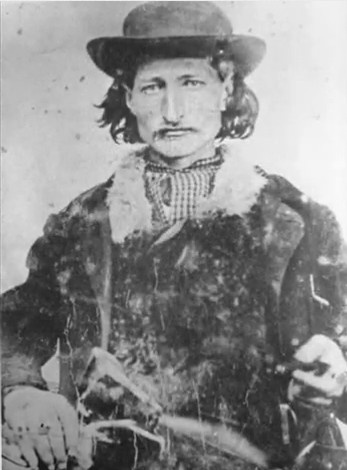
WIld Bill Hickok July 12 was a good day for culture. As I’ve noted before, if history goes on long enough every day on the calendar gets kind of crowded. But here are a few from July 12 that stand out.

First, disco died an ugly death on this day in 1979. Seems two Chicago DJs, one who had recently switched from a station that had dropped rock for an all-disco format, launched a vendetta that culminated in a promotional stunt for a White Sox double-header, a “Disco Demolition” night where they’d blow up a dumpster full of disco records between the two games.

What could go wrong? Plenty. For one thing, offering 98%-off tickets to anyone who brought a disco record, bringing not an extra 5,000 but an extra 25,000 raucous fans plus as many as 40,000 outside the stadium. For another, not collecting the records.

Following the dumpster detonation, fans stormed the field, hurled records, and caused such havoc that the Sox forfeited the second game. Still a small price to pay, I say.

July 12 is also the day, in 1389, Geoffrey Chaucer secured a plum post from the otherwise dismal King Richard II, as chief clerk of the king’s works in Westminster, a job he held while writing the Canterbury Tales.

One more thing. On July 12, 1861, Wild Bill Hickok won his first shootout, against three opponents. Now Hickok was a kind of classic Wild West character, a drifter, gambler, crook, Civil War veteran and lawman. But he also took part in one of the few documented “quick draws” of the sort immortalized in countless Westerns, many of which should themselves have been quietly deposited on Boot Hill.

Evidently in his version the combatants stood side-on, as in a classic pistol duel, took careful aim and fired; this were no Blazing Saddles-style deadly accurate firing of 23 bullets from a single six-shooter in a quarter of a second. But where would the world be without the lightning-draw Western hero, from Clint Eastwood to Michael Landon’s Little Joe on Bonanza?

Incidentally Louis L’Amour insists that there really were a lot of quick draw contests before the West was won. Most, I expect, weren’t as quick as in Hollywood and the combatants were probably often fairly close together. Either way you don’t want it to go on for a long time. But what a cultural icon.

I kind of feel the same way about blowing up a dumpster full of disco records, to be honest.