Posts in It happened today
It happened today - September 13, 2015

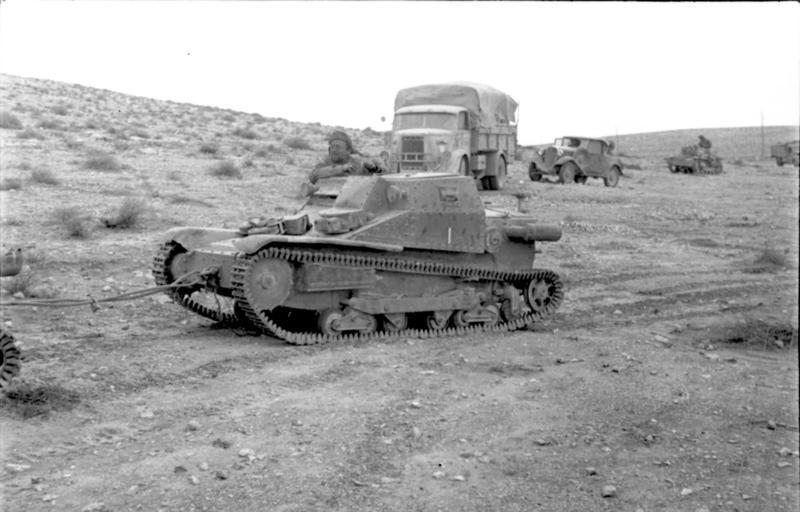
An Italian "tank" It frequently occurs to me that the only reason the open societies did not succumb to their enemies many years ago, and do not manage to do so on almost a weekly basis, is that the bad guys manage to be even dumber than we are. For instance, most of our anti-terror measures are so laughable that our first line of defence and frequently our last is that we are up against guys who can’t blow their legs off with their shoes full of explosive, or give one another one last brotherly hug before martyrdom and set off their own dynamite vests.

Now luck is not a good Plan A. But there’s more than just luck here. There’s also the impenetrable obtuseness of the truly maniacal. Open societies are, as the name suggests, open, including open to criticism. Humans being what they are, the resulting discussions are frequently inane. But at least there are discussions and once in a while people notice that some irritating crank's point of view is actually right while the big shots going bwa bwa bwa are clueless. That doesn’t happen in terrorist organizations, or surly dictatorships.

Case in point: Mussolini deciding to invade Egypt from Libya on September 13, 1940. In the first place, he intended to restore the glory of Rome. Seriously. Nobody dared tell him that having a swaggering bully in charge and timid adversaries in the prewar years did not alter the fact that Italy was now a third-rate power, capable of beating up poor Libya or Ethiopia but not ready for a real fight.

In the second place, Hitler offered help but Mussolini declined because he was hurt that Hitler had rejected his help in the Battle of Britain. One imagines Hitler, a profoundly evil man but no fool, responding with ill-suppressed laughter or perhaps the comment that Germany had enough problems already. It genuinely seems not to have occurred to Mussolini that he needed German help in Africa for precisely the same reason Hitler didn’t want his help in the air over Britain.

In the third place, Mussolini ignored the reminders from Gen. Rodolfo Graziani that Italy’s claims of air superiority in North Africa were just the usual windy propaganda. So the Italians surged in, advanced about 65 miles and then basically sat around until December when the British struck back, drove the Italians out of eastern Libya and captured around 138,000 prisoners. Which is remarkable as the British initially attacked with about 30,000 men, one fifth of the Italian force.

Mussolini evidently felt that if he accepted German help while they declined his with a sneer, he would become a junior partner. What nobody dared tell him is that in fact he was already very junior to Hitler, indeed barely a partner. The result was that the Germans had to send precious troops to North Africa, where they almost captured the Suez Canal, and then invade Yugoslavia in April 1941 to bail out Mussolini’s botched October 1940 invasion of Greece, diverting forces Hitler badly needed for his invasion of the Soviet Union that summer.

Once the fighting started, the open societies rallied magnificently, at every level from Churchill down to privates and corporals. But in the run-up, their performance was so feeble it took a clown like Mussolini not to defeat them.

Fortunately closed societies are reliably demented, vicious and absurd precisely because they are closed and no one can tell the maximum leader he’s really neither.

It happened todayJohn Robson
It happened today - September 12, 2015

Lascaux paintingWas a dog caveman’s best friend? Very possibly. It was certainly a dog that led four French teenagers into a narrow cavern on September 12, 1940, where they discovered the fabled Lascaux Cave and its hauntingly evocative paintings.

There is some dispute, as there will be in such matters, over the precise age of this astounding Paleolithic… well, what shall I call it? Site is a safe word. But bland. Is it a church? A town hall? A temple? Something we cannot name because it combined functions we keep separate?

Anyway, it’s perhaps 17,000 years old and full of stunning paintings, artistically mature, powerful, creative. As Chesterton said (yes, him again) the naïve progressive view of human beings and their thought expects primitive art to be, well, primitive: Clumsy, stupid, off-putting. But the 600 or so paintings and nearly 1,500 engravings at Lascaux, like other such sites including the Chauvet art as much as 30,000 years old showcased in Werner Herzog’s Cave of Forgotten Dreams, are not that way at all. (And reconstructions of at least one ancient flute, from Germany, show that persons of cave had the same fundamental notes and notions of melody as we do; absolute truth rears its disquieting head even in music 400 centuries old.)
Of course the Lascaux art is technologically primitive. There are no digital files to download, no petroleum-based pigments, no printing presses. But it’s all the more remarkable that, nevertheless, the art is so evocative, so vivid, so visually sophisticated, so… alive. Especially to imagine it lit by swaying torchlight, accompanied by chants, rituals, tales and dances, is to feel a wild appeal from that vanished world.

What exactly they are trying to say we cannot tell. The hands that made them, and the tongues that told their tales, are long crumbled to dust. But they are trying to say something, and if we could decipher it we feel that we would understand and sympathize. Possibly animal-based cults that reflect man’s eternal yearning for something beyond this world and eternal conviction that something greater exists. Possibly a celebration of a community, its achievements and its members. Possibly the stories that bind the community together.

It is hard to tell. We don’t know when the paintings were done, whether they were added to slowly and carefully in a more or less continuous process or in sporadic bursts, whether they all reflect the same basic beliefs and habits or wildly different ones.

What we do know, as we stare in amazement and awe, is that people like ourselves did something there we should have been proud to do if we could have managed it.

P.S. Human intrusion into the caves has jeopardized the art, including fungus possibly caused by conservation efforts. We may not be that much wiser than our ancestors after all. But at least we still love our dogs.

It happened todayJohn Robson
It happened today - September 11, 2015

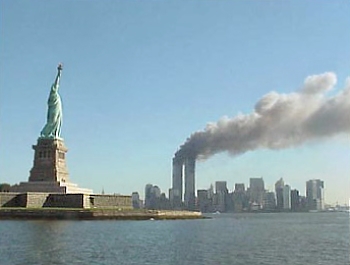
9/11If I have to tell you what happened on September 11 I fear you have not been paying attention. I realize if you hang around long enough days that will live forever in infamy tend to pile up all over the calendar. But it’s no excuse for not being alert.

Especially because other people are. When I lecture on American history, and in my view a proper modern history course gets to the present day so I certainly include George W. Bush as he fades in the rear-view mirror, I mention to my students that September 11 was a day worth watching.

Would you like a list of reasons why? Oh good. I was hoping you would.

Well, on September 11, 1941, the ground-breaking ceremony took place for the Pentagon, one of the targets on 9/11. On September 11, 1922, the British High Commissioner and Commander in Chief for Palestine, under the League of Nations mandate, took their oaths of office. On September 11 1990, George Bush Sr. proclaimed a “New World Order”. And for what it’s worth, in 1991 the UN declared September 11 an annual International Day of Peace. (Other even less noteworthy anniversaries include Canada’s first hijacking, in 1968, of a plane to Cuba, which failed; German bombs hitting Buckingham Palace in 1940; and Salvador Allende being overthrown and killed.)

It’s also almost the date when the King of Poland, Jan III Sobieski, broke the siege of Vienna in 1683; in fact his troops arrived on the high ground over the city that day, and while skirmishing began on the 11th the main battle and decisive victory were on the 12th. (Can I just mention that Louis XIV tried very hard to keep Sobieski from rescuing Vienna?)

Now of course you can’t guard against everything or you guard against nothing. On the other hand, unlike the average American, the planners of 9/11 were aware of these things – and for whom the long sweep of history was part of every day, whereas if I asked my students about the siege of Vienna I doubt four in a hundred would know the year, let alone that it was the high water mark of a long, determined Ottoman jihad against infidel Europe.

Osama bin Laden knew these things and was still bitter. In a famous video he spoke of 9/11 happening “after 80 years” which may have been a reference to the British in Palestine. And he was certainly still steaming about the expulsion of Muslim conquerors from Spain in 1492 to his dying day.

So yes, you can’t pay attention to everything. But when your enemies are, you’d better be paying at least some attention to some things. There are no vacations from history and the bad guys aren’t looking for one.

As we discovered on September 11, 2001 and, I hope, still remember.

It happened todayJohn Robson
It happened today - September 10, 2015

Well, that didn’t take long. On September 10 of 1897 mankind crowned the achievement of inventing the automobile with the first ever drunk driving charge. A London cab driver who told police his name was “George Smith” (yeah, sure, buddy, but it actually was) slammed into a building in, progressives please note, an electric car.

He owned up and was fined 25 shillings, a large sum in those days. There weren’t reliable chemical tests for breath alcohol yet but the old red eyes, slurred speech, difficulty standing and bad driving apparently did the trick. Or even a guilty conscience.

It’s interesting that there don’t seem to have been similar laws against riding a horse drunk, though that too can be dangerous. Indeed, it wasn’t until 1910 that the first U.S. state got around to banning driving drunk, New York, followed quickly by California.

In those days technology hadn’t yet brought the scientifically reliable tests for intoxication it had already made necessary. (Even the 1936 “drunkometer” was apparently not as reliable as the modern “Breathalyzer” though it sure had a better name.) But it would, it would have to, as the human race swerved erratically toward the stars.

It happened todayJohn Robson
It happened today - September 9, 2015

Esther ClevelandOn September 9th of 1891 Esther Cleveland didn’t change history. Which one can hardly hold against her as she was just a baby. A newborn, in fact, the first and thus far only child born in the White House to a sitting president.

Doubtless her life was interesting to her, including her marriage in Westminster Abbey to a member of the Coldstream Guards. And she certainly saw a lot change in her long life, which ended in June 1980 as Ronald Reagan was closing in on the White House her father is the only man to have occupied for two non-consecutive terms. But what makes her interesting to me historically, and makes her father interesting, is the unusual circumstances of his family life.

Cleveland is of course part of the dreadfully boring procession of late 19th-century Presidents only specialists can even name, whose pictures could put you to sleep before you even heard them speak. Even I can’t remember his Vice-Presidents.* Yet Cleveland was dogged by scandal on his first presidential campaign in 1884 because he had allegedly fathered an illegitimate child. (The Republican chant “Ma, Ma, where’s my Pa? Off to the White House Ha Ha Ha” indicates that while idiotic, modern political rhetoric is not necessarily worse than at other times in the past.)

Among those alleging it was Cleveland himself. He admitted to paying child support a decade earlier to one Maria Crofts Halpin. I don’t think it makes things better that Halpin was “involved” with several men, and Cleveland took responsibility because he was the only unmarried one and it could have been him. Not quite your grandfather’s late 19th century, is it?

Despite this ruckus, Cleveland was elected on a platform of honesty. And he was fairly honest about the scandal although the child, named Oscar Folsom Cleveland, may well actually have been the child of Cleveland’s law partner, one Oscar Folsom. Meanwhile the Republicans were tainted by the stench of corruption; the Democrats counter-chant in 1884 was “Blaine, Blaine, James G. Blaine, continental liar from the State of Maine” ending with a resounding “Burn this letter,” a phrase Blaine had foolishly written on a letter he had foolishly written to railroads with which he had an unsavory relationship as a legislator and Speaker of the House of Representatives.

Yes, yes, you say, but what of poor Esther, waiting to be born?

Well, Cleveland was still a bachelor when he entered the White House. But romance soon blossomed, with a woman 28 years his junior. The daughter of Oscar Folsom, in fact. Cleveland had apparently bought her first baby carriage and, after Folsom himself died, had been the executor of his estate and had supervised Frances Folsom’s upbringing. So it was a bit odd that he married her in the White House midway through his first term, making her the youngest First Lady in U.S. history.

Voters didn’t care. Cleveland lost in 1888 despite winning the popular vote, possibly a victim of electoral fraud in Indiana. (Mind you on that score the Democrats probably gave as good as they got.) But he would be back, as Frances herself predicted when she told a staff member to take good care of the furniture and not move it about because they wanted to find it where they had left it in four years; Cleveland won again in 1892. Along the way he and Frances had five children. And Frances Folsom Cleveland was very popular as a charming and elegant First Lady.

You might think people were hopelessly stuffy, strait-laced and judgmental back in the 1880s and 1890s. Certainly Cleveland’s staunch adherence to the principles of limited government would raise eyebrows today even in the Republican Party, let alone among Democrats. But the oddities of his personal life were no impediment to his enormous public success.

As a footnote, when I say Esther Cleveland was “born in the White House” I don’t just mean she was born while her father was President. She was literally born there. People didn’t use to be born in hospitals. In fact the first U.S. President who was, Jimmy Carter, was born when Esther Cleveland was already 33 years old.

* OK, I Googled; in his first term it was Thomas Hendricks, who died less than a year in; in his second it was Adlai Stevenson I, grandfather of the guy who couldn’t beat Eisenhower.

It happened todayJohn Robson
It happened today - September 8, 2015

WWI propagandaOn September 8, 1915, a Zeppelin piloted by the famous Heinrich Mathy struck central London with incendiary bombs, killing 22 and doing half a million dollars’ worth of damage in the resulting fire.

It seems somehow ludicrous. Zeppelins were so big, clumsy, slow and vulnerable, their large seize and massive steel frames making it necessary to levitate them with highly flammable hydrogen. The idea that sending one to chuck firebombs out a hatch might dramatically affect the course of a world war is hard to take seriously.

They nevertheless created great consternation in Britain with raids beginning on May 31, 1915. But after a year they had only killed 550 people, which is a lot if you’re one of them I suppose but hardly significant given the carnage on the Somme and elsewhere. Once the British began using a mix of incendiary and explosive ammunition the Zeppelins were increasingly vulnerable; Mathy himself died when his new ship, L31, was shot down on the night of October 1-2, 1916.

Yet somehow people could not shake off the notion that technology would one day let them rain death from the skies, crush civilian morale, and win wars on the cheap.

In fact a significant contribution to the pacifism of the 1930s was the belief that aerial bombardment would make future wars unbelievably bloody on the home front. As future Conservative Prime Minister Stanley Baldwin put it to the British House of Commons on November 10, 1932 (and oddly, this was calling for rearmament, “I think it is well also for the man in the street to realise that there is no power on earth that can protect him from being bombed. Whatever people may tell him, the bomber will always get through. The only defence is in offence, which means that you have to kill more women and children more quickly than the enemy if you want to save yourselves...”

In 1939, the justly famous British military theorist Basil Liddell Hart said a quarter of a million Britons could be killed or wounded from the air in the first week of a European war. In fact the entire “Blitz” from September 1940 through May 1941 claimed fewer casualties; Hermann Goering was revealed as a pompous as well as murderous ass as his invincible air armada was beaten and driven off. But Liddell Hart was far from alone in the 1930s; even Churchill had warned Parliament in 1934 that sustained bombing of London would force three to four million people to flee the city.

Despite the failure of “strategic” bombing to live up to its billing, it remained popular. Surely the next time it would work. Thus following the Nazi Blitz the Allies unleashed endless attacks on Germany, designed to destroy war industry and crush morale. They did neither. So while I have no problem with them on moral grounds, they seem to me to have been of limited strategic use. The most that can be said for them, and it is not trivial by any means, is that the RAF’s night raids and the U.S. 8th Air Force’s daytime bombing diverted considerable resources, including both planes and the dreaded all-purpose German “88s”, away from the Eastern and later also the Normandy fronts.

Of course on August 6 and 9, 1945, strategic bombing finally did was it was meant to, finishing off Japan. And while Japan was on the ropes by that point anyway, I think it is fair to say that the atomic bombs did shorten the war and save lives and that even if Japan had retained far more conventional strength such an attack if sustained would rapidly have forced surrender. (The U.S. did not have more bombs ready but could have made them, and 10 such attacks with the prospect of more to follow, would surely have broken any adversary.)

So the world went from lone Zeppelins dropping scattered incendiary bombs to fleets of bombers pounding rubble to atomic warfare in just 3 decades. They call that progress. And now we’re trying to win wars from Iraq to Afghanistan primarily on air power, without terror bombing, and it’s not working. They call that further progress.

In retrospect, if Mathy’s Zeppelin seems both pathetic and ominous, it rather set the tone for bombing in the future.

It happened todayJohn Robson
It happened today - September 7, 2015

Buy a Riker - 1900 adThen there’s the electric car, vehicle of the future, which first showed its true potential on September 7 of, um, oh my, 1896, when it won the first auto race ever held in the United States, at a mile-long dirt Narragansett Trotting Park in Cranston, Rhode Island.

The race was a huge hit, as people eagerly cheered on the various strange contraptions lurching round the track including steam-powered ones. Well, why not? It was the industry standard, powering the locomotives and paddle-wheelers and ocean-going freighters and liners that had Victorians gaga about the “wonders of the steam age.”

The first ever steam car thundered through the streets of Paris back in 1770 at a death-defying two miles an hour. And by 1906 the famous Stanley Steamer would hit 127 miles an hour. Though steam cars had a disconcerting habit of breaking down or blowing up, which consumers especially disliked.

As for electric cars, well, they sure started strong. The Riker Electric Motor Company’s car came first at Narragansett Trotting Park, and the other battery-powered car came second, before some 60,000 spellbound spectators. It’s worth bearing in mind as electric cars become all the rage again, and especially given the kind of conspiracy theories that swirl around alternate energy and other technologies supposedly suppressed by the big corporations.

Don’t believe conspiracy theories. If electric cars had worked better, they’d have been the foundation of the big corporations and gas would be a sideline whose enthusiasts would be muttering about monopolies crushing innovation. But the fact is petroleum distillates were a superior way of powering the horseless carriage and prevailed in open competition. At one point a third of all cars on U.S. roads were electric but gas engines kept getting better in a way that batteries just didn’t.

Of course technology can form a cul-de-sac. The excellence of gasoline as a fuel might have led us all into an environmentally and economically unsustainable system. But if so, fear not as long as human ingenuity is allowed to find alternatives. Fear only if government won’t let it.

If the state had been in charge in 1896, they’d almost certainly have mandated steam-powered cars, and we’d be filling up with coal every couple of dozen miles and waiting half an hour for the boiler to get hot enough to get moving.

The day of the electric car may yet come. But it’s been a long time getting here considering how fast it went in 1896.

It happened todayJohn Robson
It happened today - September 6, 2015

Little Willie - early designDo not laugh at technology. Well, don’t only laugh. I say this because today is the 100th anniversary of the very first tank coming off an assembly line in England. It’s surprising that “Little Willie” even got out of the factory, as it was heavy, underpowered, slow and clumsy. But tanks sure got going in a hurry. You might not think so looking at pictures of tanks with weird extra wheels stuck in the mud of the Somme or Passchendaele as part of the World-War-One-Was-Fought-By-Callous-Idiots narrative. But in fact the tank was a rational response to the trench stalemate and one that was recognized in the very first year of the war by British military leaders including then navy minister Winston Churchill.

It took a while, if you’re impatient. The second prototype, “Big Willie,” went into battle on Sept. 15, 1916, and it too broke down and got stuck in the mud. But by November 1917 at Cambrai the Mark IV tank created a breakthrough the rest of the army wasn’t ready to exploit. And by 1918, as you can see in footage from the period, the war of movement that concluded the Great War featured tanks racing about making a real difference.

Then came World War II. The Allies got complacent with the tactics and doctrines that had won them the victory in 1918, when Germans including men like Rommel who’d been at Verdun were hard at work refining mechanized warfare. And in the spring of 1940 the Germans swept to the Channel and to Paris in tanks vastly superior to anything dreamed of in 1918 but vastly inferior to the Tigers and T-34s that would clash at Kursk and elsewhere. (It’s disconcerting to visit the Canadian War Museum and see, in its splendid collection, the Mark II tanks that formed Rommel’s spearheads in 1940 in France because they look like lightly armoured toys.)

Then of course came the big battle tanks of the Cold War clash that never came, the T-72s and Leopards and Abrams, updated versions of which are still in service today.

Perhaps the day of the tank is gone. Technology changes so fast these days that smaller, unmanned, high-tech devices may be sending these behemoths the way of the battleship and, before that, the armoured knight. But it’s amazing to see how fast laughable Little Willy became the terror of the battlefield. And sobering as we wonder what Terminators today’s headless cheetah robots and drones may mutate into faster than you can say “Fall of France.”

It happened todayJohn Robson