Posts in It happened today
It happened today - September 21, 2015

Benedict Arnold Generally it’s nice to have something named after you. But there are exceptions, as Benedict Arnold could testify if he were with us today. For on September 21, 1780, he made himself forever a byword for treason by promising to hand over West Point, then an important fort, to the British in return for a pile of cash and a high military post. It was squalid, ignominious and horribly timed.

Arnold was actually a distinguished American general, with a better won-lost score than Washington in individual battles. But he felt unappreciated including over slow promotion, egged on by his second wife, a conniving spendthrift and a Loyalist if not actually a spy. Ultimately they entered into treasonous correspondence with Maj. John Andre, who was exposed and hanged as a spy, manifesting a frank courage that many felt contrasted sharply with Arnold’s own behaviour.

His treason shocked the nation and promoted the witty suggestion that the United States erect a statue to his leg, mangled though not actually lost in service before he turned his coat. And the British were not terribly impressed with him.

Even if Arnold’s plot to hand over West Point had succeeded it probably wouldn’t have mattered. Washington’s plan was to outlast the British, not to contest key points and risk crushing defeat in the field. And while Arnold did command British troops in the war, they were of course ultimately defeated and he went to Britain where he died, a bitter man, in 1801.

And for what? He didn’t even get all the money the British promised him, which is fair enough since he didn’t manage to hand over the fort. He left the winning side for a paltry reward and lasting ignominy. As plots go this one was a big loser.

His only consolation, for what it’s worth, is that his is overshadowed in the annals of treason by that of Judas. He’s at best second in the all-time cheap traitors list.

It’s not much consolation.

It happened todayJohn Robson
It happened today - September 20, 2015

Paraphernalia for the matchSeptember 20 is supposedly a red-letter day for women’s equality because on this date in 1973 Billie Jean King beat Bobby Riggs at tennis. Well, something sort of like tennis. But I’ve always thought the whole spectacle was bogus and whoever builds on falsehood builds on sand.

I say it was bogus because at the time, King was 29 and at the top of her game while Riggs was 55 and retired for decades. (Despite the popular legend, however, the rules were standard tennis rules, unlike a later Jimmy Connors/Martina Navratilova match that favoured the female athlete). And nobody really thinks, or thought then, that a match between a current top male and female player on equal terms would end in anything but bitter humiliation. Indeed, just months earlier, Riggs had beaten the top-ranked woman in the world, 30-year-old Margaret Court, in straight sets, 6-2 and 6-1.

The King-Riggs match was nevertheless a huge public event, held at the Houston Astrodome with the contestants making entries more suited to pro wrestling and watched by 50 million people worldwide on TV. And King beat Riggs, who hadn’t even practised, in straight sets. But she refused a rematch even though the original contract had provided for one. And wisely.

In 1992 Jimmy Connors, then 40, took on Martina Navratilova, 35, with rules that favoured her… and won easily, 7-5 and 6-2. And nobody has staged similar spectacles in other sports, let alone suggested allowing men to compete with women in elite female events from golf to hockey.

Why not? After all didn’t King prove that women could beat men at their own game?

Of course not. In fact she proved the opposite, especially by refusing a rematch against a man who’d won titles before World War II as the Vietnam War wound down. She knew perfectly well what would happen. And imagine putting a 55-year-old former women’s champ on the court against a 29-year-old top male player. No, actually. Don’t. It would be disgraceful.

Don’t get me wrong. I’m glad women’s athletics is now higher-profile and more rewarding. Indeed, in sports from tennis to golf I think that as the equipment continues to evolve the women are playing a more interesting game more like the original than men with their 240 km/h serves and 300 yard drives that are overwhelming the world’s great golf courses. And of course even in my “prime” I was no match for top female athletes in any field of human endeavor. But the fact remains that King’s triumph was a show trial of sexism, not a fair contest.

In 2006, former great male tennis player and decorum-shattering brat John McEnroe called King “the single most important person in the history of women’s sports.” I’d be sorry if that were true. Does anyone doubt the result if a male and female player of equal distinction and comparable age, for instance, Jimmy Connors and Chris Evert, had played a genuinely competitive match under standard rules at any time in their lives?

King had a great career, of course, and did help elevate women’s sport. But the thing for which she will always be most famous was a bogus spectacle. Women athletes deserve better. And so does Billie Jean King.

It happened todayJohn Robson
It happened today - September 19, 2015

Khrushchev, Dwight Eisenhower and their wives at a state dinner in 1959 What happens when Mickey Mouse meets Communism? Sadly, we’ll never know, because on September 19 of 1959 while visiting the United States Nikita Khrushchev was told he could not visit Disneyland.

The Soviet leader threw a characteristically engaging yet childish fit. Already stung by the President of 20th Century Fox taunting him over his promise to “bury” capitalism, which prompted him to rattle his rockets publicly, when told he couldn’t go for security reasons he exploded that “I would very much like to go and see Disneyland. But then, we cannot guarantee your security, they say. Then what must I do? Commit suicide? What is it? Is there an epidemic of cholera there or something? Or have gangsters taken hold of the place that can destroy me?”

All good questions. But he should have put them to his own security detail, because it was they rather than Disneyland or the American authorities who put the kibosh on the visit.

What strikes me as most significant about the episode, and in many ways the most charming, is that Khrushchev wanted to go. It’s part of the “World Revolution of Westernization,” to use Theodore von Laue’s phrase and book title. The cultural dynamism of the open societies produces an amazing range of things, from the trivial to the revolting to the delightful, in ways no one else can match.

The U.S.S.R never produced anything like Disneyland and would not have even if it had triumphed in the Cold War and lasted centuries. Concreteland and Gulagworld yes. Disneyland no. And Khrushchev had the decency to see that there was something wonderful there and to want to go even though the optics would have been highly embarrassing. He was also thrilled to have met Hollywood stars from Shirley MacLaine to Frank Sinatra and wasn’t ashamed to show it. And to his credit he got over his Disney snit and went on to have a civilized, if unproductive, meeting with Eisenhower.

There was a dark side to Khrushchev. He rose to power under Stalin, took a leading organizational role in horrible atrocities and was praised in that era as a “brass-hard Stalinist”. He could be a blustering bully, an impulsive adventurer and worse. But he was also the prime mover behind deStalinization and a curious and reflective man who, even visiting the West as the coddled and isolated leader of the Soviet state, recognized that it was not as the propaganda he’d been hearing all his life indicated.

After he was overthrown in 1964, and allowed to live, a fitting reward for his relaxation of Stalinism while in power, he dictated a frequently thoughtful, sometimes sensitive and generally honest memoir that eventually made its way to the West. Including his comment, on the ban on emigration he himself had ordered the Berlin Wall built to enforce, that “I think the time has come to give every Soviet citizen that choice. If he wants to leave our country and live somewhere else for a while, alright, we should give him that opportunity. It’s incredible to me that after 50 years of Soviet power, paradise should be kept under lock and key.”

For all his sins and mistakes, I believe he was at bottom a decent man. So I’m sorry he didn’t get to see Disneyland. I think he would have liked it, for all the right reasons.

It happened todayJohn Robson
It happened today - September 18, 2015

The rabbit that attacked Jimmy Carter Here’s one from the X Files, sort of. On September 18, 1973, future President Jimmy Carter filed a UFO report with the National Investigations Committee on Aerial Phenomena. He’s the only President who ever thought he saw a flying saucer. And he would be.

Campaigning for President in 1976, he was quite open about this October 1969 incident. He was waiting outside a Lion’s Club meeting in rural Georgia in the early evening when he saw “the darndest thing I’ve ever seen”, a bright, multicoloured object hovering about the horizon, about the size of the moon. And afterward, he told a journalist, he swore never again to mock anyone who claimed to have seen a UFO.

Fortunately I’ve made no such promise. So har har har. Hoo hah. Har-de-har-har. What a chump. Of course it was the 1970s, when people were into ludicrous things like astrology and pyramid power and this kind of mushy receptivity to bogus alternative cosmologies was thought a sign of open- rather than feeble-mindedness. Remember Chariots of the Gods and all that nonsense? But being a creature of one’s times is not a get-out-of-ridicule-free card and, as a prominent public figure, Carter contributed to the Zeitgeist as well as reflecting and being shaped by it.

Indeed, during the election Carter promised if elected to push for the release of “every piece of information” the government had about UFOs. Once elected, he broke this promise (that’s politicians for you) citing national security. Which wasn’t as silly as it sounds. Carter wasn’t hiding space rays for use against invading aliens, but the fact that UFO sightings were at least sometimes people spotting classified Department of Defence tests and other times investigations used classified radar and other data.

The sighting itself was, though. It is of a piece with Carter being the only president ever attacked by a rabbit, and with being just generally a ridiculous person. I know he is now old and has health problems and I’m not going after him because of that. I’m going after him because he was a sanctimonious prat, a bad president, a bitter ex-president who badmouthed his successors abroad and at home, and a generally feeble character endowed with endless conceit but thoroughly lacking in judgement in everything from relations with the Soviet Union to things changing colour in the sky.

Incidentally NICAP went out of business the same year Carter was defeated by Reagan. Neither was missed.

It happened todayJohn Robson
It happened today - September 17, 2015

President Lyndon B. Johnson driving an AmphicarIn case you’ve forgotten, September 17 of 1965 saw the triumphant arrival of two “Amphicars” at the Frankfurt Motor Show, having crossed the English Channel in about seven hours. Ah yes. Amphibious cars. The only model ever mass produced. Where are they now?

When we survey the magnificent march of progress we go from one brilliant invention to another, from waterproof cement to stirrups to windmills to steam engines to computer chips to karaoke machines, sometimes savouring the improbable connections between one great discovery and another. But it’s important to remember that for every technology that struggled from those comic clips of early airplanes crashing, collapsing, failing even to get off the ground before crumpling into it, the “hopeful monsters” of human ingenuity, there are countless things that inspired enthusiasm without ever getting anywhere.

Oh sure, you may say, the Amphicar was just one more product of the 1960s, an era that thought it would be cool to have pant-legs be really wide at the bottom, button jackets to the neck and let George Lazenby play James Bond tongue-in-cheek. But for all its follies, the decade saw some serious advances in both good and bad directions. The Amphicar is not so much a period piece as a lasting monument to the human habit of creating solutions to which no problem could be found as well as the reverse.

The Amphicar, for those of you who are not enthusiasts, was in production from 1961 to 1968 and nearly 4000 of these convertibles were produced, in four colours (Beach White, Regatta Red, Lagoon Blue, and Fjord Green) and powered, if that’s the word I’m looking for here, by a four-cylinder 43-horsepower rear British engine. Yes, I said convertible; just what you want while driving a car into the choppy English Channel is a soft retractable roof. That perhaps can be put down to the 1960s.

Evidently the manufacturers, Quandt, called it the “770” because of a basically unproven theory that it could go 70 mph on land and 7 in the water, though one owner opined that it did neither, holding instead the dubious distinction of being “the fastest car on the water and the fastest boat on the road.”

It was fairly rugged though. At least judging from the fact that when one of the two cars crossing the Channel from Dover in 1965 got a flooded engine the other was able to tow it the rest of the way to Calais. Unfortunately it wasn’t very environmentally sound. Most Amphicars, about ¾, were sold to Americans and when it couldn’t meet strict new pollution standards in the U.S. it went out of production.

Incredibly, enthusiasts have kept several hundred of the things on the road, or river, to this day. It is however one of those occasions when “They just don’t build them like they used to” is praise not blame. But don’t worry. The human race, between nude selfies, is eagerly at work on countless other things that are every bit as ingenious and pointless as a Lagoon Blue Amphicar.

It happened todayJohn Robson
It happened today - September 16, 2015

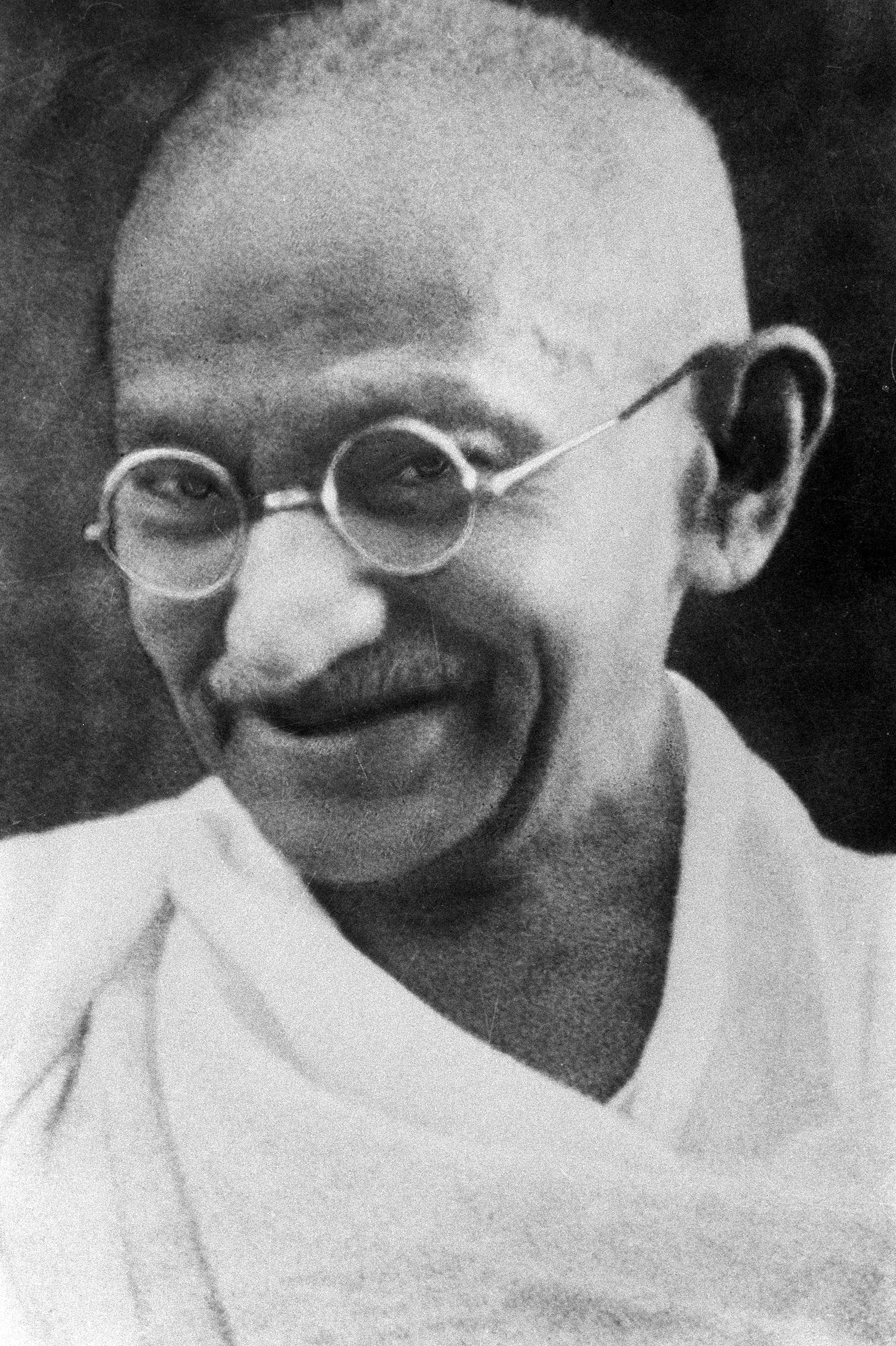
GhandiOn September 16, 1932, Mohandas K. “Mahatma” Gandhi, already in jail, began a hunger strike against the British decision to create separate political representation for “untouchable” outcastes. To me it embodies everything that is most admirable and most annoying about Gandhi simultaneously.

To start with the admirable, Gandhi was utterly opposed to discrimination against untouchables or anyone else, whether it was social or legal. He was an absolutist for rights. Moreover, he had a genius for organization, a gift for PR and a commitment to non-violence.

Now to the annoying. As purists do if they are not careful, Gandhi lacked any sense of proportion. The reason the British were bringing in this measure was not to treat untouchables separately and worse as, for instance, segregation in the United States was meant to do. Rather, it was to make sure they did have a political voice in a society that treated them miserably. In taking his stand, Gandhi rather ignored the nastiness of too many of his countrymen or brushed it aside as trivial.

Moreover, he never seemed to grasp the fact that his methods only worked because the British were, more generally, extraordinarily benevolent colonial masters, who were concerned with the rights of all Indians rather than, as the Japanese or Germans showed themselves as colonizers, contemptuous of them all. Non-violence would have succumbed quickly to the machine-guns of either of those powers. And Britain was willing to grant self-government to India but slowly because of concerns about the sudden coming of political liberty to people unused to it.

In the Second World War, Gandhi did not grasp how important British victory was to the ultimate success of his campaign for self-government in India, or the trouble that would arise trying to contain sectarian violence when the Raj ended. And he did not understand how deeply rooted prejudices of all kinds were among Indians, how indeed the British were on the whole far more enlightened on such matters ethnic, religious and class/caste based.

For all that, Gandhi did set a standard that, while inflexible and unrealistic was inspiring. Indeed, to some extent it was inspiring precisely for those reasons. And he meant what he said and lived it himself. He was, in short, admirable and annoying not by turns but simultaneously and for the same ideas and habits not conflicting ones.

That India is today a functioning, if rambunctious, democracy is a tribute to both Gandhi and his British opponents.

It happened todayJohn Robson
It happened today - September 15, 2015

On September 15, 1963, a homemade bomb exploded during Sunday morning services at 16th Street Baptist Church in Birmingham, Alabama, killing four young girls. It was a turning point in the civil rights struggle. And how could it not be?

Fifteen sticks of dynamite were planted in the basement by bigots furious at a recent federal order to integrate the Alabama school system. It was the third church bombing in Birmingham in the 11 days since that order, and the target was chosen because it was not merely a major black church but also a meeting place for civil rights leaders including Martin Luther King Jr. And the bomb “worked” in the sense of exploding, killing people, and spreading shock and fear. But it failed dramatically, and as far as I can see was bound to, because it was so transparently evil. Especially when and where it was carried out, its evil was utterly and unmistakably transparent.

Alabama was then a leader of resistance to civil rights under governor George Wallace, who later ran for president, in 1968, on a thinly veiled white supremacy ticket. But it was also a profoundly Christian state. And once four moronic Klansmen framed the issue of civil rights as “Would Jesus side with people blowing up kids in church or with the kids?” it was essentially over.

That’s not to say that the bombing immediately changed the most hardened of hearts. Indeed, when thousands of protesters assembled at the scene of the murders, Governor Wallace sent police and state troopers to disperse them. And that night two black adult males were killed, one by police and one by vigilantes. But world attention focused on the incident and despite bluster and screeching, in their hearts people knew the act was indefensible. So if it made sense in the context of white supremacy, it too must be indefensible.

It is fashionable to say that little or nothing has changed on race in the United States. I consider this a snide, mean-spirited counsel of despair. Yes, it should not have been necessary in the 1960s because it should have changed centuries earlier. But in the 1960s it really did change (and to be fair, white churches in the South were among the first to change, many in the 1950s).

To be sure, it changed slowly. The aftermath of this bombing and other such acts of brutality was the Civil Rights Act of 1964, the Voting Rights Act of 1965 and, more importantly, a change in hearts and minds. But prosecution of the guilty parties was obstructed at many levels including by FBI chief J. Edgar Hoover. The last conviction came in 2002, 39 years after the fact, and to some extent justice delayed is always justice denied. But in a larger sense, the justice that flowed from this horror was in the changing of hearts and minds.

Including that of George Wallace, who survived a crazed, apolitical assassination attempt in 1972 but was paralyzed from the waist down. He had already declared in 1972 that he no longer supported segregation and after experiencing an evangelical conversion in the late 1970s he repudiated segregation and bigotry and was re-elected Alabama governor in 1982 with substantial black support.

Nothing can bring back those four murdered girls, whose names were Addie Mae Collins, Carol Denise McNair, Carole Robertson and Cynthia Wesley. The lives they might have led, the things they might have done, the children and grandchildren they might have had all vanished in an instant in that deadly blast. And yes, there is still hatred and racist violence today. But the racial landscape in the United States has been transformed.

Once Americans saw segregation and bigotry as evil, they turned against them as fully as humans ever manage to turn against evil. And that wicked, stupid bombing of 16th Street Baptist Church on September 15, 1963 was a significant landmark in their voyage away from that tormented part of their past and their culture.

It happened todayJohn Robson
It happened today - September 14, 2015

Laika, the first dog in space On September 14, 1959, the Soviets won the race to the moon. Much good it did them.

I know, I know, Neil Armstrong was the first man on the moon on July 20, 1969. But the Soviets managed to crash-land a flag there nearly a decade earlier and just two years after they shocked the world by launching the first satellite, Sputnik, on October 4, 1957.

Now arguably Sputnik itself wasn’t very impressive. But that’s how it always starts: very small. And the key thing about Sputnik in the short run was that if the Soviets could put up satellite with big rockets, those same rockets could carry hydrogen bombs up and release it far above any possible interceptor after a short boost phase, from which point they would drop unstoppably onto American cities.

The key thing about Sputnik in the long run was that it made people think the U.S.S.R. was getting ahead of the United States technologically, scientifically, educationally and in being cool. This was greeted with thunderous enthusiasm in much of the world and with panicky disbelief in the U.S. It helped elect John Kennedy in 1960 on a pledge to “get this nation moving again” as if the U.S. had been sitting on its duff since Pearl Harbor (which denied Nixon the presidency in 1960 which left him free to pursue it in 1968 which led to Watergate… but I digress).

Kennedy of course pledged to put a man on the moon within a decade which the U.S. did and then brought him back alive, something I have trouble believing the Soviets could have achieved even if they’d somehow got him there. Remember, they did put the first dog into space without any plan for getting her back, a stray they’d nabbed on the streets of Moscow with a Hey-you’re-going-to-be-famous-and-dead sort of pitch, and then managed to kill her accidentally, probably by overheating, even sooner than they’d meant to. Even the Vogons were more organized than that; when they planned to throw you out of an airlock to die, out you went on schedule.

Kennedy also promised to close the non-existent missile gap with Khrushchev’s Soviet Union and, after getting elected and learning definitively that there was no missile gap, went ahead with a massive American missile deployment anyway. Not my favourite president. But I digress again.

The point is, even after spotting the Soviets a significant lead, the United States overtook them so fast they got space dust in their gaping mouths, then denied they even had a manned moon program. The U.S. eventually got bored with the moon and had Gene Cernan turn out the lights when he left. The Soviets never even got anyone there.

All they did was crash a rocket into it on their sixth try, destroying the flag it was carrying. Which is, again, exactly what you’d expect from them.

It happened todayJohn Robson