 It feels like something from a vanished era in all kinds of ways. On September 29, 1829, Home Secretary Sir Robert Peel’s metropolitan London police force began operation.
First, it’s hard now to imagine not having an official municipal police force. And by 1829 the older decentralized and more citizen-based system, with some police, some militia and some informal “watches” was having trouble coping with the vast metropolis the industrial revolution had created.
Second, it’s hard now to imagine there being any issue over such matters as blue uniforms and organizational structure. But Peel believed that it was important that the police force should be clearly seen to be an extension of the public and accountable to them, not a military or paramilitary outfit. Hence the uniforms were blue instead of standard military red, there were no military ranks other than sergeant, and the “Peelers” or “Bobbies” carried no weapons beyond a truncheon and a rattle to summon assistance.
Third, the moral authority of established order was such that, while the Bobbies did have weapons for exceptional circumstances, generation after generation of these was retired to museums with very little use. For instance, flintlock pistols were replaced by revolvers in the 1860s but not until 1887 did a constable fire a revolver in the course of duty… to warn people of a fire. And this in a populace then enjoying the right to bear arms and frequently bearing them.
Fourth, as has often been noted of late, nine principles were incorporated into the “General Instructions” issued to every new officer from 1829 on. Peel helped devise them but was not apparently the author of the formal list. But consider that it includes such core constitutional notions as “To maintain at all times a relationship with the public that gives reality to the historic tradition that the police are the public and that the public are the police, the police being only members of the public who are paid to give full-time attention to duties which are incumbent on every citizen in the interests of community welfare and existence.” And to remember always that they are part of the executive branch of government. And such advanced “criminological” insights as “To recognise always that the test of police efficiency is the absence of crime and disorder, and not the visible evidence of police action in dealing with them.”
I have enormous sympathy for the police, who perform a difficult and dangerous job in an increasingly unruly and self-absorbed society. But when I look at today’s police, in their scary black SWAT outfits, or hear them involve themselves in politics via their unions, or witness the deliberate seizure of firearms from law-abiding citizens’ homes in High River, or see them acting as armed social workers who treat self-defence as a menace to decency, I fear that they have forgotten that they are the public and the public are the police.
It may be time to refound the Bobbies on those principles from a sadly vanished era.
 What if? What if? Some say such historical questions cannot even be asked, let alone answered. I reply that if we cannot say what would have happened if some event had gone otherwise, we cannot speak intelligibly of causation, separate the essential from the trivial. So what if Henry Tandey had shot Hitler?
 One hundred years ago today Rudyard Kipling’s only son, Lt. John Kipling, was killed in the bloody Battle of Loos in northeastern France weeks after his 18th birthday. He was just one of thousands killed there, indeed just one of thousands killed at Loos whose bodies were not recovered, “A soldier of the Great War known unto God”. And yet his death has a special poignancy.
 It is, I suppose, always a dubious honor to be the first person killed in virtually any way or for any reason, even a noble cause. It certainly is in the case of Lt. Col. Peter Dewey, who on September 26 1945 became the first American killed in the Vietnam War.
 It’s now been exactly 10 years since the IRA officially disarmed in front of independent weapons inspectors on September 25 2005. Which strikes me as one more case of digging in the wrong place.
 On your list of things that didn’t make that day’s headlines, consider the authorities driving out a trouble-maker whose own family had stopped protecting him. The year was 622… or 1, depending how you’re counting. Because the location was the Arabian peninsula and the person was a middle-aged merchant turned monotheistic preacher named Muhammad.
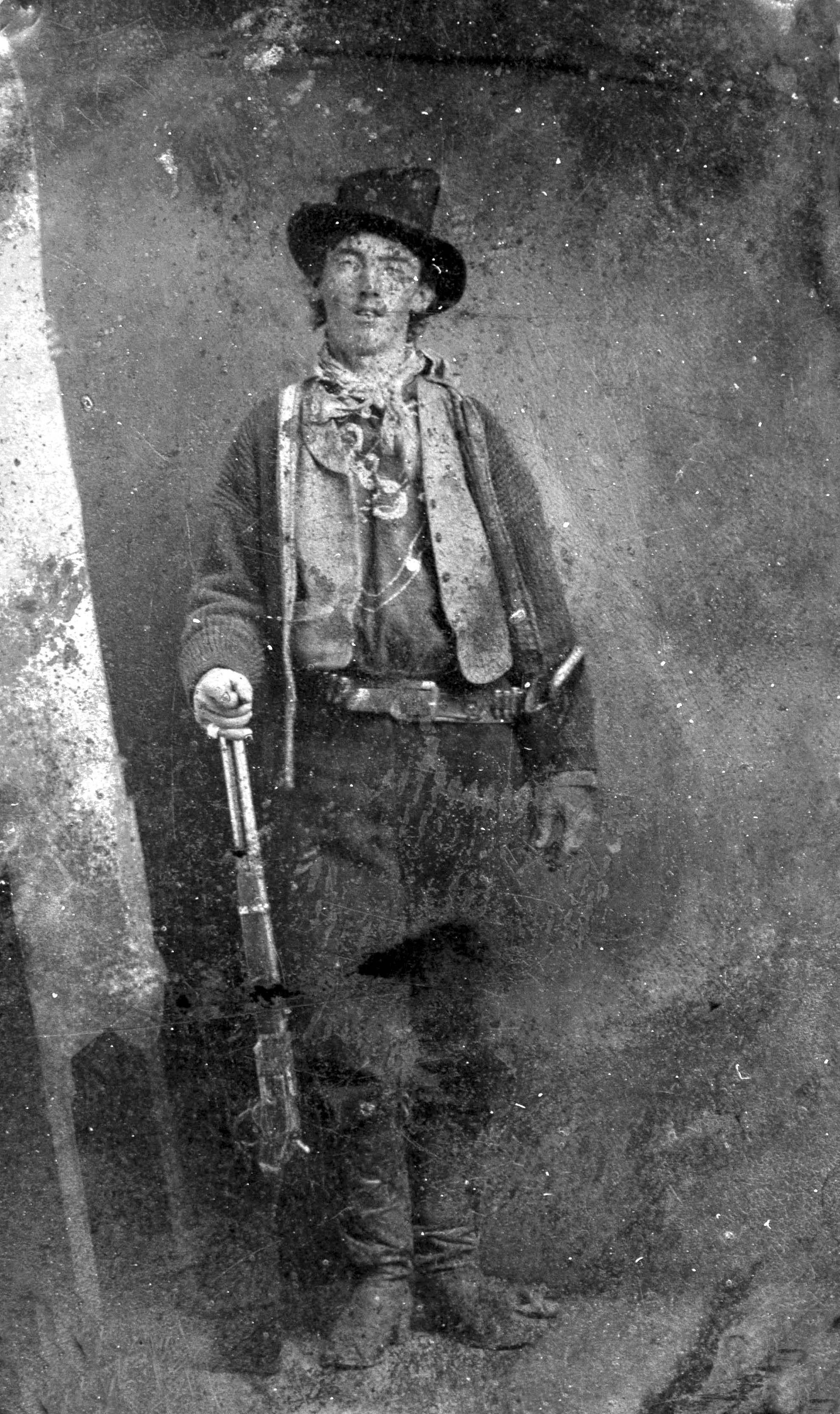 It’s a bit of an unglamorous start. Billy the Kid was arrested for the first time on September 23 1875 for stealing a basket of laundry. But then, he had an unglamorous life despite the weird aura that came to surround it later.
 On September 22nd back in 1980 the Iran-Iraq war erupted. It was certainly proof that while both sides cannot be right in a quarrel it’s very easy for both to be wrong. But the nature of the two grim, murderous sides in this conflict, their strange resemblance despite supposedly opposite philosophical foundations, throws considerable sickly light on the problems of the Middle East over the past century.
 on this problematic point).
 , specifically). But a century later, it’s happening again, as the region turns in a bloody and futile circle, unable to defeat the West and unwilling to embrace it.