Posts in It happened today
It happened today - December 2, 2015

Well duh. On this day in history Fidel Castro said he was a Marxist-Leninist. The only reason it matters is that he said it in 1961… two years after seizing power. And while dishonesty may be a virtue among Communists, it should have told the world something.

Namely they’d been had. As such people often did, Castro posed as a moderate nationalist reformer or at least let people assume he was one while struggling to take power. And it worked. The United States, under Eisenhower, pulled the plug on the friendly dictator Fulgencio Batista, paving the way for Castro’s triumphant entry into Havana, and was the second nation (after Venezuela) to recognize him.

The New York Times lionized him as “the Robin Hood of the Caribbean” and Norman Mailer called him “the greatest hero to appear in the world since the Second World War”. But he wasn’t. He was a Commie rat who repressed dissent, crushed the economy, aligned himself with the Soviet Union and indeed pushed for war during the Cuban Missile Crisis. And his long reign created stagnant tyranny, a classic “Autumn of the Patriarch”.

Pierre Trudeau visited in 1976, became friends with Castro, and publicly shouted “Viva Fidel” in Cienfuegos (actually “Viva el Primer Ministro Fidel Castro” which is less pithy). The same Trudeau who feared America’s imperialism and Reagan’s alleged warmongering. Castro and Trudeau were described as “intellectual soulmates” by a former Canadian ambassador to Cuba, and Castro was an honorary pallbearer at Trudeau’s state funeral. I find it hard to imagine, say, Francisco Franco being welcomed in such a manner. And at least he was a tyrant who opposed totalitarianism, not one who advocated it.

As I say, Castro’s admission that he was a hard-line Communist once it was too late should have taught us a lesson. But if it did, we’d have to start taking bad guys seriously when they tell us what they’re up to, from conquering the world to ushering in proletarian revolution to shouting “Allahu Akhbar” while massacring innocents. And that would never do.
It happened today - December 1, 2015

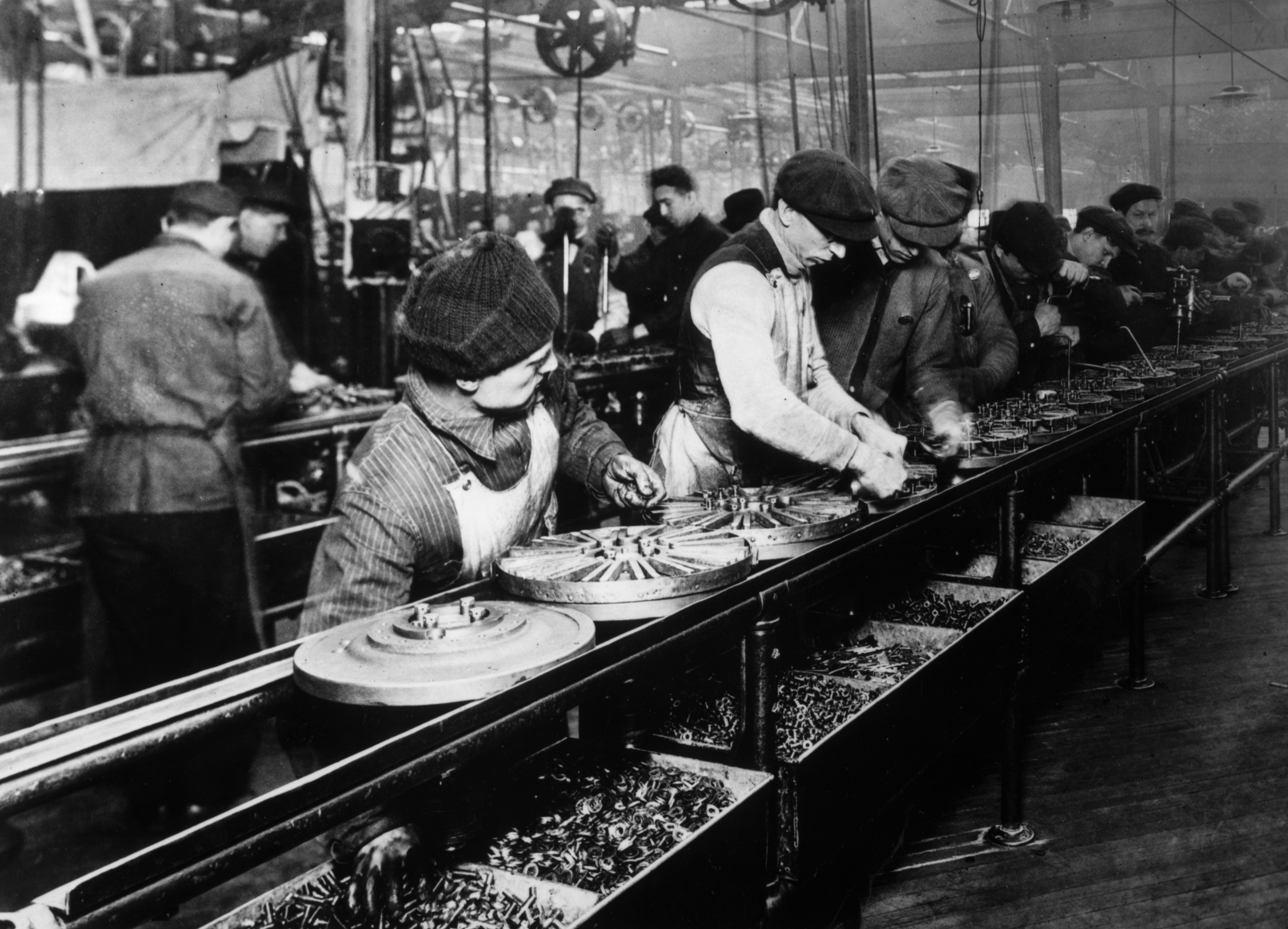
Just over a century ago, on Dec 1 1913, a momentous event occurred in Michigan. Like many pivotal moments, it wasn’t headline news at the time. Indeed, the world was less than a year away from the horrors and geopolitical upheavals of World War I and it didn’t seem like huge news that an American inventor had adapted the technique of meat packers to the new-fangled automobile.

He had. Because I’m talking about Henry Ford switching on his assembly line. And what he did changed the world dramatically. Perhaps as dramatically as the collapse of the old European world order in the trenches and on the steppes of the Great War.

Ford’s innovation wasn’t so much the Model T, which first appeared in 1908, as it was having the work come to the workers instead of them going to it, and automating tasks instead of relying on workers’ knowledge, judgement and initiative. It had a huge, lasting impact not limited to the automobile, though the mass availability of cars (the 1908 Model T cost over $800, two thirds of an excellent annual salary; by 1916 it was down to $345) changed how Americans worked, lived, even courted in enormous ways.

And everyone else, though sooner in America, where half of families had cars by 1929, prompting Will Rogers to quip that when the Great Depression hit, the US was the first nation that could go to the poorhouse in an automobile. That 50% figure was not achieved even in Britain until, believe it or not, 1980.

It is easy to forget now how the automobile and the associated blacktop road helped end rural isolation and lessen the physical burden of farm work. Very often the old Model T was hoisted up on blocks and the axle used to power a conveyor belt leading to the well, a saw or something else as a kind of all-purpose mechanical power source.

Later, the car spawned suburbia with the aid of ill-advised zoning rules, and contributed to the obesity crisis and, for those who take it seriously, man-made global warming. But its success with cars made it a model for any number of other consumer goods. In that sense Ford is the father of modern prosperity, for good or evil; his innovation in production methods put refrigerators, radios, televisions, stereos and computers in all our homes.

As for the claim that it mattered at least as much as, say, Naziism or Bolshevism that arose directly from World War I, or decolonization that resulted indirectly, it was mass production plus the inherent resilience of free societies that brought down Hitler’s Third Reich, and consumerism and technological dynamism that doomed Communism. And the lifestyles available in Western “consumer” societies fascinated and repelled the newly independent nations, creating a love-hate relationship that is still helping drive phenomena like ISIL, with jihadis listening to anti-Western rap on iPods and posting it online.

At the same time, mass production created mass labour, well-paid but boring, and then as automation advanced it destroyed it without bringing back the manual or artisan work that had existed previously. It’s increasingly problematic in the modern world, where the “creatives” flourish smugly especially in the parastatal sector, but the average working stiff increasingly isn’t working. And mass production is so effective that it’s very hard to make money doing it, in industries from cars to computers, while luxury threatens to undermine virtue and the social order.

All that in just a century. And to think people are excited about what future innovations might bring. I’m still wondering how to cope with that one.

It happened todayJohn Robson
It happened today - November 30, 2015

On November 30, 1965, one of the icons of the 1960s appeared. It was a book, not a person on drugs without any clothes. It was Ralph Nader’s Unsafe at Any Speed: The Designed-In Dangers of the American Automobile and it was an immediate hit that made the author famous for life and prompted government action to protect consumers from the malice of business and their own stupidity. It was that kind of era.

The irony isn’t just that Nader’s prime target, the Chevy Corvair, was in fact no less safe than other cars. It’s that Nader’s paranoia, the notion that cars were deliberately made unsafe instead of, at worst, not being made safe enough, was totally off target. Americans were becoming more safety-conscious and manufacturers would have had to adapt. Instead the process of consumer sovereignty driving product improvement was short-circuited, first on safety and then on fuel economy and other environmental considerations. Coupled with long-standing government intervention in labour relations in the auto and related industries, all this benign intervention … basically killed the U.S. car industry.

Nader has been a pest ever since, sometimes on relatively worthy causes, sometimes on worthless ones, but always from the wrong angle. The 1960s spoke of power to the people, but gave it to governments, and the world is not a better place for it. It is not an improvement, let alone empowering, that policemen make manufacturers put seat belts in my car and make me wear them, instead of me working it out with my fellows who manufacture vehicles for me.

The worst part is, we’re now so used to it that people think it’s totally weird if you’d rather buckle up voluntarily. Even in the United States, the land of the free. Except in New Hampshire, where they put the state motto “Live free or die” on their licence plates and seem to mean it, no matter how much it annoys Ralph Nader.

It happened todayJohn Robson
It happened today - November 29, 2015

On November 29 1947 the United Nations voted to partition Palestine and create a Jewish homeland. And you know what happened next, don’t you?

Exactly. The partition was a compromise deeply unsatisfactory to Jews and Arabs alike. But the Jews decided to swallow hard and make the best of it and hope for peace with their neighbours. The Arabs rejected it angrily and, at the first opportunity, sought to exterminate not just Israel but the Israelis.

They failed, and Israel got bigger. And it happened again, and again, and again. Compromise after compromise was put on the table, always deeply unsatisfactory to both sides. And each time the Jews swallowed hard and made the best of it and hoped for peace, and the Arabs rejected it angrily and plotted wars they then lost badly.

We’re still there now, of course. And the irony is that the original checkerboard Israel was almost certainly not viable. By accepting it, Arab leaders could have destroyed it. But they didn’t, and now it’s too late.

Not that they aren’t keen to repeat the pattern indefinitely, of course.

It happened todayJohn Robson
It happened today - November 28, 2015

On November 28, 1895, Frank Duryea did something unprecedented in American history. He entered a car race. What’s more, he won it.

Not many people even entered. The Chicago Times-Herald had sponsored the race to drum up the fledgling U.S. car industry. And fledgling is the right word; Duryea’s victory bagged him $2000 back when that was real money and sufficient publicity to make his and his brother’s Motor Wagons company the leading auto manufacturer in America, with a breathtaking 13 sales in the following year. Talk about volume.

As for the race itself, it was meant to go 92 miles, from Chicago to Waukean, Illinois and back (and you had to carry an umpire to make sure you didn’t take a sneaky short cut). But a snowstorm forced organizers to shorten it to 50 miles, to Evanston and back. One journalist wrote that with eight inches of snow “Waukegan might as well have been Timbuktu.” To be honest, for my money it might still be. But that’s not the point.

The point is that Duryea made the trip in 10 hours. So he set a blistering 5 mph pace. Which is easy to ridicule until you hear that thanks to the weather only six cars out of the registered 89 even got to the start line, including two electric cars that promptly died and three Benz cars of which exactly one finished at all.

I love the rules of the race, including that you had to have at least three wheels. I presume they meant at the beginning and the end; the way those cars were built you never knew what might fall off next. Think pre-Wright brothers airplanes on tires wrapped in string. (Seriously, to give something politely referred to as traction in the snow). But here’s the thing.

Much as we admire the skill and courage of modern race-car drivers who achieve genuinely spectacular speeds, and the incredible machines in which they race, Duryea’s feat was actually more difficult and remarkable because the technology was less advanced.

Do not mistake technical progress for the real thing. And remember Frank Duryea, who dared to enter and somehow win a “car race” that almost no one else could even start that had never been seen in the land before.

It happened todayJohn Robson
It happened today - November 27, 2015

On November 27, 1954, a ghost was released from prison. His name was Alger Hiss and he wasn’t technically dead. Indeed, he lived until 1996 and never ceased to protest his innocence. It’s terribly sad.

Not because he was innocent, a victim of the “Red Scare”. On the contrary, he was guilty, a fact established in Congressional testimony and in court at the time and confirmed by Soviet archives and serious researchers since. It is detailed in Whittaker Chambers’ book Witness and it cannot be evaded.

A child of privilege, a radical betrayer of the system that had given him so much, Hiss was not merely a communist but a Soviet agent. And when exposed he could not face the truth about himself.

In a deeper sense he had never been able to do so. He knew he was a Communist and must have suspected that his activities on behalf of his comrades amounted to spying. But he convinced himself it was all in such a good cause that somehow it wasn’t real and neither were the horrors of the Stalinist regime whose crimes he abetted.

The most compelling, almost heartbreaking comment on Hiss came from Chambers himself, who said at the time the “saddest single factor about the Hiss case is that nobody can change the facts as they are known…They are there forever. That is the inherent tragedy of this case.” And he meant it.

In testifying about Communist penetration of the U.S. government during what liberals sneeringly dismiss as the “Red Scare”, Chambers even perjured himself to avoid incriminating former comrades he felt were no longer an active threat, on the grounds that he had wandered so long in the darkness himself that he would do nothing to keep others from finding their way back to the light. The darkness he referred to was primarily internal, in his own case and theirs. And ironically, at one point he perjured himself to shelter Hiss, before Hiss’s own actions and the nature of the crisis forced him to come clean.

Chambers was always deeply sorry about what he had to do to Hiss. Sorrier, indeed, than Hiss himself ever was. Hiss could not bring himself to repent his own deeds; Chambers deeply repented having to expose them.

So it was that Chambers, who died in 1961 aged just 60, was a man during the comparatively few years left to him after the Hiss case, and Hiss was a ghost for decades, squandering the long years before his formal death at age 92.

It happened todayJohn Robson
It happened today - November 26, 2015

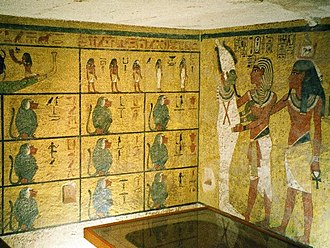
On November 26, more than 3,000 years later, someone finally knocked. I refer of course to November 26 1922 and the door of King Tut’s tomb. The boy pharaoh achieved lasting fame and glory of a sort that largely eluded him during his brief life. And Hollywood went nuts with mummies.

Much of the credit goes, or should go, to Howard Carter, one of those larger-than-life British explorers who had already located two significant tombs in the thoroughly plundered Valley of the Kings, thought to be bereft of remaining treasures. (One was that of Queen Hatshepsut, whose funerary temple is one of the greatest buildings in the world, by the way). And then in 1922 he made his biggest find, Tut’s magnificent, untouched tomb.

Much had happened since Tut died, after an undistinguished decade in which he mostly undid the radical religious innovations of his father Akhenaten. Tut was originally Tutankaten after Aten, the monotheistic sun god Akhenaten more or less invented but changed his name and… am I boring you?

If so I apologize. Egypt is weirdly fascinating and yet truly obscure and distant; the gods and goddesses of ancient Greece remain familiar in their broad outlines to any educated person whereas Osiris and Horus and that crowd could be jackals in the desert for all we know (and at least one of them looked like one but I don’t know who either). And its religious quarrels and controversies didn’t really lead anywhere; the Greek gods yielded to Christianity whereas the Egyptians just sit there like a Sphinx, mute and puzzling.

There, I think, lies paradoxically the enduring fascination of Egypt. When Tut’s tomb was sealed, and then he and his father were officially disgraced, their records including the location of their tombs destroyed, and then excavations for the tomb of Rameses VI two centuries later buried it in rock chips, it closed the door definitively on whatever his hopes were and threw away the key. They could not be more vanished if they were on Jupiter. And yet everything looked exactly the way it did the day they closed the door amid lamentation, aspiration and controversy.

Tut’s curse also got him plenty of good press despite not existing. But the main thing is the haunting way the lifelike nature of the artefacts seemed to preserve, in eerily fragile beauty, the hopes we all have that our life might somehow mean something permanent.

In life he was just annoying. In death, frozen in time, rescued from obscurity, he became weirdly magnificent.

It happened todayJohn Robson
It happened today - November 25, 2015

https://www.youtube.com/watch?v=m7XOaXK_kDc On November 25, 1990, the Lacey V. Murrow Memorial Bridge succumbed to heavy Thanksgiving Day weather and sank to the bottom of Lake Washington. Now at this point you may be regretting the price of admission to this feature on the grounds that this event wasn’t really historical. Apparently it was pretty cool to watch, though, and as it happened slowly it was filmed and you can watch it if you like. But to me there’s an important sic transit gloria mundi aspect to it.

Speaking of the transitory nature of Earthly glory, my spellchecker didn’t even know that phrase and tried to make Gloria into a person. But it’s not just that the bridge, a much-ridiculed construction that worked pretty well for nearly 50 years then sank ignominiously, amusing rather than shocking the public. It’s Lacey V. Murrow.

Who? You ask. Well exactly. Who was this guy, completely and perhaps justly forgotten before the bridge named after him suffered its now largely forgotten fate? He was the brother of “famous newsman Edward R. Murrow” who may himself fast be slipping into historical oblivion but was certainly more of a public figure in his day than, um, did you say Lacey?

Yes. And he was in fact the Washington State highways director when the bridge was built. I don’t actually know why “Memorial” since he lived into the 1960s and I thought they generally memorialized you after you crossed a far greater bridge than that particular pontoon construction east of Seattle. I also think naming things after minor bureaucratic potentates in your own outfit smacks of obsequiousness and vainglory.

Murrow may have been a fine man and we shouldn’t just build monuments to the truly great, the successfully ambitious and the nightmarishly prominent. But at the same time we might choose, say, a soldier with no known grave over a functionary with no known achievement.

Remember Cato saying that when he died he would rather men asked why he had no statue than why he did. I feel that way about Murrow’s bridge and memory sinking slowly into obscurity, to the point that I can’t even figure out why a website devoted to important historical events would list this one.

As to why I decided to comment on this unsuccessful dredging up of the event, apart from being vulnerable to the modern penchant for watching pointlessly diverting rubbish online (admit it, you watched it), it’s to remind you that being “who dat” a half century after you die is not the sort of thing you should focus on during your time on Earth.

What really mattered about Murrow couldn’t be put on a sign, and what could be didn’t really matter.

It happened todayJohn Robson