In my latest National Post commentary I welcome Iran's release of Prof. Homa Hoodfar but worry about what our government may have done behind the scenes to get her out.
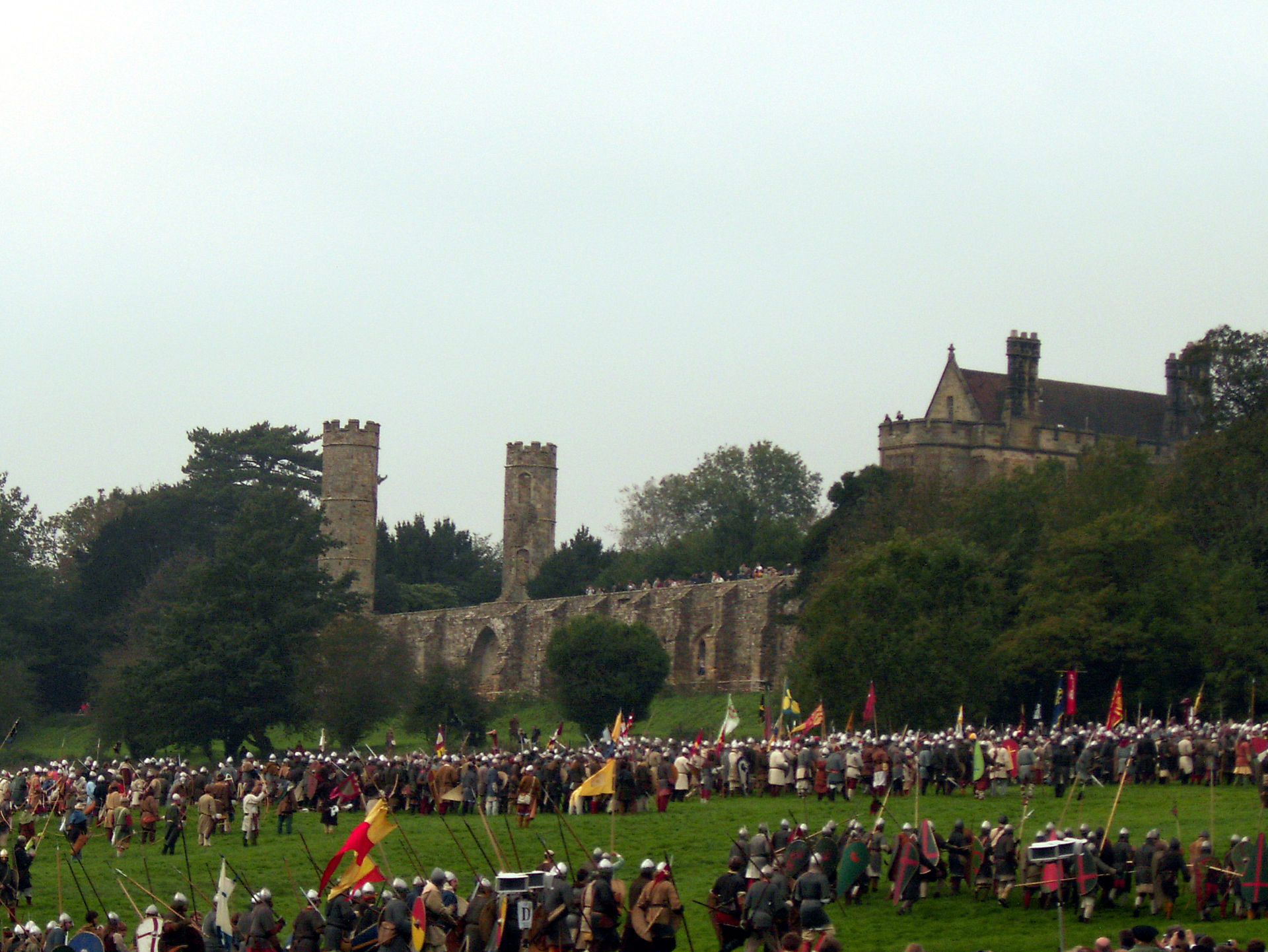 What a bastard! No, no. I mean it. On this date back in 1066, September 28, William “the Bastard” landed at Pevensey, near Hastings, and shortly became William the Conqueror, founder of the “modern” British monarchy. Should we care?
No, no, I don’t mean is all this old stuff boring and Britain irrelevant. You already know I don’t think so and if you’re reading these items neither do you. I mean how much does it really matter that William won at Hastings?
On the surface it seems enormously important. It brought not just a new king but a new ruling class, and the feudal system. Why else would we regard the real British monarchy as dating from 1066, to the point that William’s great-great-great-great-grandson Edward I as though even Edward the Confessor had never reigned, let alone Edward the Elder?
OK, I’m getting a bit pedantic. But you get my drift. 1066 is a major turning point. Or is it?
Sixteen years ago I thought it was, calling the Conqueror the most important person of the millennium on the grounds that if Harold the Great Chump had won at Hastings England might have been part of a Nordic rather than European civilization. But the more I’ve considered it the clearer it seems to me that, on the other hand, England tamed the Normans not the reverse, always remaining very much apart including, during its long history as a Catholic nation, maintaining a far healthier separation between church and state than, say, France or Spain ever did and having a “Protestant” break with Rome that for all its unattractive qualities was quite unlike Calvin’s or Luther’s. And of course Saxon common law beat back Norman statute law, at Runnymede and elsewhere.
On the third hand (someone get me an octopus, quick) it may have been precisely the powerful tension between the Norman and Saxon conceptions of government that forced the development of elaborate governmental institutions that restrained instead of empowering the state. The Normans were, after all, outstanding administrators in ways that were often highly desirable provided the underlying mechanisms of popular control could keep pace in their elaboration and formal procedures.
I do believe that in a parallel universe where that arrow missed Harold Godwinson at Hastings and the shield wall did not crack, we would remember him as Harold the Great. But I also think things turned out surprisingly well, albeit with considerable difficulty, the way things did turn out.
For all that, I do not like William the Conqueror, an angry man seething with ambition who was not, I think, entitled to claim the throne. And even after all these years, I do care about that too.
“It is better to play for nothing than to work for nothing.”
Adam Smith
“It is a trite but true observation that examples work more forcibly on the mind than precepts.”
Henry Fielding in Joseph Andrews (1742)
 Can I just kick this one off with a bird’s head or some odd circles and waves? Or perhaps a more comprehensible drawing of a thumbs-up, directed at good old Jean-François Champollion. You respond with an ornate question mark? Well, he’s the guy who on September 27 of 1822 published a decipherment of the Rosetta Stone. And the sphinx never looked back.
The Rosetta Stone is, fairly famously, the great key to reading ancient Egyptian inscriptions because some clever chap way back when had written the same thing three times in three different languages: Ancient Greek, Demotic (the Egyptian not the Greek kind) and Ancient Egyptian. I say fairly famously because it is the most visited object in the British Museum which is not exactly short of other interesting exhibits. And of course Egypt wants it back so they can treat it with the same care they have given to various other antiquities.
The actual text is kind of odd, basically declaring King Ptolemy V divine which he wasn’t.
Interestingly, even ancient Greek was a challenge in those days. Not the truly classic Aristotelian stuff which scholars could read, but the Hellenistic bureaucratic jargon of the Rosetta Stone and similar such bumf. As for Demotic, nobody knew what it was including even whether it was alphabetic, until people who weren’t Champollion got hold of prints of the Rosetta Stone and discovered that it basically was.
Then Champollion really cracked the hieroglyphic stuff. He may not have been “good old” after all; he was apparently an annoying character who didn’t give others due credit, which not only made his life difficult but led to a lot of hair-splitting, or glyph-splitting, or stone-splitting, about the accuracy of his translation. But recently he’s been given full credit as an annoying genius.
So what? Who cares about a bunch of squiggles?
We do. That’s what really stands out to me about the whole venture. It might be that the ancient Egyptians had something really important to tell us about life, the universe and everything. Though if so, I still don’t know what it was and maybe won’t until the sphinx finally opens up. But we just wanted to know, to understand, to connect with them even if it was purely one-way, because they too were humans, groping through the fog, and they mattered even if their religion was an unholy mess.
There’s a huge contrast between the West, with its obsession with historical memory, even of non-Western peoples, and the habit in much of the world of ignoring or erasing it because it had not achieved the degree of perfection of those doing the destroying. An attitude which helps explain why that degree was and is so low, from Nazis to ISIL.
In some sense people were determined to decipher hieroglyphic in the Hillary-Everest spirit. Just because it is there, we’re going to figure out what it says. But even more it’s because people were there and we just had to say hello, we’re here too, how was it on the banks of the Nile back then? And by golly we managed to read the squiggles and get some idea.
P.S. What’s with the pyramids? You can level with us, so to speak. How did you do it? And why?
In my latest National Post column I ask how people can be warning not to allow "two-tier" health care when we've known we have multiple tiers for years.
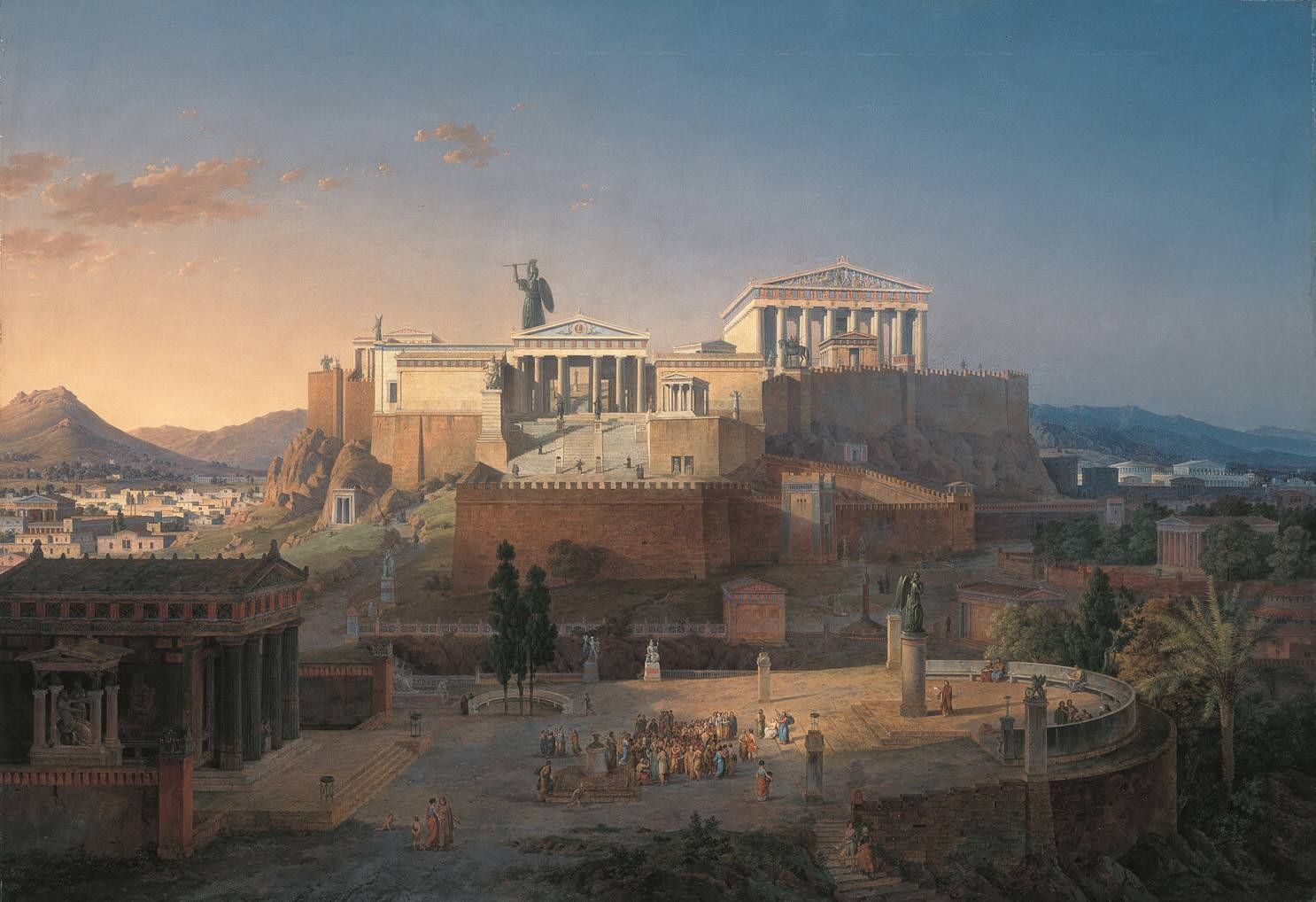 One thing I really hate is when someone blows up the Parthenon. Which they did on September 26, 1687.
Now you might point the finger-bone of blame at the Venetians, whose artillery touched it off. But they in turn might note that marble doesn’t habitually explode unless some tasteless vandal is, say, storing gunpowder there. Which the Ottomans were.
Yes, it’s our old friends the Turks. Having captured Athens in 1458 they promptly… what did they do? Right. They turned it into a mosque. Thanks for respecting the religious impulses of others even if you consider them mistaken.
Then came the disaster of 1687, during the “Great Turkish War” from 1683-1699, the same one in which the Ottomans attacked Vienna for the last time, or so we hope. The Venetians were trying to recapture Athens, of all outrageous infidel provocations. And so the Turks fortified the Acropolis and filled it with gunpowder even though they’d already blown up the Propylaea or “entrance” to the Athenian Acropolis in 1656.
As Oscar Wilde noted in a different context, one might be regarded as a misfortune. Two looks like carelessness. And indeed it speaks of carelessness, if not contempt, toward the achievements of other cultures and civilizations, the same inability to appreciate the beauty and nobility of human striving toward the divine even if misguided that led the Taliban to destroy ancient Buddhist statues in Afghanistan or the deliberate destruction of shrines in Iraq by ISIL and in Mali by various Islamist rebels.
Beautiful as the Parthenon’s remains are today, we have sketches from the mid-17th century that show how much more had survived intact for over 1500 years until this catastrophe. And while one might also blame the Venetians for targeting the Parthenon, which the Ottomans may have thought they wouldn’t given its historic value and beauty, the decision to use it as a military asset is surely the main cause of the disaster.
OK, so the Turks had an issue with defending Athens and it might have seemed a good place to store munitions. But it wasn’t given what happened. And anyway, sometimes there are things more important than keeping your illegitimate conquests. Or not, depending who you are.
Lord Elgin takes a lot of heat for having collected a lot of what was left of the Parthenon and took it to the British Museum with the disputed permission of the Sultan. But at least he wanted to preserve and display it.
It sure beats blowing it up, through malice, carelessness or a combination of the two.
“You've got to be very careful if you don't know where you're going, because you might not get there.” Yogi Berra according to rinkworks.com/said/yogiberra.shtml