Posts in Government
Oh yeah, that Vermont – It Happened Today, February 18, 2017

Vermont is not all that controversial. Is it? No. It’s just this rather pleasant New England state with the odd distinction of being among the most Democratic in the United States and the most heavily armed. But precisely because it does not arouse strong passions, it’s interesting to reflect on its admission to the Union on February 18 of 1791.

Interestingly, that decision was controversial, because Vermont was on land ceded by the French after the Seven Years’ War and at one point New York, Massachusetts and New Hampshire all claimed some of it. By 1770 it was basically New York versus the local staid pious New England rowdies, especially Ethan Allan and his "Green Mountain Boys" who were frankly rather scary vigilantes against New York authority.

Until, of course, the British decided to suppress liberty in their colonies at which point everybody decided to forget their old quarrels and go get George III even though Ethan Allan continued to contest New York’s authority. So here’s the interesting thing.

In the general uprising against British authority, a group of Vermonters gathered in convention declared themselves a sovereign state in 1777. Then they named themselves Vermont, and adopted the first constitution in North America to ban adult slavery. (Eighty-one years later, in 1858, Vermont banned slavery altogether.)

For fourteen years people tried to avoid the awkward topic of whether there was or was not a "Vermont" even though it issued its own money, had a postal service and elected governors. And Congress could not act without New York’s consent under Article IV, Section 3 of the constitution. Finally New York threw in the towel and, after successful negotiations over where exactly the border lay and what compensation was due to New Yorkers whose land titles had been ignored in Vermont, Vermont became the 14th state and (duh) the first new one after the original 13.

What’s interesting here is that Vermont’s claim to statehood rested on two key points. First, the people who then lived there wanted it. And second, they had successfully acted as a state in fact. In short, people bowed to reality.

I’m not saying might makes right. The origins of many nations and subnational jurisdictions give serious pause on grounds of legitimacy, especially in a world that no longer recognises the "Doctrine of Discovery" of places that already had people in them, and is distinctly uneasy with the "Doctrine of Conquest". But the simple fact is that as far back as you can find anything resembling reliable records, land is in possession of those who took it from others including the aboriginals who were in Vermont when Europeans showed up. And sometimes de facto is the best basis you can find for de jure, that is, you agree that Vermont should be accepted as existing essentially because it does exist.

We still hope for perfect justice. We cannot do less. But at times we admit that things are what they are and we must make the best of them.

I do not think a great many people, even in New York, go about today saying Vermont is a fraud and an imposition. But precisely because it does not arouse strong passions, it’s a good test case of our willingness to defy, or accept, what actually does exist in favour of what we wish existed or feel might perhaps have existed under other circumstances.

Sic Transit again – It Happened Today, February 17, 2017

On this date in 364 AD, February 17, Jovian was found dead in his tent. And if your reaction was a rudely pointed "Who?", well, you have a point. Actually he was a Roman Emperor and an illustration of the vanity of much worldly ambition.

He only reigned for eight months, following Julian the Apostate’s sudden death during his bungled campaign against the Persians. He was foisted on the empire by soldiers, possibly in a case of mistaken identity. And though he was found dead in suspicious circumstances, nobody much cared to investigate them.

On the plus side, he did restore Christianity after Julian’s rather pathetic efforts to restore worship of the Olympian deities. And he did proclaim freedom of conscience while, um, forbidding magical rites and imposing the death penalty for those who worshipped ye olde Gods like Jupiter. Oh, and he had the Library of Antioch burned down because Julian had filled it with pagan books. Which actually annoyed his Christian as well as non-Christian subjects.

He then continued Julian’s retreat from the far east and signed a humiliating treaty with the Sassinids surrendering five Roman provinces. After which he made a bee-line for Constantinople to bolster his political position somehow. Except it ended up a bee-line to the cemetery.

To rub it all in, his successor Valentinian I did such a good job that he was nicknamed "the Great". Whereas Jovian was nicknamed "Who dat" or some such.

Another person who would have been better off staying on his farm. As would his nation.

Castro came and stayed – It Happened Today, February 16, 2017

In what seems truly a bygone era, Fidel Castro seized power in Cuba on February 16 of 1959. Yes, 58 years ago. And a Castro is still in power in this ghastly real-life Autumn of the Patriarch.

I could say a lot of things about Fidel Castro without getting to anything nice. Like how revealing it is that he would have switched jobs repeatedly while still being the guy you got shot for disobeying. And how typical it is of a regime that for all its yapping about true democracy had no legitimacy that it became dynastic like North Korea. (Mind you his own daughter, from one of his many infidelities, fled the island prison in disguise in 1993 and his own sister opposed him from American exile.) But never mind him.

What I want to do on this dismal anniversary is insult all the leftists who placed such high hopes on him to begin with and then somehow insisted despite everything that he really was a good man and a liberator. Anybody can make a mistake. Even the New York Times in originally hailing him as "the Robin Hood of the Caribbean". But to persist in one, to speak of democracy and human rights and peace in a sanctimonious tone while siding with this seedy brutal villain and denying repeatedly that he was a Communist, or in case he was denying that it mattered if he was one, surely indicates grave defects in judgement.

Especially as it is a habit of the left, from Stalin through Castro to Mugabe and beyond; as Jay Nordlinger memorably put it in National Review back in 1994, "Like an adolescent girl on holiday, the radical Left is always falling in love with some unsuitable foreigner..."

To do it and learn nothing is to double down on nasty folly. Why have so many done it, and not just on the radical left, including our own Prime Minister Justin Trudeau?

For that matter, why are there still Che T-shirts?


Fame you wouldn’t want – It Happened Today, February 15, 2017

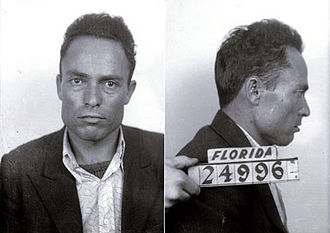
There are a lot of ways to get into the history books. But here’s one you wouldn’t want. On February 15 of 1933, Giuseppe Zangara tried to assassinate president-elect Franklin Roosevelt. Had he succeeded, it would have been the first time anyone was elected president and then died before taking office.

It didn’t happen then, and it hasn’t happened since, something I refrain from mentioning between any election and inauguration lest I should be suspected of trying to jinx the president-elect. As a matter of fact, no one has ever died between being nominated by a major party and the election either. Leaving aside violence, you’d think simply by the odds it would have happened to somebody. (Democratic lion Stephen A. Douglas, one of Lincoln’s opponents in the 4-way 1860 election, did die suddenly less than three months after his victorious rival was inaugurated.)

As for getting into the history books anyway, a dismal footnote to Zangara’s failed attempt is that in the process, standing on a wobbly folding chair and fighting a crowd trying to subdue him, he managed to shoot four other people including Chicago mayor Anton Cermak, who died of his wounds on March 6, two days after Roosevelt’s inauguration. So Cermak becomes "Who was that guy shot by mistake next to FDR?"

Meanwhile Zangara was executed in "Old Sparky," the Florida State Prison’s electric chair, on March 20, justice being swifter in those days. (For what it’s worth, the judge who sentenced him to death called for a complete handgun ban.) And in the process Zangara did make a sort of history.

You see, the rules said prisoners could not share a cell prior to execution but as someone else was awaiting capital punishment he obliged them to expand the "death cell" into the now proverbial "Death Row". It’s not exactly what you put down as your ambition in your high school yearbook. But it beats being the guy assassinated by mistake while the real target wasn’t becoming the first ever president-elect not to make it to Inauguration Day.

Elizabeth Went Where? – It Happened Today, February 6, 2017

A reminder that "It Happened Today" needs your help. It takes considerable time and effort to produce. So if you're enjoying the feature, make a monthly pledge so I can continue to research and write it. Map of Liberia Colony in the 1830s, created by the ACS, and also showing Mississippi Colony and other state-sponsored colonies. (Wikipedia)

On February 6 in 1820 something really foolish happened. Which of course does not distinguish it from any other day on the calendar. But this one is a fairly trivial incident in itself that manages at the same time to be a historical whopper.

It is the departure from New York of the Elizabeth, bound for Liberia in West Africa with three white American Colonization Society members and 88 American blacks to solve the whole vexed slavery question by sending freed slaves back to West Africa to establish their own country.

It is hard to overestimate the foolishness of the venture. The fact that all the ACS members and a quarter of the blacks were dead within three weeks from yellow fever while the rest fled back to Sierre Leone to await reinforcements gives you some idea of the early difficulties although to be fair Jamestown was sort of like that too and it worked out eventually.

Liberia never could, in a very fundamental sense. The colony not only survived but prospered, and might have done better still if better-prepared settlers had succeeded in creating a genuine self-governing republic. And if so it might have done considerable good in demonstrating what American slaves could do, and be, once the shackles were struck off.

It failed even at that, as the descendants of the colonists formed a closed elite that subjugated the indigenous population; in rather ghastly typical African fashion it is not even certain when the latter got the vote. So it failed as an example. But Liberia was meant to do more than that.

It was meant to solve America’s slavery problem by exporting it. It was meant to permit emancipation by bigots and among bigots, by promising that once freed the blacks would be sent far away where Americans would not have to put up with them. It was always logistically impossible because there was obviously no way to transport millions of people across the Atlantic with tools and other necessities (there were then nearly 2 million American slaves and 200,000 free blacks) even if they could all have been freed. Dragging them to the New World as naked slaves, with high mortality rates on the dreadful "Middle Passage," was technically feasible if morally repellent. Doing the reverse was morally repellent and technically impossible.

The moral repellence was the worst thing of all. Some ACS members were genuinely unprejudiced but figured that until their countrymen and women had a change of heart the best bet for the freedman or woman was to get to a country not run by whites, as Liberia was not after 1847. Others were benevolent by the standards of the day in rejecting slavery but failed to embrace equality, while a few actually felt colonization was a deft trick for getting rid of troublemaking free blacks to help keep slaves more docile and thus preserve the "peculiar institution".

I know it is easy to say from this distance. But the only proper solution to slavery was to accept that all men are created equal, and to reject both the legal and the social subjugation of any race. If it had been necessary to proceed by abolishing the legal subjugation first and then moving on to the social, I think it would have been an acceptable second best. But nothing good was going to happen as long as people insisted that blacks were inferior and based their solutions on that premise, whether or not those solutions they were as technically absurd as sending them all to West Africa one shipload at a time. Even those genuinely unbigoted ACS members who bowed to their neighbours’ prejudice, though they come out of the story looking a lot better than anyone else, let pragmatism trump principle in ways that ultimately failed badly as they generally do.

Whatever the Liberian colonization experiment did, it utterly failed to solve the problem of American racial slavery that erupted into the internecine Civil War and even once it was done left a poisonous legacy of segregation, injustice and bitterness. As anyone capable of math, let alone moral reasoning, would have known would happen.