Posts in It happened today
It happened today - May 25, 2015

HMS Triumph near DoverOn May 25, 1660, King Charles II landed at Dover and the English monarchy was “Restored” and with it the ancient constitution. Following the monarchical tyranny of his father Charles I and the legislative tyranny of Oliver Cromwell’s Commonwealth, just about everyone agreed that it was time to get back to individual liberty protected by a parliament that restrained the executive rather than supplanting it.

Speaking of struggles against tyranny, May 25 was also the date, in 1977, on which we first saw Luke Skywalker take up his light sabre against Darth Vader, servant of an emperor who had just, of all things, dissolved the legislature, in that case the Imperial Senate. But back to Charles.

He was not a perfect king and he didn’t have a perfect parliament. Indeed, the English were not perfect citizens or perfect people. No one is. But it is remarkable how much wisdom everyone showed (including Cromwell’s son “Tumble-Down Dick”, who inherited his father’s dictatorship, realized he wasn’t the man for the job, reconvened parliament, stepped down, and enjoyed the longest life of any former British head of state).

Oliver Cromwell was posthumously convicted of treason and his disinterred corpse hanged at Tyburn. But then people calmed down and went back to refining the institutions of liberty under law, of limited, balanced government, and put a statue of Cromwell in front of the British Parliament. Canadians who think we have a genius for moderation should reflect first that if we do it’s one more thing we inherited from Britain and second that it’s not a failure to rely on principle, but success in finding the vital Golden Mean between two barren extremes, that constitutes genuinely admirable moderation.

It happened today - May 24, 2015

Telegraph On May 24 of 1844, which happened to be Queen Victoria’s 25th birthday, Samuel Morse demonstrated the telegraph to fascinated members of Congress. He sent a message “What Hath God Wrought?” to Alfred Vail in Baltimore and Vail sent it back. I’ve always thought that message was singularly inappropriate.
It is from the Old Testament (Numbers 23:23). But could anything be less in keeping with antiquity than the telegraph in particular and the general grandiose impulse to overcome time and space, to take control of man’s surroundings and transform his life?

We tend to associate globalization, bewilderingly rapid technological change and a profusion of cool consumer goods with our own time. We have the Internet, man. We can send messages around the globe at the speed of electricity. Even though those messages surprisingly often involve Kim Kardashian or cats who look like Hitler, we pride ourselves on living in an age of unprecedented change and confidence in change. But that’s largely because we are ignorant of past ages.

Even Jonathan Swift, 18th-century author of Gulliver’s Travels, commented on the fact that the products of the entire globe were present on an English breakfast table. The Victorians could send messages around the globe at the speed of electricity. Tourism was a major industry. Curmudgeons complained that the pace of modern life was destructive of any semblance of peace and quiet.

Beyond these specific details, the larger feeling that man had at last burst the bonds of nature and would now control his own destiny, gathering force since the late 15th century, was the characteristic Victorian mood. Do not be deceived by the sepia-tinted photos and lace doilies that now seem to us hopelessly backward. It was an age of progress, the wonders of the steam age and the miracle of electricity tamed and put to the service of mankind. It was not a question of what God had wrought, but of what man was going to.

More than 150 years later I think it’s not entirely out of place to ask: “Are we there yet?” If technology is meant to transform our lives in vastly positive ways, shouldn’t it have done so by now? What, indeed, as man wrought?


It happened today - May 23, 2015

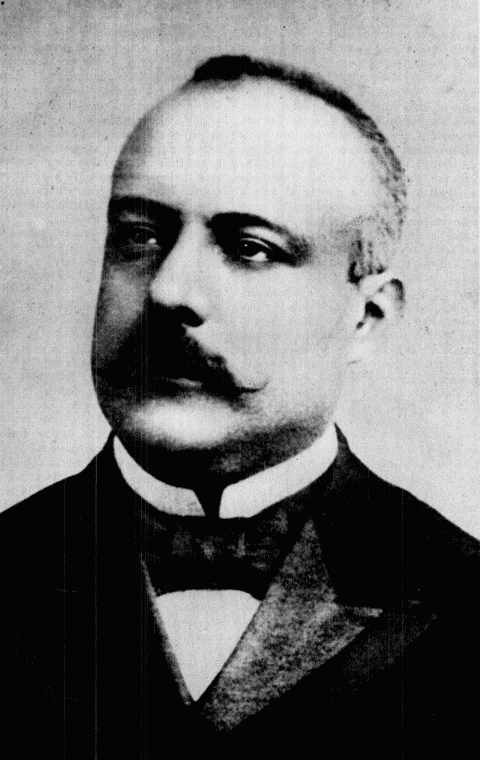
Prime MInister Antonio SalandraExactly 100 years ago today, Italy entered the First World War by declaring war on Austria-Hungary and in doing so opened one of the most dismal fronts in that dismal conflict, in every sense.

For the next three and a half years, under conditions even more dreadful than the trenches of the Western front, Italians and Austro-Hungarians with French, British and German assistance slaughtered one another by the hundreds of thousands to no moral or even strategic purpose.

Austria-Hungary wasn’t worth defending. Italy entered the war for territory not to defend neutral Belgium against wanton aggression. The battles in the Alps had neither strategic nor tactical significance, and the killing only stopped because the war was eventually won elsewhere.

It’s sobering, if you live in the Anglosphere, whose major wars however dreadful were fought for liberty and without exception successfully since 1066, to reflect on how much history elsewhere in the world is not redeemed even by success, let alone by moral soundness.

It happened today - May 22, 2015

Jimmy CarterOn May 22 of 1977 Jimmy Carter gave an important speech… no, no, don’t start laughing yet. He really did. In the immediate aftermath of the Vietnam War and Watergate, frequently seen to be related in those angry days, Carter had been elected promising a renewal of morality in American domestic and foreign policy.

He got off to a rocky start, especially with the Soviets, who unexpectedly (to Carter, anyway) took the view that agressive promotion of Western-style human rights was so clearly incompatible with, you know, their ossified tyranny that it must be deliberately aimed at them.

Carter never understood why, a curious blind spot for such an intelligent man House. But he was determined to be righteous regardless, so on May 22 at Notre Dame University he gave a moving speech reaffirming his devotion to a moral, not to say moralistic, foreign policy.

Now Carter is so easy to mock that I find my keyboard has been doing it while I was taking a quick break to check some facts. But the speech, and the subsequent disaster that engulfed his foreign policy, underline a genuine dilemma.

In his speech he deplored the “inordinate fear of communism which once led us to embrace any dictator who joined us in that fear.” And while it is arguable that America’s fear of communism was not inordinate, then or ever, mighty few people feel comfortable embracing every dictator who opposes it, just as today we aren’t willing to embrace any tyrant who stands firm against jihadism. (For instance Bashar al-Assad.) Democracy is better, and Carter was right to hail the move of American allies like Greece or Spain from dictatorship to free elections in that period.

Now Carter can be faulted for saying U.S. foreign policy must be “rooted in our moral values, which never change” while being obtuse about evil in the world from Moscow to Phnom Penh. But he can be even more sharply faulted for not realising that sometimes in geopolitics there are no attractive players in a given region or situation and yet a true statesman must act to protect his own people’s freedom, not just wag his finger and then shamble off leaving a festering disaster behind. Carter was, after all, beaten in 1980 by Ronald Reagan and not without cause. He did weaken the United States, and flap his tongue helplessly in the face of malevolent Soviet aggression.

On the other hand, Reagan himself did promise a robustly moral approach to foreign policy. He didn’t always deliver either, of course. It’s impossible not to think morality matters. The hard part is finding policies that actually work without losing sight of that point. Because for a political leader, the first and very real moral imperative is to protect his own people effectively.

It happened today - May 21, 2015

Gorbatchev meets with East German leader Erich HoneckerTo come up with interesting things that happened on this day in history I rummage through dusty parchment, search my memory, and then get smart, log on and search the Interwebs. Which led me to the news on one site that on May 21 of 1988 “Gorbachev consolidates power”.

Man, you can find anything on the Internet. Including parallel universes. So pardon my sarcasm but would that be the same Mikhail Gorbachev who accidentally destroyed communism and the USSR, the Mrs. O’Leary’s cow of Bolshevik socialism, who was permanently out of office by Christmas 1991?

Indeed. And while I give him credit because, at the critical moment, he didn’t give the order to open fire, I’m amazed how much admiration he evoked and still evokes from some western progressives because he didn’t realize socialism couldn’t work, central planning was necessarily hopeless and communism was inherently tyrannical.

OK, enough mocking of Gorbachev. My main point is this notion of him “consolidating power” when he didn’t have any. Far too much attention is given to ostensible political structures, to what institutions are meant to do and to what the conventional wisdom says they do, and far too little to whether they are working or whether they can work.

Of course to do the latter requires us first to shun pomposity and flattery, which isn’t always the best career move, and second to admit that certain things cannot work, like, um, what was it? Oh yeah. Socialism and central planning.

Mind you, if you’re still impressed by Gorbachev’s consolidation of power you can ignore that last point.

It happened today - May 20, 2015

British soldiers evacuating from DunkirkHistory is full of spectacular events. But also things that sneak up on you. For instance on May 20 of 1940, 75 years ago today, the German Blitzkrieg broke through to the English Channel at Abbeville, precisely as the Kaiser’s armies had not at Ypres In 1914, 1915 or in spring 1918. This Nazi victory was big and everyone noticed.

The same cannot be said of the patent issued on May 20 1873 for work pants reinforced with metal rivets. And if you are tempted to retort that the world has rightly taken no notice of it since either, I should specify that this patent went to a Nevada tailor named Jacob Davis and a Bavarian-born shopkeeper and entrepreneur based in San Francisco named Levi (originally Leob) Strauss.

That’s right. Their humble and obscure-sounding patent for “Improvement in Fastening Pocket-Openings” marked the birth of blue jeans. The new sturdier garments caught on fast, and by the 1920s “Levi’s” overalls were the top-selling men’s work pants in the US. And jeans long ago ceased to be primarily a work pant. Indeed, it’s interesting how, as the U.S. got richer and richer, it became more and more of a fashion statement to dress down in work pants especially if you turned on, tuned in and dropped out of the rat race. To the point that for some three decades now you’ve been able to buy artificially “pre-distressed” jeans if your lifestyle emphatically won’t wear them out on its own.

Of course, Hitler considered Americans and their blue jeans decadent and if he’d won the Second World War they might have been chased back to the factory, farm and workshop. The sword is mightier than the pocket fastener. But in terms of their overall impact on global culture, blue jeans still mattered more than his armies’ terrifying breakthrough to the channel.

It happened today - May 19, 2015

English ships and the Spanish ArmadaOn May 19 back in 1588 the dreaded Spanish Armada, bombastically the “Invincible Armada,” set out from Lisbon to crush the upstart English, bring Albion back to Rome and subject it to the glorious King of Spain.

It didn’t work. Delayed by a daring raid on Cadiz by that sea dog of all sea dogs, Francis Drake, it finally set out with 130 ships, 2,500 guns and 20,000 soldiers. But Elizabeth I gave an inspiring speech, Drake allegedly finished his game of bowls and sauntered coolly into action, and better English guns and gunners drove the Spanish into Calais where fireships continued the destruction. Finally the Armada fled north around the British Isles where storms sank more ships.

It was the beginning of free England’s rise to naval supremacy, as frustrating as it was baffling to glorious continental despots with unbeatable this and invincible that, on through the Sun King to Napoleon and Hitler. But as John Quincy Adams would later say, “liberty is power.” And it’s the first major illustration of my rule about not attacking the Anglosphere.

Oh, and here’s a vexing footnote to the whole business. You know those emails you get from people in West Africa with a big heap of diamonds or access to a dormant bank account, or in Iraq with a pile of Saddam’s loot etc.? A century ago they used to come from businessmen stranded in Mexico. But way way back, the originals were from Spanish noblemen marooned in Ireland when their Armada ship sank, but with a huge heap of gold back in old Madrid, and if you could just furnish them a few pounds to get them home blah blah blah. That’s why the original name of this scam is “the Spanish prisoner”. The victory was still worth it, though.