Posts in It happened today
It happened today - August 4, 2015

Anne FrankOn August 4, 1944, Anne Frank and her family were captured by the Gestapo. Somebody ratted them out and they, the family of Otto Frank’s business partner Hermann van Pelz, and Fritz Pfeffer, a friend of the Franks who was hiding with them, were sent to concentration camps; only Otto Frank survived. Which you knew.

Anne Frank is famous, and justly so, because of the diary the Gestapo did not find. She began it shortly before the family went into hiding and made its last entry just three days before they were captured. It was recovered by one of the brave Dutch gentiles who had sheltered the Franks and the others, and given to Otto Frank after the war. Amazingly, given the cramped quarter eight people shared for over two years, he was not aware that his daughter was keeping such a detailed chronicle of their lives.

The diary puts a very human face on the Holocaust, and speaks for the millions of whom we have not even a name let alone a story (despite the best efforts of the Names Recovery Project at Yad Vashem). And it forces each of us to ask how we would have handled such difficult circumstances for over two years, unable to get away even briefly from people who would not under other conditions even have socialized occasionally. And to ask whether we would have had the courage to help them if we’d been in the position of non-Jewish Netherlanders in those terrible years.

By the way, I said somebody “ratted them out” and I use the phrase advisedly. Technically a rat, as G. Gordon Liddy says, is one who had been part of a group and then betrays it. And the person who betrayed the Franks, van Pelzes and Pfeffer may never have agreed to help shelter them. But I think our fundamental duty to assist one another against life’s greatest horrors makes whoever turned them a “rat” who betrayed all mankind and their own humanity as well as the eight people in the secret “annex”. I only hope after the war they read the diary and repented (though if they did, I note unhappily, they did not find the courage or clarity to make a public confession).

The diary is a very powerful book. Anne was a remarkable girl, kind and thoughtful, at one point repenting of an earlier harsh judgement about her mother and recognizing how their claustrophobic as well as generally terrifying situation naturally made everyone edgy. And because of her sensitivity the diary is almost a wonderful insight into the blossoming of a shy girl into an exceptional woman.

I say almost, because almost everyone knows how it ends before they start reading it. And we all know before we reread it. I wonder sometimes if it would be better to give it to a young person without revealing the ultimate fate of the participants, which obviously Anne Frank herself did not know as she wrote. But I think not.

Somehow having the whole story unfold not just under the general shadow of Nazism, but the specific knowledge that the darkness would take Anne, swallowing her petty thoughts and her profound ones, her small frustrations and her unexpected joys, makes it that much more poignant and moving, a bright light still shining through the dreadful murk.

It happened today - August 3, 2015

On August 3 of 1948 Whittaker Chambers accused Alger Hiss of being a Soviet spy and a Communist. And he was.
The case rapidly became not just a cause celebre but a political litmus test. All right-thinking persons despised the House Un-American Affairs Committee before which Chambers made his accusation. They also despised Richard Nixon, whose determined investigation into Chambers’ accusations helped his meteoric political rise from House freshman to California senator to Vice-President and then eventually President. Nixon was, it must be said, a dishonest man even by the standards of politics, and liberals cherished the notion that this key stepping stone of his career had been his first big lie.

The problem is, Hiss was guilty. Chambers had all sorts of evidence that could not be ignored or explained away including, with implausible spy-thriller melodrama, key microfilm hidden in pumpkins on his Maryland farm. Hiss was ultimately convicted of perjury in 1950, the statute of limitations having run out on espionage, spent three and a half years in jail, and protested his innocence to his dying day. As do some liberals even now, though many have reluctantly accepted long after it stopped mattering that even if it helped Nixon rise to power, Hiss was guilty.

Once again I am dismayed at the way in which people can be consistently, vocally, bitterly wrong on an important issue with no harm to their reputation or credibility. Particularly as their reaction was compounded of ideological partisanship and sheer snobbery.

Hiss was to the manner born, a child of privilege, Harvard law graduate, protégé of a future Supreme Court justice, a striped-pants diplomat who was with Roosevelt at Yalta and with Truman when he addressed the UN in June 1945. Chambers was a loser with bad teeth and a shabby suit, and Nixon was a vulgar parvenu. It was us against them and the elite rallied around “us,” treason be hanged.

Actually Chambers was not a loser. He did have bad teeth and he did not have Alger Hiss’s wardrobe. But he was a remarkable man, a profound and compassionate soul whose book Witness is a must-read autobiography. It is not primarily about his being a witness against Alger Hiss, though of course he discusses that affair in detail. It is the compelling story of his weird, difficult life and a witness to his spiritual odyssey that included initially perjuring himself by denying Hiss’s espionage to try to spare a former friend pain and trouble. Having himself wandered so long in the dark, he would later write, he was determined to do nothing that would hinder another in his struggle to get back to the light. By the time he died, quite young, in 1961, Chambers was thoroughly vindicated. Not so Hiss.

Alger Hiss was a communist, a spy and a traitor. But not just to his nation. He was in his shallow, supercilious, frivolous life of privilege and deceit, a traitor to life itself. Chambers was the opposite, a reluctant accuser whose “central mood”, he wrote in the “Letter to my children” at the beginning of my copy of Witness, was of “absolving pity”. His story and his ideas remain vitally important long after Hiss and his supporters have become an annoying footnote to history.

It happened today - August 2, 2015

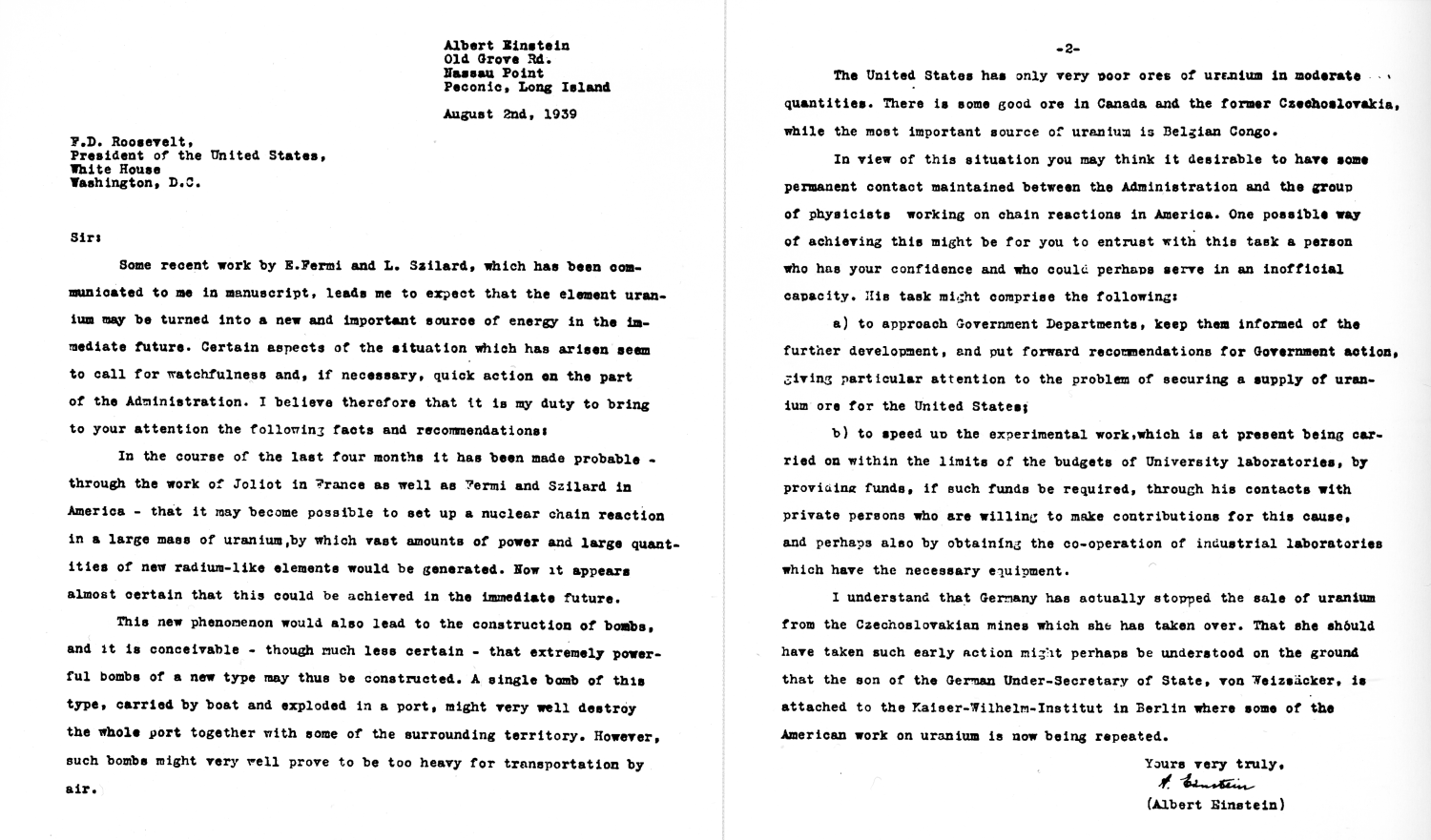
Letter from Einstein to Roosevelt Albert Einstein isn’t exactly Dr. Strangelove, now is he? The famously bushy-haired, pacifist physics genius was a kindly, gentle man frequently quoted as telling an interviewer in 1949 “I know not with what weapons World War III will be fought, but World War IV will be fought with sticks and stones.” And yet it was on this date back in 1939 that he wrote to President Franklin Roosevelt expressly urging the United States to research nuclear weapons.

Back then the stakes were horribly clear. Hitler had achieved conventional military superiority of a sort that might well give him domination of the Eurasian land mass. And if he did it would not only be disastrous for those who lived there, especially those like Einstein, by then in America, who were Jewish by descent if not belief. If he had conquered Russia and Britain, can anyone doubt based on his career that the Nazi leader would have turned his sights on infiltrating South and Central America preparatory to a combined German-Japanese attack on Canada and the United States?

That the Nazis’ racial doctrines made them unlikely allies with the Japanese, whose own ethnic views did not bear close examination, or rather cried out for it, would have been cold comfort had they ended up quarreling lethally over our corpses. And Einstein saw that all these things could come to be if the democracies did not find some way to combat Hitler. It wasn’t just a question of our finding an atomic “superweapon” to overcome the Blitzkrieg and the U-boats and other Nazi weapons and tactics. It was a question of getting there before Hitler did.

As it turned out, the Nazi nuclear program wasn’t very effective, partly though not primarily due to Allied bombing of heavy water facilities and efforts to deny Germany key raw materials. And while I remain convinced that the U.S. atomic bombings of Hiroshima and Nagasaki saved millions of Japanese lives as well as hundreds of thousands of American ones, World War II would in fact have been won without nuclear weapons.

It is after the war that the wisdom of Einstein’s course became clear. For seven decades, the primary guarantee that world affairs cannot get completely out of hand has been the American capacity for massive nuclear retaliation against any foe who menaces the core of the West. Presidents from Reagan to Obama who dream of nuclear disarmament know not what they do. A world in which Beijing, or Pyongyang, or Teheran had nukes and Washington and London and Jerusalem did not, or even one in which we had no sure defence against the conventional might of tyrants, would be such a nightmare that even a pacifist should not be able to bear it.

Einstein couldn’t in 1939. And that’s good enough for me.

It happened today - August 1, 2015

Resistance fighter armed with flamethrowerOn August 1 of 1944 one of history’s most heartbreaking battles and revolting crimes began: The Warsaw Uprising was launched, and Stalin deliberately let Hitler crush it.
Poor brave Poland had been cleaved in twain by Hitler and Stalin to kick off World War II. The Poles had fought valiantly but against impossible odds and, in defeat, managed to smuggle out an Enigma machine. Polish flyers took part in the Battle of Britain. There was a Polish division fighting in Normandy in 1944. And then, as Stalin’s tanks closed in on Warsaw, its inhabitants rose up to throw off Nazi tyranny and defy the Bolshevik version, liberating themselves to help give their nation a place in the post-war settlement.

It didn’t work. With cold brutality chilling even in the murderer of tens of millions of his own people, Stalin halted the Red Army’s advance for 63 days while the Nazis overcame the largest resistance action anywhere in the entire Second World War. Not only did he deny the uprising air support, he did everything in his power short of opening fire on the RAF to prevent Churchill even from airlifting in supplies. And of course after the war Moscow subjected the Poles to Bolshevik tyranny instead of allowing them self-government.

I’ve always been puzzled by Poland’s history. Generally speaking it seems to me not to fit the political culture of Eastern Europe at all. It often feels as though it was somehow misplaced by fate between Germany and Russia on a flat plain instead of being located between, say, France and Spain, free to develop into a flourishing dynamic democracy. Be that as it may, in all the annals of its unfortunate history I think there is no episode quite as gruesome as this one.

For that reason, it strikes me as both weird and appalling that this action alone of Stalin’s did not turn Western opinion and Western leaders irrevocably against him. Churchill of course saw through Stalin early. But even if we pardon enormous naiveté among those who had already lived through the rise of Hitler, which is already hard, and ignorance or blindness to so much of the conspicuous evil of the Bolshevik regime, Stalin’s icy indifference to human suffering and the nauseating lies of his propaganda in this episode ought surely to have alerted everyone else to what they were dealing with in Moscow.

If it had, the hundreds of thousands dead, mostly civilians, would be too high a price to pay. I admire the Polish Home Army for undertaking this desperate venture, despite the horrendous odds that it would fail bloodily. But for Stalin to stand by and watch Hitler slaughter the inhabitants of Warsaw, and for Roosevelt and others to watch him and not learn, mocks their heroism and sacrifice.

It happened today - July 31, 2015

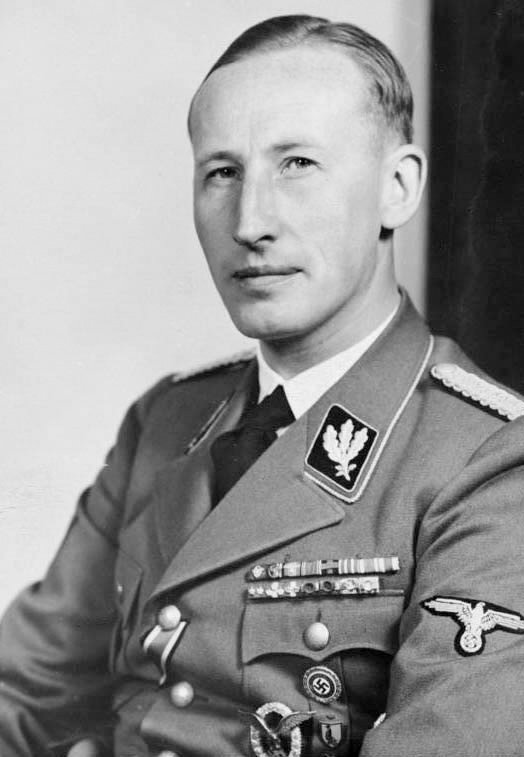
Reinhard Heydrich On July 31, 1941, Herman Goering ordered S.S. general Reinhard Heydrich to start planning the Holocaust. On Hitler’s instructions. Which is surely obvious.
That’s why I’ve always found it an odd aspect of the Holocaust that there is some debate about the extent of Hitler’s involvement in it. I don’t mean on the lunatic fringe, where you get this typically surreal combination of denial that he knew about it with praise for his undertaking it. I mean among reasonable people including reputable scholars who note the lack of direct written evidence.

I do find the lack of written evidence significant. But not in that way. I think it underlines the way conscience is always peering over your shoulder. The Holocaust is so overtly and obviously evil that even people eager to carry it out flinch at putting it down in black and white where it would sit there indicting them.

Thus Goering’s wording is somewhat nesh, requiring of Heydrich “a general plan of the administrative material and financial measures necessary for carrying out the desired final solution of the Jewish question.” You’d think a man willing to try to kill all the Jews would be willing to write an SS general a note saying “Hey, bud, what would it take to kill all the Jews?” But no.

As to the question of Hitler’s direct involvement, the whole concept of something this major happening in Nazi Germany without the “Fuhrer’s” knowledge and enthusiastic support is absurd. By 1944 the Holocaust was consuming resources desperately needed for the war which could not happen without his enthusiastic support. Besides, Hitler famously hated Jews. How can anyone believe that a totalitarian regime headed by an anti-Semitic maniac would attempt to exterminate the Jews of Europe by sheer coincidence?

There the answer lies in the curious reluctance to take ideas seriously. In modern democratic politics nearly everyone declares themselves “pragmatic,” meaning even if they have beliefs they have no intention of letting them influence their words or deeds. And they assume everyone is as emptily cynical.

Regrettably it is untrue. History is full of maniacs, as are current affairs. They mean what they say and they say what they mean and they act on it. Including Hitler, whose anti-Semitism frenzy was the direct prime cause of the Holocaust.

It happened today - July 30, 2015

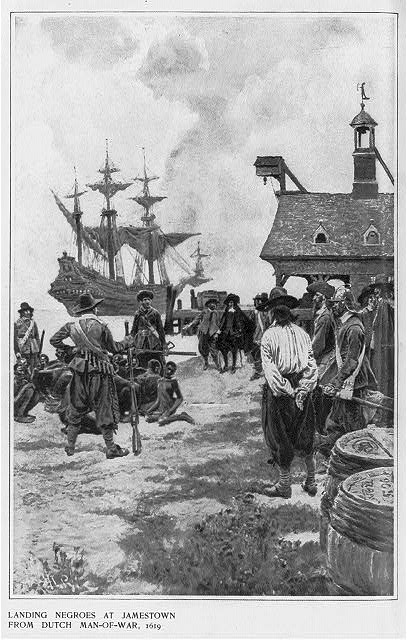
July 30 is a great day for liberty. And a dark day. It’s a great day because on July 30 of 1619 the first representative assembly in the New World met in Jamestown, Virginia just 12 years after the remarkably rocky founding of that British colony. It’s a dark day because it was in that same year in that same place, though not on the same day, that the first Negro slaves were sold. How could the same people have done both?

I have often commented on the everyday miracle of the colonists creating representative government in the midst of hunger, sickness and terrible trouble with their Indian neighbours, without seeking anyone’s permission, simply because that’s what Englishmen did, being free. It was at once stunningly bold and absolutely conventional.

It continues to inspire me. But then there’s the slavery thing.

How could people so devoted to liberty be so obtuse about denying liberty to others? Of course slavery was not fully developed institutionally or legally in Jamestown in 1619, any more than legislative control of the executive was. But every step they took on slavery from then on was wrong just as almost every step they took on self-government in every other respect was right. How can this be?

It’s easy to explain if you regard American freedom as essentially a fraud, a system of privilege for a small elite or white men generally built, necessarily, on the denial of rights to others. But if you take a less structurally conspiratorial view it is a major problem to explain it.

It might become tempting to make excuses, from a general claim that people in the past were dim compared to us to an acknowledgement that many people including white indentured servants in Virginia enjoyed unpleasantly limited legal status in the 17th century to the fact that life was tough all over back then and thus a certain callousness is understandable. But it won’t do.

The men and, eventually, women who settled Jamestown and later Virginia were human beings like ourselves and moral actors and even once all the extenuating circumstances are given their due weight the fact remains that on this count of the indictment they are grotesquely guilty. Struggle as I may, including in teaching a 4th-year seminar on the history of American slavery at the University of Ottawa, I still do not see how they could have been so consistently blind from 1619 down through 1860 and beyond. Especially as slavery is as old as rock against head but racial slavery, which flourished from the earliest European “voyages of discovery” in the 15th century, was a new and specially horrible form of this already brutal institution.

The story of representative government and slavery taking root in the same place in the same year in what really did become in most respects the unchallenged “land of the free” is, I remind my students, a sobering reminder of the evil of which otherwise thoroughly decent people can be guilty, even casually.

By the way what saved the fragile Jamestown colony was the discovery by John Rolfe, who married Pocahontas and whose journal records the arrival of the first slaves “About the latter end of August”, that tobacco grew splendidly in the soil of Virginia, just when the smoking craze was sweeping England to the horror of James I, who unleashed a very diverting 1604 polemical “Counterblaste to Tobacco” and at least got that one right. Nowadays we’re probably almost as horrified at the tobacco as the slavery. And the early European settlers’ blindness to the hypocrisy as well as the evil of racial slavery prompts uncomfortable reflections, unless you are fatuously self-satisfied about modernity, as to which aspects of our conduct will strike posterity as equally bewilderingly blatantly wrong.

When I brought this issue up in one seminar and suggested that abortion on demand might qualify, one of my students responded that our neglect of animal rights might baffle future generations. I can’t be sure, though I’m still more inclined to think it will be abortion. But in any case, since I know I’m not a superior kind of sentient being to the colonists in Jamestown, I am kept at least somewhat humble by the thought that there will probably be something and that, of course, if we knew what it was we wouldn’t be doing it so it would be something else.

Even if we have our principles right, we cannot afford to be careless about examining our fidelity to them in practice. Not in 1619 and not in 2015.

It happened today - July 29, 2015

Spanish ArmadaOn July 29 back in 1588 the English navy won one of its most important victories when it defeated the “Invincible” Spanish Armada with which Philip II of Spain sought to crush Protestant England like an insect. When tyrannical bombast meets quietly determined self-government, Thousand Year Reichs and other such vainglorious constructs often come tumbling ignominiously down.

July 29 is also the day the Doors had their first #1 hit with “Light My Fire,” which I was tempted to discuss not only to give the knucklebone shampoo to Jim Morrison’s talents as a lyricist. Evidently he was upset that he never received his due recognition as a poet, to which I sneer at his shade that the last poetaster to rhyme moon spoon and June with an air of self-congratulation was infinitely superior to one who would seriously write that someone’s brain was “squirming like a toad.” But I digress. Except that a key part of the English victory in 1588 was that they did indeed light the Armada’s fire, releasing the burning hulks known as “fire-ships”, full of blazing pitch, brimstone, gunpowder and tar, upwind of their foe anchored off Calais with deadly effect on the very early morning of July 29.

The defeat of the Armada, which took months to complete, also gave rise, you’ll be irritated to hear, to the original version of that annoying online scam where someone in West Africa has a big bank deposit, some diamonds etc. that they need your help sneaking out. Following the defeat of the Armada, and the disastrous effort to return home by sailing north round the British Isles in September 1588 only to come to grief on the rocky Atlantic coast of Scotland and Ireland, prospective English chumps would get letters from someone claiming to be an enormously wealthy Spanish noble currently stuck in Ireland who would give you a serious heap of doubloons later if you would just front him some actual coin of the English realm now to get him home. Which is why that scam is properly called “the Spanish prisoner”.

Still, you can’t blame Francis Drake, Lord Howard or Queen Elizabeth for that. They commanded with consummate skill and coolness or, in the case of the queen, inspired her subjects by her general conduct and, in a famous speech on August 8 to soldiers on watch against an invasion, her stirring words: “Let tyrants fear, I have always so behaved myself, that under God I have placed my chiefest strength and safeguard in the loyal hearts and goodwill of my subjects”. And their ingenuity; the day before that speech the English had again beaten the battered Armada in the Battle of Gravelines, pioneering the use of gunnery rather than ramming and boarding as the main tactic.

Now suppose the Spanish had won. Suppose Philip had managed to make good his claim to the throne of England (he had married Elizabeth’s Catholic sister Mary) and brought Spain’s stagnant, oppressive and plutocratic system to England. Where would we be today? Would Canada be another Venezuela, Argentina or Cuba?

Perhaps this scenario is as fanciful as an email from Nigeria promising untold wealth. Perhaps a Spanish invasion would have been repulsed by an armed citizenry devoted to their ancient liberties, or never even gotten its barges full of soldiers from Flanders across the Channel against Dutch opposition. But again, it’s easy to be complacent about a threat after it’s defeated. To me the victory in 1588 is another of those triumphs against long odds on which our freedom today depends.

It happened today - July 28, 2015

Eleanor Roosevelt speaks at the UN, 1947 Sixty years ago today the United States Senate approved the UN Charter. Examining the performance of the UN since I am tempted to reproach Senators for having done so. But in many ways it was a remarkable achievement.

I do not say so because the UN, or its Charter, are the revolutionary advance in human history that zealots and partisans claimed and sometimes still do. The UN is not a world government and I for one am glad it’s not. It does not warm the cockles of my heart that Eleanor Roosevelt was a U.S. delegate to the UN General Assembly and the first U.S. delegate to the UN Commission on Human Rights. So why is it remarkable and not just in the same way that Chief Inspector Dreyfuss described Jacques Clouseau as “a remarkable man”? Because it signaled decisive American commitment to the maintenance of world order.

Key players in 1944 and 1945, from President Roosevelt himself to Senate Foreign Relations Chairman Tom Connally (D TX) and ranking Republican Arthur Vandenberg (R MI), remembered the disastrous failure of the United States to join the League of Nations, a body almost as useless as the UN in practice but equally important from a symbolic point of view. As World War II wound down and Allied victory became inevitable they were determined to avoid a similar result once Germany and Japan surrendered. And while I have little use for FDR’s diplomacy generally, I will give him credit for understanding that his Democratic predecessor Woodrow Wilson had made a horrible botch of his effort to get the U.S. into the League of Nations partly by excluding Republicans from the effort and partly by excluding Congress altogether. FDR kept both his partisan adversaries and the legislative branch involved.

Perhaps the danger of American rejection of a leading postwar role was never that great. Popular opinion had clearly swung behind engagement and at least limited willingness to endorse multilateralism; hence the enormous margins by which resolutions passed the House and Senate in 1944 stating that Congress would not obstruct American membership in a postwar international organization (the “Fulbright Resolution” passed the House by 360 to 29; the “Connally Resolution” passed the Senate by 85 to 5). But it’s easy to be smug in retrospect. At the time it seemed both important and controversial. And that requires us to give at least some credit to those who managed to bring it smoothly to a successful conclusion.

Americans would of course come to regret much about their nation’s engagement in world affairs and to sour on the UN as they soured on their Soviet “ally” after 1945. But until very recently they remained overwhelmingly committed to leading the free world and we are very fortunate that they did.

As a practical matter American membership in NATO, formed in 1949, mattered more. The decision to join the UN was symbolic. But sometimes symbols matter. In 1945 this one did, and it is remarkable how decisively and clearly the American political establishment endorsed it with the clear support of a majority of citizens.