Great news! Our latest documentary, on how to fix our Constitution, is now available to the public and is free to watch on YouTube. The high-resolution digital version is also available for purchase, for only $5. DVDs (standard) are available for pre-order and we will have a blu-ray version in the next little while. For more information about the project, and to help us make the changes we propose, please visit www.fixtheconstitution.ca. https://www.youtube.com/watch?v=QQHH_KIjTsc
 So this is the anniversary of the “Great Stand on the Ugra River”. Or at least part of it. Never heard of it? See, it’s a tributary of the Oka which in turn leads to the Volga. Oh. You meant the stand. Well, apparently it was pretty much the end of the Tatar Yoke over Russia, in 1480.
Now I’ve written elsewhere in this series about the lamentable political history of Russia including the sad way the newly independent Tsars seem to have learned all the wrong lessons from the period of Mongol dominance. And it’s all true. But it doesn’t diminish the value of this incident beginning on October 8, 1480 when the army of Akhmat, Khan of the Great Horde, tried to force the Ugra and were stopped by the forces of Grand Prince Ivan III of Muscovy including by their possession of firearms that the Horde lacked.
I said Oct. 8 was part of the stand. And it was, because the action went on for four days. Then the armies sat glaring at one another while Ivan tried successfully to reconcile with his own brothers whose troops then showed up swelling the Russian ranks and the Khan waited unsuccessfully for his ally the King of Poland whose troops then didn’t show up not swelling the Mongol ranks.
The latter withdrew and a few months later Akhmat was killed in battle with other Hordies. And the Mongols never really came back.
I wish Russian history since had turned out better, that Muscovy had somehow got back onto the open, European path Kievan Rus’ had been on until the Mongol Empire showed up with fire and sword and Möngke Khan. But sometimes sufficient unto the day is the evil thereof or in this case the heroism of the Russian soldiers and the steady hand of Ivan III.
At any rate, if you’d been there that day you’d have been cheering for them. And they did win. So that’s got to count for something.
“Life does not cease to be funny when people die any more than it ceases to be serious when people laugh.”
George Bernard Shaw The Doctor’s Dilemma
 On this date in 1879, Otto von Bismarck got too clever by half. Or maybe he had that problem all along. But on October 7 of 1879, his plan to keep Germany from being isolated by isolating France and Russia began to mature with the signing of the “Twofold Covenant” between Germany and Austria-Hungary.
Now you might think the alliance between these two central European states was natural, precisely because they were central European states, whatever else you might think of it. For instance that the Central Powers were the aggressors in World War I, or that land powers tend to lose to sea powers in big geopolitical showdowns, or that attacking the Anglosphere is a bad idea no matter how carefully you prepare, or that Austria-Hungary was a useless ally for anyone to have. (Incidentally Hitler shared this last view, calling Austria-Hungary “this mummy of a state” in Mein Kampf, and while he was indescribably evil he was regrettably prone to strategic insights including about the defects of Germany’s first attempt to conquer the world, which is why he got as far as he did and did as much harm as he did before finally being stopped. Mind you, he chose to be allied with Mussolini’s Italy so maybe he wasn’t that smart.)
In any case, there was real genius in Bismarck’s successful alliance with a nation his own Prussia had fairly recently humbled, in 1866, in one of the wars in rapid succession that created a mostly united Germany. Minus some of the German-speaking bits Hitler went about accumulating on his way to aggression, genocide and ultimate defeat. Moreover Germany's unification and neighbour-attacking was generally driven or at least justified by nationalism, which the Austro-Hungarian rulers rightly saw as a deadly threat to a state whose very name indicated the presence of several important and very self-conscious minorities and which, indeed, was the figurative trigger behind the literal trigger whose pulling killed Archduke Franz Ferdinand, heir to the Austro-Hungarian throne, and in turn set off the cascading series of threats among members of the rigid yet rickety European alliance system that plunged the world into World War I.
That alliance system was, in turn, Bismarck’s great achievement or at any rate his doing. True, he was gone by the time the great crisis of 1914 came, and those who controlled Germany were lesser lights than his. But his light shone in the wrong direction and put them where they found themselves tempted to strike fast and hard to solve dilemmas Bismarck’s alliance system had made worse not better.
It was Bismarck’s obsession with keeping Germany from being isolated that created a menacing sense of isolation among almost everyone else, even his supposed ally Italy and certainly France on the west side and Russia on the east side of his central European bloc. Indeed, the “Twofold Covenant” of 1879 specifically provided that Germany and Austria-Hungary would support one another if either got into a war with Russia, while they would maintain benevolent neutrality if either got into a war with somebody else or should I say quelqu’un d’autre.
Bismarck then proceeded to sign treaties with just about everybody else including Russia. But everybody thought he was up to something and that something would involve German troops crossing their border, which is why France and Russia gradually created an alliance that was formalized in 1894. And why Britain and France created one in 1904, and added Russia in 1907.
Now the wise course for Germany would have been to give up the notion of attacking everybody until it achieved “Deutschland über alles” whose original lyrics speak of Germany stretching from the Memel river (in Belarus) to the Meuse (in France) and from the Adige (Etsch) in Italy which created understandable anxiety or perhaps more exactly angst in the nations suddenly and musically informed of the need to start either German lessons or military training. Unfortunately Bismarck was clever rather than wise.
Too clever by half. With appalling consequences.
“The truest kinship with humanity would lie in doing as humanity has always done, accepting with a sportsmanlike relish the estate to which we are called.”
G.K. Chesterton in The Common Man, quoted in Gilbert! Vol. 3 #7 (June 2000)
My latest for the Rebel: https://www.youtube.com/watch?v=WJUQWkTkuMA
The audio-only version is available here: [podcast title="Rebel, October 6"]http://www.thejohnrobson.com/podcast/John2016/October/161006Rebel.mp3[/podcast]
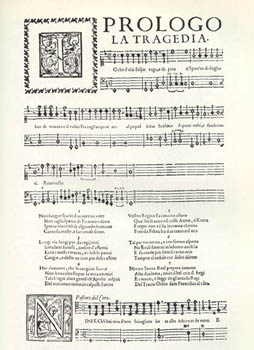 On this date… let me take a deep breath and really let this one go… the earliest opera we still have had its first performance. Euridice by Jacopo Peri was performed in Florence on October 6, 1600 “signifying” according to Wikipedia “the beginning of the Baroque period.”
Obviously it’s an oversimplification or at least a very bold simplification to date the start or end of an artistic period to a particular day. But Oct. 6 1600 is as good a day as any because both opera and Baroque are, how shall I put this in a suitably Philistine manner, rather over the top.
I mean in one sense opera is just theatre where they dance and sing instead of walking and talking. And why not? Dancing and singing are good… unless I’m doing them, but that’s a topic for another day. Or perhaps decade. Like the 2070s. Meanwhile can I just say that the thing about opera is that it rather is to singing as Baroque is to decoration. It’s incredibly impressive. But it’s dazzling, overdone and in the end I admire the technical accomplishment more than I enjoy the thing.
At this point you’re probably raising your hand, or baton, to suggest that I don’t seem to know much about opera. And I don’t. Once I’ve told the joke about the diva who had no sideways I’m pretty much done except I know Mozart wrote some and they were probably among the best. I’m not even all that sure whether the dancing is in operas or mostly in ballet where people make impossible feats look easy but don’t sing much though I’m pretty sure there’s dancing in at least one Mozart opera because I watched Amadeus. So there. But clearly there are different kinds of opera, some of which try not to go over the top and fail and others embrace it with gusto-o-o-ooooooo (here the wine glass shatters).
Indeed, early opera was thought too frivolous and so some very straight-laced people tried to make it long and dull. Or allow “opera buffa” for rubes who actually liked to laugh during an evening out. (Or out cold if the opera was dull enough.) Then they started castrating people which is just never a good thing. Then you got “bel canto” which means beautiful singing which makes me wonder what had gone before and why. Then they decided the songs were too intricate and showy and maybe it would be better with some actual tunes, an idea associated I gather with Verdi. Already I like him. But he still wrote operas so maybe not so much. And people followed him up with melodramatic opera which strikes me as painting the lily. (Yes, that is the real expression, from Shakespeare’s King John, not “gilding the lily” which makes no sense. I assure you.)
So on it goes. And there I sit sympathizing with Captain Haddock, in Tintin, saying whenever he hears Bianca Castafiori sing it reminds him of the hurricane that struck his ship off the Azores.
By the way, there seems to be an opinion out there that the whole thing was a misunderstanding, that in trying to revive classical art in the “Renaissance” or rebirth of not being dirty poor ignorant and superstitious during the Dark and Middle Ages (another misunderstanding, incidentally) some smart-alecky Italians thought the “chorus” sang in Greek plays and maybe everyone else did. So they revived something that never existed. The first “opera” ever, Dafne by Peri, “is unfortunately lost” according to Wikipedia. I’m not sure how unfortunate it is given that first tries are not always successful and given that Euridice isn’t generally performed today because it’s not, you know, any good. But however that may be, opera caught on and there’s nothing we can do about it now.
“And have we now forgotten that powerful Friend? or do we imagine we no longer need its assistance? I have lived, Sir, a long time; and the longer I live, the more convincing proofs I see of this Truth, that God governs in the Affairs of Men. And if a Sparrow cannot fall to the Ground without his Notice, is it probable that an Empire can rise without his Aid?”
Benjamin Franklin, Motion for Prayers in the Constitutional Convention, 28 June 1787