If you're looking for reasons we need to fix our Constitution, look at this story from today's National Post about a customer awarded $12,000 for "injury to his dignity, feelings, and self-respect" after a restaurant stopped accommodating his very special need for pseudo-hyper-clean surroundings. The man apparently suffers post-traumatic syndrome and OCD and can't cope with lemon in his water or cutlery placed directly on the table. And thus he has a human right to make other people do what he says even if it's not reasonable. Now I have sympathy for this person and his struggles. I don't doubt they are real. But what about the restaurant and its employees? What would happen if everybody demanded very special service including wiping the vinyl seats and always putting him in the same booth away from other patrons? How much would costs increase? And how could you seat everyone away from all other patrons without having a restaurant the size of a stadium?
Once the rule was that if you wanted special service and a restaurant was willing to provide it, as this one was for a long time, you went there. If they refused, or changed their service, you stopped going there. Just as you don't eat in a place where you don't like the food, the wait staff, the décor, the ambiance or anything else. They can't make you come in, and you can't make them let you in.
You don't always get what you want. And nor does anybody else. But nobody is able to make anyone else bend to their will regardless of consequences. All transactions must be mutually satisfying. And my right to swing my fist ends where your nose starts.
Not in the Brave New World of human rights tribunals. Instead you get to demand whatever you want of me, and I am in a very real way conscripted labour. You don't actually punch me if I don't serve the water without a straw or tell you you're too much trouble and should leave. You call the state and they send people to do it for you. First a summons, then a fine, then jail if I don't pay, and cops with weapons if I won't come quietly. Behind all this lurks the policeman's truncheon. But not the courts.
This fine came not from a judge or jury, following the due process guaranteed in Magna Carta and generally proudly upheld ever since. It came from a human rights tribunal, specifically the Ontario one. They follow very different rules, far more lenient toward the self-proclaimed aggrieved and far harsher on everybody else. And it's not a recipe for a good society.
Allegedly in this case the restaurant manager was very rude. And I like good manners. But for heaven's sake, you don't have a human right not to encounter rude people. De minimis lex non curat. And restaurants with surly staff lose customers unless the food is great and worth putting up with the abuse, or it becomes a weird kind of cult attraction. (Don't laugh; when I was in grad school there was a burger joint with an elaborate menu but only cheeseburgers actually for sale, and they ridiculed anyone who ordered anything else. It was always full. And we often asked for something else just to hear what they'd say.)
In short, we work out our own accommodations with our fellows. They can't use force or fraud and neither can we. We can negotiate but we cannot demand or compel. Or at least, we didn't use to be able to.
There were lamentable exceptions, of course. Governments drew invidious distinctions based on race or gender and punished people who did not obey such rules. But generally, people got to decide for themselves how to do things and with whom. And if you wanted the sympathy and respect of others, you had to show it for them and their difficulties too.
All that is changing now, into a society where everyone can coerce everyone else. But where does it all end? The Post story quoted a professor of hotel and restaurant management at Ottawa's Algonquin College that “Responsibility (to accommodate) will never be lessened. It will only be increased with time.”
That certainly is the way things are going now. But how do we accommodate one another once everyone has special demands, and I can't sit where I want so you can sit alone and vice versa, and the waiter is afraid of plain water, and the person at the next table but three has to bring their companion snake but someone else has a phobia about snakes? (The last is not an invented example.)
You can't. You literally can't build a society with stable rules, mutual respect, and restaurants that can actually operate if people don't have to respect other people's autonomy. Instead you get a free-for-all of uncivil demands and hurt feelings and everyone has a right to everything but there is nothing.
If that sounds bad to you, please back our "True, North and Free" project to fix Canada's constitution so that it really respects individual rights, including the right to run a restaurant where customers can't march in, redesign the place and call a cop if you object.
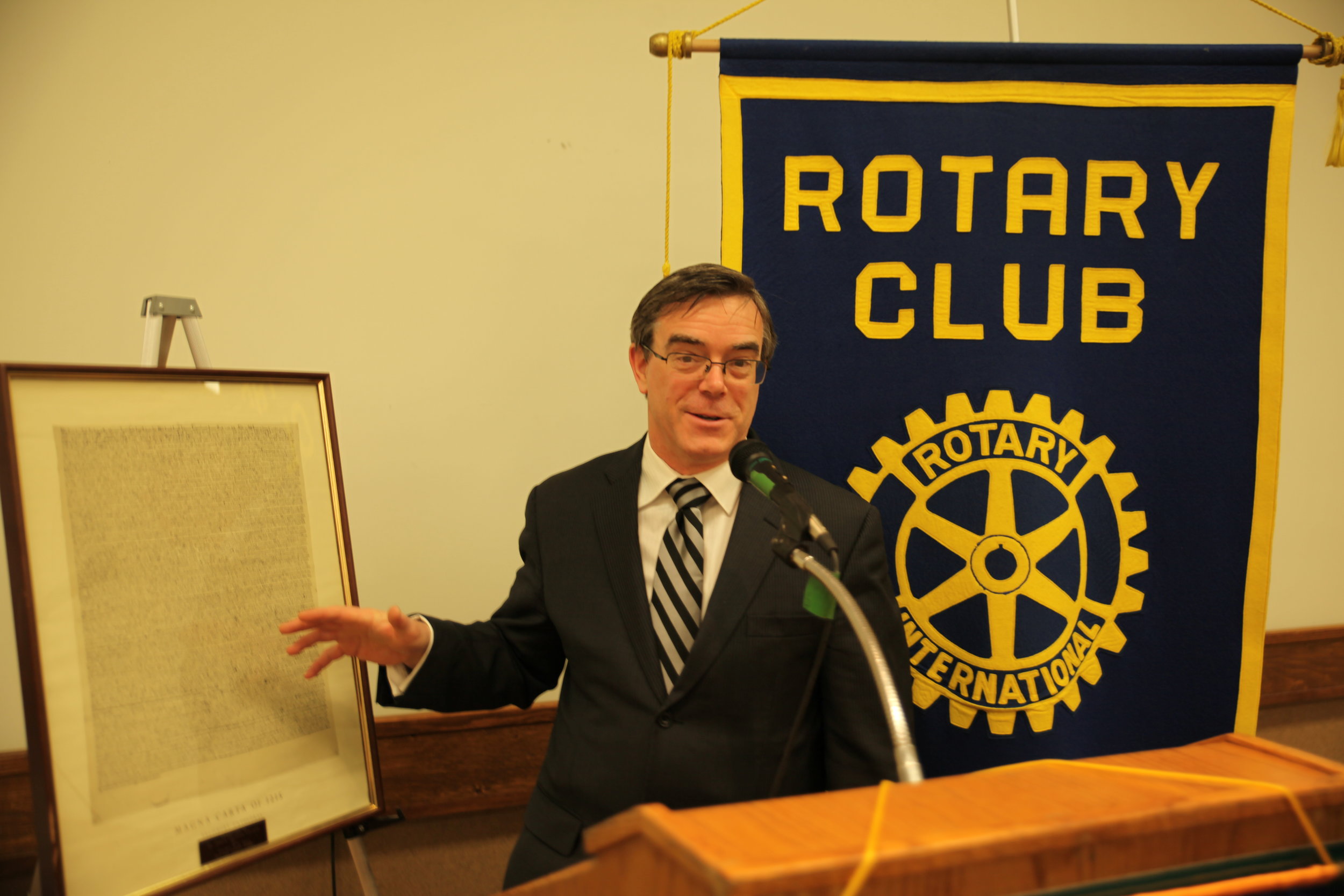
 Brigitte and I will be talking about Magna Carta and how to take Canada back with a smile at the Vic Juba Community Theatre in Lloydminster on February 29, an event put together by our friend Danny Hozack and the good folks at the Economic Education Association.