In my latest National Post column I satirize people's ongoing faith in government's compassionate efficiency despite all their experience with its actual performance.
"[H.G. Wells] seems to believe that men who have begun anyhow, and come from anywhere, and believe or disbelieve anything, will by some process of pooling impressions arrive at an agreement at the end... I cannot see how this is really consistent with any rational process of thought at all... people who differ at the beginning still differ at the end…’" G.K Chesterton in G.K.’s Weekly June 22, 1928, quoted by Dale Ahlquist in Gilbert Magazine Vol. 20 #2 (Nov.-Dec. 2016)
 "A spectre is haunting Europe – the spectre of communism." It is, I must admit, a brilliant opening line. With that line the Communist Manifesto opened on February 21 of 1848. And the world was never the same again. In, most people must surely now admit, mostly bad or even horrible ways.
Radicalism is, I suppose, inevitable, an intellectual or even psychological disposition that has always been with us and always will be. And it will always be impatient, convinced that good will is all you really need, and therefore also convinced that its opponents must be evil, an attitude which rapidly passes through insolence into abuse. But Marxism seems to have been a singularly poisonous and attractive form of radicalism, a perilous combination.
Marx himself long enjoyed a reputation as a deep thinker that sometimes attaches to the voluminously impenetrable. Marx was not, in fact, a great analytic economist, although his theories had a certain plausibility when conventional economics believed in the labour theory of value that they could not retain to the educated mind after the marginalist revolution of the early 20th century. But he was also attractive to the usual suspects, especially of the more dangerous sort, because his supposed erudition was basically just the lead weight in the glove of his rhetoric.
Marx always was a fine rhetorician even if Kapital is all but impenetrable. I’ve always cherished Joseph Schumpeter’s phrase that "the cold metal of economic theory is in Marx’s pages immersed in such a wealth of steaming phrases as to acquire a temperature not naturally its own."
Especially in the Communist Manifesto, full of ringing phrases like "The history of all hitherto existing society is the history of class struggles" that are exceptionally clear as well as polemical.
Among these is one that I consider highly perceptive, partly because Marshall Berman used it as the title of an unsettling book about modernity. It is that under what Marx called capitalism but might better be dubbed "modernization," a disorienting process of constant change occurs in which "All that is solid melts into air". Including your formerly brilliant cutting edge smartphone, which three years later is an embarrassing brick. But a few insights do not make a philosopher or an economist.
Nor do a few good phrases make a good man. Including his castigation of "the idiocy of rural life". Oddly the famous "Religion is the opium of the masses" is not from the Communist Manifesto but from the posthumously published "A Contribution to the Critique of Hegel's Philosophy of Right" whose title gives a fair idea of Marx’s general prose style despite his gift for turning a phrase when he wanted. And that quotation, in full, is not as rude as Marx often is: "Religion is the sigh of the oppressed creature, the heart of a heartless world, and the soul of soulless conditions. It is the opium of the people". But Marx was, as a rule, abusive, in debate and in his personal life and I do not think it can be disregarded in considering his theories and their appeal.
Space precludes getting into all the details here but he was a mean, selfish, thuggish hypocrite, and his doctrines not accidentally often appealed to thoroughly unpleasant people. Moreover they were materialist, which necessarily denies human dignity (whether it is true or not is of course not determined by its attractiveness). And Marx and Engels’ theory of class struggle, in ways that to borrow a Bolshevik phrase are no accident, absolutely denied the possibility of rational debate, declaring all opposition to Communism to be at once viciously self-interested and impenetrably obtuse, thus leaving a speedy resort to violence the only course. In that sense, for all its elaborate theoretical framework, Marxism was at bottom radically relativist and nihilistic regarding the very possibility of objective truth.
Despite its failings, or perhaps because of them, far too many adolescent revolutionaries of all ages adhered to it for far too long for the thrill of giving reputable society, and staid socialists, a poke in the eye, without looking carefully at the implications of its doctrines. And perhaps that, too, is an enduring characteristic of radicalism. But if so, it is another reason to avoid it.
A spectre did indeed haunt Europe for more than a century after the Communist Manifesto first appeared. And it turned out to be even worse under Stalin, Mao and Pol Pot among others, than its most vociferous critics warned, in part because its most vocal and determined adherents were so careless about what they advocated. It remains hugely popular on the intellectual left, even trendy.
Do such people never learn?
In my latest National Post column I lament the latest New Brunswick budget continuing down the boringly disastrous path of deficits today for affordable free money the day after tomorrow... or after the next election... or never.
 In what seems truly a bygone era, Fidel Castro seized power in Cuba on February 16 of 1959. Yes, 58 years ago. And a Castro is still in power in this ghastly real-life Autumn of the Patriarch.
I could say a lot of things about Fidel Castro without getting to anything nice. Like how revealing it is that he would have switched jobs repeatedly while still being the guy you got shot for disobeying. And how typical it is of a regime that for all its yapping about true democracy had no legitimacy that it became dynastic like North Korea. (Mind you his own daughter, from one of his many infidelities, fled the island prison in disguise in 1993 and his own sister opposed him from American exile.) But never mind him.
What I want to do on this dismal anniversary is insult all the leftists who placed such high hopes on him to begin with and then somehow insisted despite everything that he really was a good man and a liberator. Anybody can make a mistake. Even the New York Times in originally hailing him as "the Robin Hood of the Caribbean". But to persist in one, to speak of democracy and human rights and peace in a sanctimonious tone while siding with this seedy brutal villain and denying repeatedly that he was a Communist, or in case he was denying that it mattered if he was one, surely indicates grave defects in judgement.
Especially as it is a habit of the left, from Stalin through Castro to Mugabe and beyond; as Jay Nordlinger memorably put it in National Review back in 1994, "Like an adolescent girl on holiday, the radical Left is always falling in love with some unsuitable foreigner..."
To do it and learn nothing is to double down on nasty folly. Why have so many done it, and not just on the radical left, including our own Prime Minister Justin Trudeau?
For that matter, why are there still Che T-shirts?
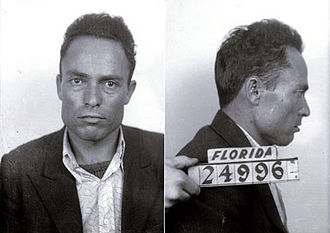 There are a lot of ways to get into the history books. But here’s one you wouldn’t want. On February 15 of 1933, Giuseppe Zangara tried to assassinate president-elect Franklin Roosevelt. Had he succeeded, it would have been the first time anyone was elected president and then died before taking office.
It didn’t happen then, and it hasn’t happened since, something I refrain from mentioning between any election and inauguration lest I should be suspected of trying to jinx the president-elect. As a matter of fact, no one has ever died between being nominated by a major party and the election either. Leaving aside violence, you’d think simply by the odds it would have happened to somebody. (Democratic lion Stephen A. Douglas, one of Lincoln’s opponents in the 4-way 1860 election, did die suddenly less than three months after his victorious rival was inaugurated.)
As for getting into the history books anyway, a dismal footnote to Zangara’s failed attempt is that in the process, standing on a wobbly folding chair and fighting a crowd trying to subdue him, he managed to shoot four other people including Chicago mayor Anton Cermak, who died of his wounds on March 6, two days after Roosevelt’s inauguration. So Cermak becomes "Who was that guy shot by mistake next to FDR?"
Meanwhile Zangara was executed in "Old Sparky," the Florida State Prison’s electric chair, on March 20, justice being swifter in those days. (For what it’s worth, the judge who sentenced him to death called for a complete handgun ban.) And in the process Zangara did make a sort of history.
You see, the rules said prisoners could not share a cell prior to execution but as someone else was awaiting capital punishment he obliged them to expand the "death cell" into the now proverbial "Death Row". It’s not exactly what you put down as your ambition in your high school yearbook. But it beats being the guy assassinated by mistake while the real target wasn’t becoming the first ever president-elect not to make it to Inauguration Day.