My latest for The Rebel: https://www.youtube.com/watch?v=5cpmg0t5Dzk
The audio-only version is available here: [podcast title="Rebel, September 29, 2016"]http://www.thejohnrobson.com/podcast/John2016/September/160929Rebel.mp3[/podcast]
My latest for The Rebel: https://www.youtube.com/watch?v=5cpmg0t5Dzk
The audio-only version is available here: [podcast title="Rebel, September 29, 2016"]http://www.thejohnrobson.com/podcast/John2016/September/160929Rebel.mp3[/podcast]
I talk with Mark Sutcliffe about Iranian hostages and US presidental debates. Click here to listen.
 Render therefore unto Caesar the things that are Caesar’s. As Kenny Stabler used to say, “Easy to call, hard to run.” A thought prompted by the September 29 anniversary of the excommunication of the Holy Roman Emperor Frederick II in 1227. Well, one of four actually.
Right away you see the problem. The Pope is meant to be holy. This other guy has “holy” in his title. And here they are hurling abuse at one another over political matters.
Of course a lot of people don’t think the Catholic Church is all that holy. Indeed quite a few hate it bitterly. And no one has improved on Voltaire’s gibe that the Holy Roman Empire was in fact none of the above. But it’s noteworthy that while this particular excommunication was formally because of Frederick’s failure to take part in the Sixth Crusade it was really about political and military disagreements over European matters.
Even a Crusade is sort of a mixed bag render-unto-Caesar-wise. It’s a war which is secular but with what were meant to be holy motives. And the Biblical injunction never meant kings should not try to defend churches, monasteries and schools against rampaging invaders; Alfred the Great certainly did exactly that and rightly so. But this whole episode was shabby and not least because the Crusades were used as a pretext.
On both sides, it seems. Frederick actually had set out for the Holy Land before becoming too ill to continue, something his enemies downplayed or denied. But he only went on the crusade because he’d managed by proxy to marry Yolande of Jerusalem and promptly had his new father-in-law John of Brienne deposed as king of Jerusalem so he could bag it. Piety was not self-evidently his main motive.
As for the Pope, his motives were essentially secular. The papacy was a major political player in those days and didn’t get along with the Holy Roman Emperors. In fact Frederick’s predecessor Otto IV had been excommunicated by Gregory’s predecessor-but-one Innocent III, the same guy who backed Bad King John against Magna Carta and the Barons (which pace Dave Barry would be a good name for a rock band). Innocent had a bit of a case, in that Otto was trying to control the church in his territories and was leading an army toward Rome. But the deeper cause was quarrels over secular papal control of various Italian polities and alliances with various rulers.
The same is true of Frederick’s issues with the Pope, who actually excommunicated him again when he did go on the Sixth Crusade in 1228, on the grounds that an excommunicated guy shouldn’t do so. There were legitimate grounds for dissatisfaction with some of his actions as a Crusader. But it is telling that by 1229 Frederick and Gregory were at war over various bits of Italy and when the excommunication was lifted in 1230 it was for political rather than moral or religious reasons.
The larger problem here is that politics is such an ugly business, so often dominated by counsels of necessity in dubious circumstances, that to start excommunicating people over policy rather than because they, say, murdered an archbishop weakens the moral authority of the act of excommunication. In 1239 Gregory excommunicated Frederick again, for invading Lombardy, which may have been both nasty and unwise but is hardly among the 7 Deadly Sins. (At one point Frederick also persuaded Gregory to excommunicate Frederick’s own son Henry on political grounds, following which he outmaneuvered Henry politically and threw him into a dungeon which seems more suitable to the situation.)
Interestingly enough Frederick does appear to have held views far outside the Catholic mainstream. Very possibly he wasn’t a Christian at all. Which I can see excommunicating him for if you are Pope. But when you only erupt into theological thunder when the guy is giving you political fits you wind up being just one more politician.
In any case Frederick went on to demand the Church give up its wealth, fail to organize a European league against politically ambitious clerics, wage more wars, get excommunicated again in 1245 and die unexpectedly in 1250. His dynasty perished soon thereafter in conflict with a papacy whose political ambitions were dragging it down into the spiral of cynical worldly maneuvering that would see Borgia and Medici Popes and the Reformation.
It would have been far better to leave politics to Caesar, surely, on practical and certainly on moral grounds.
“Had the praise of history been passed over by former chroniclers it would perhaps have been incumbent upon me to urge the choice and special study of histories of this sort, as knowledge of the past is the readiest means men can have of correcting their conduct. But my predecessors have not been sparing in this respect. They have all begun and ended, so to speak, by enlarging on this theme: asserting again and again that the study of history is in the truest sense an education, and is training for political life; and that the most instructive, or rather the only, method of learning to bear with dignity the vicissitudes of Fortune is to recall the catastrophes of others.”
Polybius (Introduction to Book I of his Histories published in the 2nd century BC)
In my latest National Post commentary I welcome Iran's release of Prof. Homa Hoodfar but worry about what our government may have done behind the scenes to get her out.
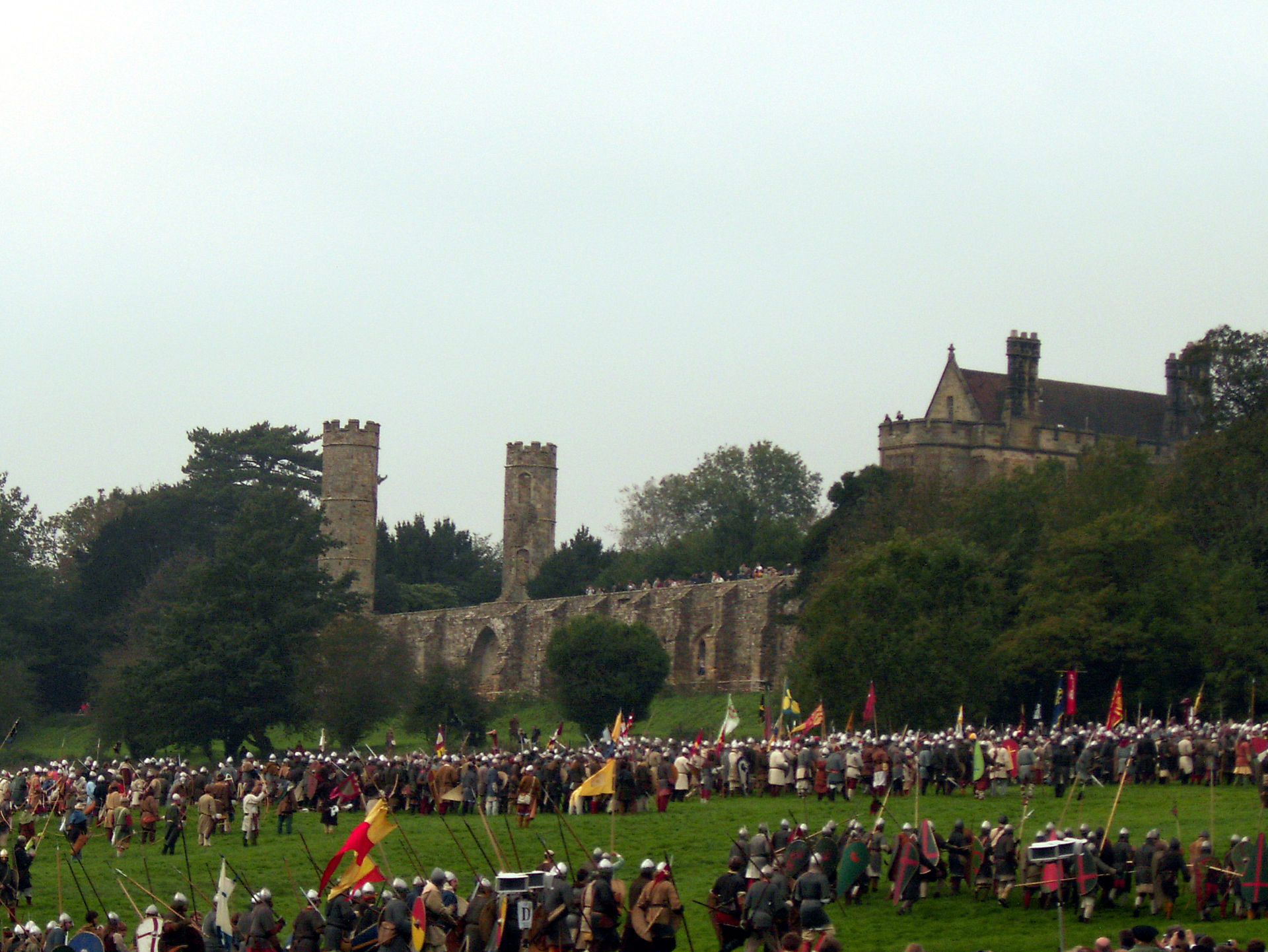 What a bastard! No, no. I mean it. On this date back in 1066, September 28, William “the Bastard” landed at Pevensey, near Hastings, and shortly became William the Conqueror, founder of the “modern” British monarchy. Should we care?
No, no, I don’t mean is all this old stuff boring and Britain irrelevant. You already know I don’t think so and if you’re reading these items neither do you. I mean how much does it really matter that William won at Hastings?
On the surface it seems enormously important. It brought not just a new king but a new ruling class, and the feudal system. Why else would we regard the real British monarchy as dating from 1066, to the point that William’s great-great-great-great-grandson Edward I as though even Edward the Confessor had never reigned, let alone Edward the Elder?
OK, I’m getting a bit pedantic. But you get my drift. 1066 is a major turning point. Or is it?
Sixteen years ago I thought it was, calling the Conqueror the most important person of the millennium on the grounds that if Harold the Great Chump had won at Hastings England might have been part of a Nordic rather than European civilization. But the more I’ve considered it the clearer it seems to me that, on the other hand, England tamed the Normans not the reverse, always remaining very much apart including, during its long history as a Catholic nation, maintaining a far healthier separation between church and state than, say, France or Spain ever did and having a “Protestant” break with Rome that for all its unattractive qualities was quite unlike Calvin’s or Luther’s. And of course Saxon common law beat back Norman statute law, at Runnymede and elsewhere.
On the third hand (someone get me an octopus, quick) it may have been precisely the powerful tension between the Norman and Saxon conceptions of government that forced the development of elaborate governmental institutions that restrained instead of empowering the state. The Normans were, after all, outstanding administrators in ways that were often highly desirable provided the underlying mechanisms of popular control could keep pace in their elaboration and formal procedures.
I do believe that in a parallel universe where that arrow missed Harold Godwinson at Hastings and the shield wall did not crack, we would remember him as Harold the Great. But I also think things turned out surprisingly well, albeit with considerable difficulty, the way things did turn out.
For all that, I do not like William the Conqueror, an angry man seething with ambition who was not, I think, entitled to claim the throne. And even after all these years, I do care about that too.
“It is better to play for nothing than to work for nothing.”
Adam Smith
“It is a trite but true observation that examples work more forcibly on the mind than precepts.”
Henry Fielding in Joseph Andrews (1742)