Napoleon Not Blownapart – It Happened Today, January 14, 2017… or didn’t

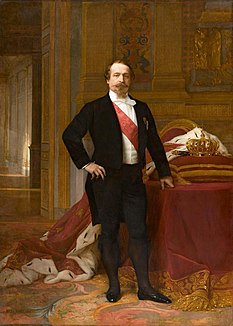
Can we just get back to assassinating politicians for a moment here? As a theoretical exercise, I hasten to add. For instance Napoleon III, the "French Emperor" in a rather comic opera sense from December 2, 1852 to September 4, 1870 after having been President from December 20, 1848 until he build himself a throne in a coup.

He was eventually overthrown in the aftermath of the humiliating French defeat in the Franco-Prussian war in which the Emperor himself was captured. D’oh. But years earlier, he was not blown up on January 14, 1858, unlike eight members of his escort and bystanders when would-be assassins threw three bombs at the royal carriage on its way to the opera. It was a pretty serious effort; over 100 people were also injured.

I have repeatedly quoted Disraeli’s dictum that "Assassination has never changed the history of the world." But for purposes of discussion not dogmatism because I’m far from certain that he is still right even if he was then. I’m not even convinced that assassination changed history on June 28, 1914, because Germany was bent on launching World War I anyway so the shooting of Franz Ferdinand was in many ways just a convenient occasion for doing so. But what about the people who were not assassinated but might have been?

Napoleon III was a vainglorious nit whose meddling in the conduct of the Crimean War by telegraph helped prolong that conflict. But assassinating him in 1858 wouldn’t have helped in that regard because it ended in 1856. And I don’t think history changed much because that war took longer than it might have; its major impact was its unsettling impact on Russia due to this unexpected defeat, at least unexpected in the eyes of the Tsarist regime, right in their breadbasket.

What, though, of the Franco-Prussian War? Might a better-led France, a less absurdly led France, either have avoided the war or fought it better, perhaps even with allies? And if they had, might the subsequent course of European history and the lessons drawn from the brief 1870-71 war have been sufficiently different to avoid or dramatically alter the course of World War I?

I’m not endorsing assassination even of people who put themselves outside the law by staging coups. And to give him as much credit as possible, at the possible expense of the French themselves, Napoleon III subsequently legitimized his seizure of power in a reasonably fair referendum. But if those bomb-throwers had had better aim, the world might be considerably different. Even better.

Of course, the result might also have been that Germany won the big European war that was probably brewing around the turn of the century. Or things might have unfolded much as they did. But Napoleon was an idiot. And even though fools are not in short supply including in positions of leadership, including in France, it’s hard to believe it didn’t matter at all that a major European power was ruled by one for almost a quarter-century ending in humiliating disaster for the man and his nation.
A Feeble Blow Against Slavery – It Happened Today, January 13, 2017

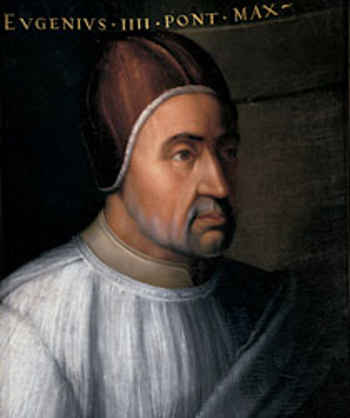
So I’m trying hard to be fair here. Which requires me to note that on January 13 of 1435, before European colonization really got going, Pope Eugene IV issued a papal bull called Sicut Dudum which said you couldn’t enslave Canary Islanders who had converted to Christianity or were about to.

Sixtus IV was obliged to repeat this warning in "Regimini Gregis", threatening the excommunication of seafarers who enslaved Christians. But as I’m sure you know, it didn’t stick. There was an initial argument that enslaving Africans was OK because they weren’t Christian, but when slaves began announcing their conversion and requesting their freedom it is sadly predictable that they didn’t get it. (Incidentally the Canary Islands have a long and interesting history including, despite being off West Africa, being settled by people who appear to have been more Arab than sub-Saharan African.)

In some cases slave conversions may have been a dodge to get freedom. And it’s not obvious how you would enforce the rule if, after being liberated, they turned around and said actually I don’t find your religion convincing on sober reflection. But it doesn’t really matter in the simpleminded sense that it’s just plain wrong to enslave anybody of any race. A point that was in fact made by the local bishop, Fernando Calvetos, prompting Eugene’s bull.

It’s amazing the feebleness of the reasoning, in retrospect, for enslaving people. The original impetus behind Sicut Dudum was that as the Canaries were disputed between Portugal and Castille people said we might as well, you know, just rush over there in the absence of effective authority and stuff the inhabitants into sacks or something. Even though many of those inhabitants had already converted to Christianity before the shackles descended.

It’s also amazing how readily people acquiesced in what amounted to a rebirth of slavery in the Christian or at least Roman Catholic world after it had all but vanished in the Middle Ages. Including in many cases the Church itself. So it is important to note that there were at least some moves in the other direction, however inadequate, including Sicut Dudum itself, which imposed the penalty of excommunication for anyone who did not free any enslaved Canary Islander. As well as the arguably more significant point that it did not apply more widely, then or later.

Pour le Verdienst – It Happened Today, January 12, 2017

On January 12 of 1916, as the First World War was the process of tearing European civilization apart physically and morally, Oswald Boelcke and Max Immelmann became the first airmen to receive the most prestigious Imperial German military award, the Pour le Mérite, for eight victories each over Allied fliers. It might seem to acknowledge only the growing prominence of a new way for men to kill one another. But to me it embodies a certain poignancy about the world in the process of vanishing into the much and mire of the Western front.

As you doubtless noticed with at least some curiosity, in the middle of a ferocious German effort to conquer France, the award in question has a French name. In fact the Pour le Mérite was by then nearly two centuries hold, having been inaugurated by Frederick II of Prussia in 1740. (It was also, for much of its history, also a civilian award though after 1842 in a separate class.) And he chose a French name not only because France was then a more dominant nation culturally as well as militarily than it later became, but also because divisions of nationality were regarded as less important and indeed less divisive in those days.

Europe, for all its brutal wars, tyrannical governments and various stupidities, still saw itself as a unified civilization, specifically as "Christendom," one bound together by common ideals and habits however short they often fell in practice, and one in which common languages served to unite them, Latin in the Middle Ages and French to a large degree since.

Both Boelcke and Immelmann deserved the award. The former was a brilliant pilot and tactician who trained the "Red Baron," Manfred von Richthofen, who idealized his mentor long after surpassing him in kills. And the latter invented an aerial combat maneuver still known as the "Immelmann turn" and in fact the Pour le Mérite came to be known informally as the "Blue Max in his honor. I salute their prowess while wishing they had fought in a better cause.

Tragically the war in which they won this award left little room for such sentiments as the world grew crueler, harsher and less decent. The Great War took a terrible toll in lives, including Immelmann’s own just months later, on June 18, 1916 and then Boelcke’s on October 28; after being grounded for a month to spare the German public the loss of two such heroes in short order, he resumed his duties and died in a midair mid-combat collision with a fellow German plane. And it took at least as terrible a toll in ideals of the sort that once made it possible for the Kaiser to give a military award with a French name. The last such award was made on September 2, 1918.

Perhaps this verdict is too bleak. The civil version was revived in 1923 in a mixture of French and German, the Pour le mérite für Wissenschaften und Künste. And after the dreadful Nazi period, it was again re-established in 1952 and is still awarded, not just as a medal but as an order with actual members.