Posts in International
Here Comes The Flood… Again – It Happened Today, January 16, 2017

St. Marcellus English weather is proverbially lousy partly because it’s so wet all the time. But January 16 of 1362 was especially bad, the onset of the Grote Mandrenke which if your low Saxon is in good working order will alarm you because it means the "Great Drowning of Men".

Also known as the "Second St. Marcellus Flood" because it peaked on his feast day, January 17, the Grote Mandrenke took at least 25,000 lives in the British Isles and northern Europe from Denmark to the Netherlands. A previous "First St. Marcellus flood" had hit in 1219, drowning some 36,000 people in northern Europe, which surely indicates that extreme weather did not begin when Al Gore hit middle-age.

In fact the Grote Mandrenke was the result of a massive southwesterly Atlantic gale that sent a storm side surging far inland, sweeping away islands, cutting off parts of the mainland and wiping entire towns off the map to the point that some cannot now be located even through archeology. And it was, as the "Second St. Marcellus flood" business indicates, far from unusual in that period.

Wikipedia notes blandly that "This storm tide, along with others of like size in the 13th century and 14th century, played a part in the formation of the Zuiderzee, and was characteristic of the unsettled and changeable weather in northern Europe at the beginning of the Little Ice Age." But hang on. Doesn’t that sound exactly like "climate change"? But hardly "man-made" or, if you like long words, "anthropogenic."

OK then. If drastic, menacing climate change has been clearly happening since long before humans invented factory mass production, and has been known to have been happening, it tells you what?

The politically correct answer is nothing. Everybody contemplating any issue other than the current panic knows climate has always varied, often suddenly and with dramatic consequences, and says it openly. Glaciers suddenly advance and suddenly retreat. The Earth warms and cools repeatedly. But never mind. Pay no attention. The science is settled. It’s all our fault.

Except the science is no more settled than the climate itself. The famous "Little Ice Age" itself, which brought the Middle Ages to something of a screeching halt and lasted into Victorian times, was not caused by humans. But nor logically then was its end, which set off the warming trend that persisted through most of the 20th century. Indeed most of that warming awkwardly preceded the large increase in atmospheric CO2 to which it is attributed by those who do not believe that causes must precede effects for science, or life, to make any sense.

Blaming humans for unstable weather is about as rational as blaming St. Marcellus. Which people in the Middle Ages were too sensible to do, I might pointedly add.
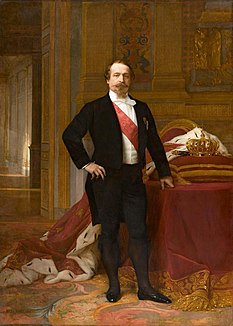
Napoleon Not Blownapart – It Happened Today, January 14, 2017… or didn’t

Can we just get back to assassinating politicians for a moment here? As a theoretical exercise, I hasten to add. For instance Napoleon III, the "French Emperor" in a rather comic opera sense from December 2, 1852 to September 4, 1870 after having been President from December 20, 1848 until he build himself a throne in a coup.

He was eventually overthrown in the aftermath of the humiliating French defeat in the Franco-Prussian war in which the Emperor himself was captured. D’oh. But years earlier, he was not blown up on January 14, 1858, unlike eight members of his escort and bystanders when would-be assassins threw three bombs at the royal carriage on its way to the opera. It was a pretty serious effort; over 100 people were also injured.

I have repeatedly quoted Disraeli’s dictum that "Assassination has never changed the history of the world." But for purposes of discussion not dogmatism because I’m far from certain that he is still right even if he was then. I’m not even convinced that assassination changed history on June 28, 1914, because Germany was bent on launching World War I anyway so the shooting of Franz Ferdinand was in many ways just a convenient occasion for doing so. But what about the people who were not assassinated but might have been?

Napoleon III was a vainglorious nit whose meddling in the conduct of the Crimean War by telegraph helped prolong that conflict. But assassinating him in 1858 wouldn’t have helped in that regard because it ended in 1856. And I don’t think history changed much because that war took longer than it might have; its major impact was its unsettling impact on Russia due to this unexpected defeat, at least unexpected in the eyes of the Tsarist regime, right in their breadbasket.

What, though, of the Franco-Prussian War? Might a better-led France, a less absurdly led France, either have avoided the war or fought it better, perhaps even with allies? And if they had, might the subsequent course of European history and the lessons drawn from the brief 1870-71 war have been sufficiently different to avoid or dramatically alter the course of World War I?

I’m not endorsing assassination even of people who put themselves outside the law by staging coups. And to give him as much credit as possible, at the possible expense of the French themselves, Napoleon III subsequently legitimized his seizure of power in a reasonably fair referendum. But if those bomb-throwers had had better aim, the world might be considerably different. Even better.

Of course, the result might also have been that Germany won the big European war that was probably brewing around the turn of the century. Or things might have unfolded much as they did. But Napoleon was an idiot. And even though fools are not in short supply including in positions of leadership, including in France, it’s hard to believe it didn’t matter at all that a major European power was ruled by one for almost a quarter-century ending in humiliating disaster for the man and his nation.

A Feeble Blow Against Slavery – It Happened Today, January 13, 2017

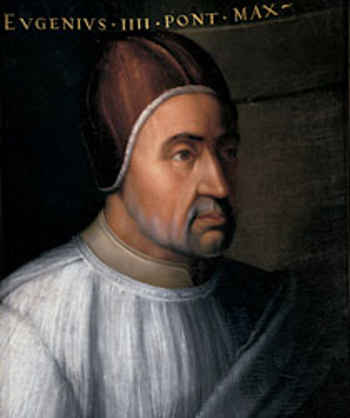
So I’m trying hard to be fair here. Which requires me to note that on January 13 of 1435, before European colonization really got going, Pope Eugene IV issued a papal bull called Sicut Dudum which said you couldn’t enslave Canary Islanders who had converted to Christianity or were about to.

Sixtus IV was obliged to repeat this warning in "Regimini Gregis", threatening the excommunication of seafarers who enslaved Christians. But as I’m sure you know, it didn’t stick. There was an initial argument that enslaving Africans was OK because they weren’t Christian, but when slaves began announcing their conversion and requesting their freedom it is sadly predictable that they didn’t get it. (Incidentally the Canary Islands have a long and interesting history including, despite being off West Africa, being settled by people who appear to have been more Arab than sub-Saharan African.)

In some cases slave conversions may have been a dodge to get freedom. And it’s not obvious how you would enforce the rule if, after being liberated, they turned around and said actually I don’t find your religion convincing on sober reflection. But it doesn’t really matter in the simpleminded sense that it’s just plain wrong to enslave anybody of any race. A point that was in fact made by the local bishop, Fernando Calvetos, prompting Eugene’s bull.

It’s amazing the feebleness of the reasoning, in retrospect, for enslaving people. The original impetus behind Sicut Dudum was that as the Canaries were disputed between Portugal and Castille people said we might as well, you know, just rush over there in the absence of effective authority and stuff the inhabitants into sacks or something. Even though many of those inhabitants had already converted to Christianity before the shackles descended.

It’s also amazing how readily people acquiesced in what amounted to a rebirth of slavery in the Christian or at least Roman Catholic world after it had all but vanished in the Middle Ages. Including in many cases the Church itself. So it is important to note that there were at least some moves in the other direction, however inadequate, including Sicut Dudum itself, which imposed the penalty of excommunication for anyone who did not free any enslaved Canary Islander. As well as the arguably more significant point that it did not apply more widely, then or later.

Across the River and Into the Italy – It Happened Today, January 10, 2017

On this date, January 10, back in 49 B.C., Julius Caesar crossed the Rubicon, cast the die, and waded into an unending series of metaphors as well as a civil war that he won unless you count the bit where he was assassinated.

Especially in an era where cultural literacy is being lost, if not actively buried, it’s important to remember what crossing the Rubicon meant technically. The Rubicon is a shallow river in northeastern Italy, the crossing of which is not necessarily memorable as a rule. But (assuming the name has not wandered in the last 2000 years, which is a matter of some dispute) crossing it was a very big deal back in Caesar’s day because it was the frontier between the conquered Roman province of Cisalpine Gaul, and Italy proper. And while appointed governor held military authority ("imperium") in the provinces, only elected magistrates could do so within Italy itself given its proximity to Rome on which, just possibly, a man with soldiers under his command might suddenly march to seize power or some such.

For instance Julius Caesar. Caesar led his 13th legion ("Gemina") into Italy for the specific purpose of seizing power. And when he did so, he uttered the once-famous phrase "alea iacta est" ("the die is cast") meaning he had gambled everything and it was now too late to turn back because for an appointed governor to bring soldiers into Italy was open revolt and a capital offence.

Generally speaking if we use the metaphor today with any concept of its meaning, we refer simply to a decisively bold act. But there is a bit more to it, and it is less unequivocally praiseworthy. The reason crossing into Italy, over the Rubicon or any other otherwise insignificant marker, was a capital offence was that it was an attack on established authority and moreover in Caesar’s day, as Rome was still a Republic albeit very rickety by that point, an attack on civilian rule by those meant to be defending it instead.

The crucial political problem, then, now and always, has been to create a government able to protect liberty without being able to threaten it. It is by no means a simple problem or it would have been solved more often including in Rome. But Caesar’s contribution was to shove it aside in favour of the question of which strongman should rule, whose answer is far simpler but far less satisfactory.

The main difficulty through history is that most governments have been too weak to sustain themselves against invasion or upheaval even when plenty strong enough to oppress their citizens in the average course of events. You could not solve the former problem by further strengthening it without making the latter even worse. And you could not solve the latter without making the former worse.

The Romans did better than a lot of people, sustaining a Republic for nearly five hundred years. It had its flaws, both in its internal law and in its tendency to expand without regard for the niceties of law or justice, although it was on the whole a great deal better than its rivals in foreign as in domestic policy. But it caromed between anarchy and tyranny until the latter finally prevailed decisively, alternating the two problems rather than finding a solution that transcended them.

Not until medieval parliaments, backed by an alert and armed citizenry, did a more stable and attractive solution emerge, one we still enjoy today although its foundations are showing worrisome cracks and signs of crumbling. And so when we recall that in crossing the Rubicon Caesar cast the die once and for all, we should recall not merely his admirable boldness and directness but also his understandable but regrettable determination to bury popular government which, after the conspirators buried him, did succeed in the persons of Augustus, Tiberius and on down through the imperial centuries.

Like a few other great conquerors, such as Alexander and Napoleon, Julius Caesar has always seemed to me to combine military genius and political adroitness with a curious vagueness about what it was all for. And while it takes nerve to cross the Rubicon and courage is in principle a virtue, it was not in Caesar’s case directed to a praiseworthy end.

Washington Watches a Balloon – It Happened Today, January 9, 2017

Regular readers of this feature will know that I have a soft spot for the incorrigible enthusiasts for hot air balloons, dirigibles and all those lighter-than-air craft that preceded the airplane, were rudely shoved aside by it, and yet whose backers continue to dream. You just can’t keep a hot air balloon down.

It is also remarkable that for some reason the French were especially keen enthusiasts. I won’t make any hot air jokes here. But I will note that French pioneers included Jean-Pierre Blanchard, who in 1785 boldly demonstrated the value of a parachute in escaping a troubled hot-air balloon by … um… throwing his dog out wearing one. (See "It Happened Today" for October 22, 2016.) Dogs being what they are, the pooch was probably enthusiastic about it. But I do not suggest you try it with a cat or it may well sharpen its claws on your balloon before your next flight. Or on you as you seek to ease it out of the contraption or into the parachute.)

Blanchard's interest in the subject of escaping alive from a balloon gone bad was doubtless stimulated by his own very nearly lethal trip from Dover to Calais on January 7 of 1785 in which (see "It Happened Today" for January 7, 2016) he and his co-lunatic only escaped a plunge into the Channel en route by jettisoning all the ballast they could think of including Blanchard’s pants. And the danger was very real; an effort by another Frenchman, Pilâtre de Rozier, to cross the Channel the other way later that year ended in a fatal crash.

Well, on January 9, 1793, Blanchard was at it again. No, I don’t mean the animal cruelty stuff or the mid-air striptease. I mean a historic balloon flight. The first in the Americas, taking off from the yard of Walnut Street Jail in Philadelphia and reaching Deptford in New Jersey. Which may not sound like the acme of glamour. But in fact the flight was witnessed by America’s first, incumbent President George Washington along with her future 2nd president John Adams, 3rd president Thomas Jefferson, 4th president James Madison and 5th president James Monroe.

Sadly, Blanchard suffered a heart attack and fell from a balloon in the Hague in 1808 and died about a year later from his injuries. And his widow continued ballooning demonstrations until she too died in an accident. And it’s also sad to see how France, which was somehow still a world leader in many ways at the turn of the 19th century despite a long tradition of bad government that was about to get worse, has gradually faded as excessive if no longer vicious government seems gradually to have stifled much of the French genius for bold innovation.

Obviously ballooning continues to have adherents, and I cannot look up on a beautiful day and watch balloons cruising over Ottawa without wishing I were in one. But given all the passionate commitment, interest and courage that went into their early development I do hope that one day that somehow the first and most graceful form of manned flight will become more important relative to the dominant, convenient but loud and increasingly tawdry airplane travel that dominates today.

Who knows? Maybe they'll even serve good food. Especially if the French are involved.

A Load of Bull on Slavery – It Happened Today, January 8, 2017

Nicholas V January 8 was not a good day for the Papacy, Portugal or Africa. At least not if you mean January 8 of 1454. For on that date Nicholas V confirmed that Portugal owned all of Africa south of Cape Bojador and could enslave the inhabitants.

OK, perhaps "confirmed" isn’t quite the right word, since Portugal did not actually own that part of the world and nobody has the right to enslave anyone. And while you might expect an assertion to the contrary from some cackling old reprobate hunched over his ill-gotten gains, there’s this general idea out there that the Pope’s job when it comes to worldly matters is to be so unworldly that, in upholding high ideals, he sometimes gives advice that is almost wilfully useless. That trap at least Nicholas avoided.

Instead he issued this bull from concern that without it, other European nations would start horning in on Portugal’s "right" to grab large tracts of land because its inhabitants were not Christian, and demonstrate the virtues of the true faith by brutally mistreating them and denying their humanity. I can think of better plans.

I bring this up because I entirely reject ludicrous PC versions of history in which only Europeans were bad, basically the white serpents invading various gardens of Eden around the world. The inhabitants of Africa before the coming of European domination were up to the usual human tricks, sometimes in remarkably horrible ways. As were the inhabitants of the Americas. And I believe that on balance, the spreading particularly of the ideals and practices of the Anglosphere has brought great benefit to mankind. But it will not do, in rejecting one fairy tale, to substitute another.

At times, European conduct was so loathsome as to invite despair at humanity’s fallen condition. Especially when the worst practices were endorsed by those entrusted with recalling us to our moral senses when we went wrong. And so it is also important to note here that opposition to slavery and mistreatment of colonized people generally arose soonest and most strongly among professed Christians including Catholic clergy in the Spanish empire.

Still, we should pause on January 8 and reflect on the casual manner in which the papacy put its seal of approval on all that was worst about European colonization.