[podcast title="Robson's Roundup, August 19"]http://www.thejohnrobson.com/podcast/John2016/August/160819RobsonPodcast.mp3[/podcast]
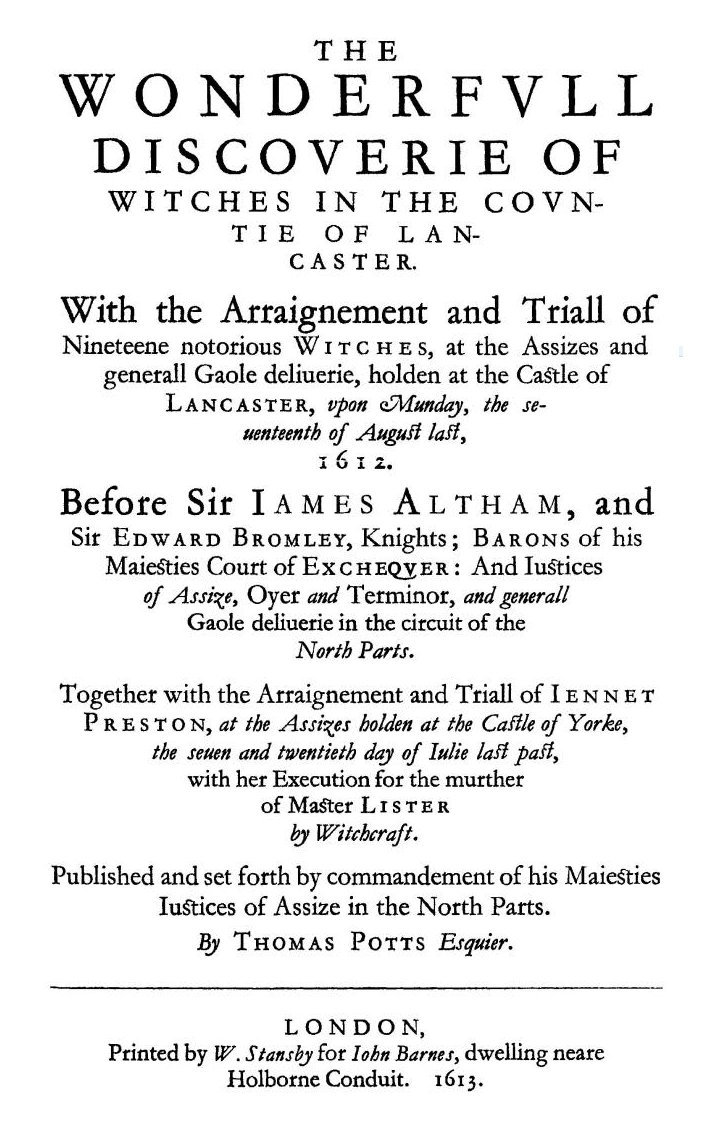 Ugh, witch trials. Gotta hate those Middle Ages, right? Like the one of the “Samlesbury Witches” held on August 19 of 1612 in Lancashire where…
Wait a minute. 1612? That’s not the Middle Ages. They weren’t just this bad period back then somewhere when people weren’t smart and kind like us. They were a very distinct period from either the Fall of Rome if you include the Dark Ages in them, or from around the 10th century if you don’t, down through about 1500 and then we had the “Renaissance” and the “Enlightenment” and after all that dumb superstition the lights came back on and classical knowledge and attitudes were reborn.
Remember?
Now there are a lot of things I could say about this view, like that it’s totally ridiculous. I have often cited Tony Blair’s foreign secretary Robin Cook saying that Slobodan Milosovic’s forces putting Albanians into concentration camps “belongs to the Middle Ages. It does not belong to modern Europe. We are right to fight it.” So you’re saying concentration camps were a feature of Edward I’s England not Stalin’s Soviet Union or Hitler’s Germany. And you learned your history where exactly?
The answer appears to be Aberdeen Grammar School, Royal High School and the University of Edinburgh where, to be fair, he studied English literature. But it sounds as though it could have been Monty Python and the Holy Grail. And since for many people it was, the prevalence of this “Terrible Middle Ages” idea makes it necessary to take it a bit more seriously in order to demolish it in detail.
Like they thought the Earth was flat ha ha ha. Elizabeth May recently ridiculed our “First Past The Post” electoral system by saying it was invented when “people thought the Earth was flat”. Except they didn’t. Indeed, John Sacrobosco’s best-selling Tractatus de Sphaera (he was so dumb he wrote in Latin which we would never do) presented not merely the doctrine that the Earth was round but several simple compelling proofs. I’d like to hear a typical modern student do that. (Since you ask, three of them are that stars rise and set sooner in eastern than western places, people in the northern hemisphere can always see some stars including the Pole Star that you can’t in the southern but you can see others and the list changes gradually as you travel south or north, and that as a ship sails away from shore, people on deck lose sight of land before those at the top of the mast. Clever, huh?)
Now let’s consider witches. They burned them in the Middle Ages because they were dirty dumb and religious, right? Uh, wrong again. The first explicitly attested witch trials were in the 14th century, but they really got going in the 16th and went over the top in the 17th. Remember Salem, the famous non-medieval outbreak? Even England, not as bad as France, Germany or Scotland, executed somewhere under 500 witches between the early 15th and the mid-18th century, versus a couple of hundred a year in Scotland in the late 16th century and what seems to have been thousands in Germany.) And evidently the upsurge in concern about witches in 17th-century England was partly the work of James VI/I, as if he needed more blots on his escutcheon; the first Stuart king of England was convinced Scottish witches were conspiring to harm him and in keeping with his not entirely fanciful self-conceit as an intellectual had written a book Daemonologie in 1597 justifying witch-hunting. Thanks, Jim.
Now in fairness I should note that the Samlesbury Witches were actually acquitted. (And that the infamous Spanish Inquisition took a very dim view of accusations of witchcraft.) But eleven other witches tried in the same Assizes were executed. And the last execution of a witch in England was in 1716, involving a woman and her nine-year-old daughter.
Thank goodness they didn’t live in the Middle Ages when the Catholic Church insisted that the faithful … not believe witches could fly. Unlike its Renaissance version which insisted they believe it.
After being shipwrecked, Robinson “Crusoe might be driven to make his own trousers on the island. But he was not driven to make his own legs on the island… You may regard the universe as a wreck; but at least you have saved something from the wreck.” G.K. Chesterton in “The Idea of Separation” quoted in Gilbert Magazine Vol. 10 #5 (March 2007)
My latest for The Rebel: https://www.youtube.com/watch?v=QsVyMvTdPgU
The audio-only version is available here: [podcast title="Rebel audio, August 18"]http://www.thejohnrobson.com/podcast/John2016/August/160818Rebel.mp3[/podcast]
In my latest National Post column, I urge the makers of the forthcoming film The Silver Chair to do it faithfully in both senses.
In today's National Post Terry Glavin has another excellent piece on Canada's troubling relationship with China. He's not only very clear on the sinister nature of the government in Beijing and the aggressive style as well as content of its foreign policy. He's also one of the few commentators I know who understands that we are cozying up to an "increasingly decrepit" as well as "belligerent Chinese police state". It is remarkable how wrong the conventional wisdom is about the nature and dynamism of this regime. And Terry is much to be commended for seeing through it.
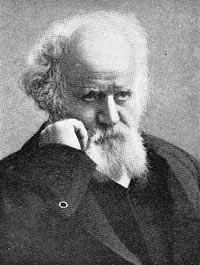 So how about that Pierre Janssen? What, you haven’t heard of him? Why, Pierre Jules César Janssen is the French astronomer who discovered helium, on August 18 1868.
OK, he discovered some other stuff too. He went to Peru to find the magnetic equator, observed a transit of Venus in Algeria, and he studied telluric absorption in the solar spectrum in Italy and Switzerland, which might seem odd since presumably “solar” means it was in the sun, but the sun is a bit hot for direct observation even by an adventurous man.
Which Janssen was. He went wherever you had to in order to study solar eclipses including Siam, as it then was, and Trani, which I don’t even know where it is, and Madras State in India, now Andhra Pradesh. And maybe he enjoyed it and maybe he didn’t. But during the Indian eclipse observations he noticed that the spectral lines (indicating chemical composition) from the sun’s prominences were so bright that they could be observed under ordinary daylight conditions. Which mattered because sometimes an eclipse just didn’t work out. Janssen actually escaped besieged Paris in 1870, during the Franco-Prussian war, by hot air balloon, to observe an eclipse in Algeria and then it got all cloudy.
Janssen was a clever as well as bold and resourceful chap. For instance he also realized it would be good to put observatories in high places so you’d be looking through less atmosphere, which led him to lobby for one atop Mont Blanc and once it was built, at age 69, he climbed up there to make observations, including I suggest the observation that he was one fit guy. But back to helium.
In his results from that 1868 Madras State observation, there was a particular bright yellow line that was eventually determined to indicate a hitherto undiscovered chemical element, the first to be detected off the Earth before being found here (which it was in 1885), helium being of course very light and also extremely non-reactive and thus not hanging around waiting for a scientist to trip over it.
Another scientist, the Englishman Joseph Norman Lockyer, also observed this bright yellow line in the solar chromosphere’s emission spectrum, and he and others worked out that it must be some unknown element, which they named helium for the obvious reason that never struck me until I researched this bit, namely that the Greek word for sun is helios. And without his work, and Janssen’s, no kid would have the brilliant experience of a lighter-than-air balloon on a string or the heartbreak of discovering just what lighter than air means if you let go. (At Disney World they tie weights to the string, in the familiar Mickey Mouse logo shape, which is surely brilliant too.)
So yes, Lockyer gets a lot of credit for helium too. But I still think August 18 is a good date to take a deep breath of the stuff and utter a comically squeaky and high-pitched hip hip hooray for Pierre Janssen.
