"Life is a fight and not a conversation." G.K. Chesterton quoted by Dale Ahlquist in Gilbert Magazine Vol. 13 # 8 (7-8/10) p. 45.
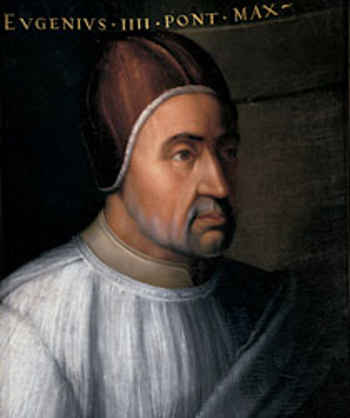 So I’m trying hard to be fair here. Which requires me to note that on January 13 of 1435, before European colonization really got going, Pope Eugene IV issued a papal bull called Sicut Dudum which said you couldn’t enslave Canary Islanders who had converted to Christianity or were about to.
Sixtus IV was obliged to repeat this warning in "Regimini Gregis", threatening the excommunication of seafarers who enslaved Christians. But as I’m sure you know, it didn’t stick. There was an initial argument that enslaving Africans was OK because they weren’t Christian, but when slaves began announcing their conversion and requesting their freedom it is sadly predictable that they didn’t get it. (Incidentally the Canary Islands have a long and interesting history including, despite being off West Africa, being settled by people who appear to have been more Arab than sub-Saharan African.)
In some cases slave conversions may have been a dodge to get freedom. And it’s not obvious how you would enforce the rule if, after being liberated, they turned around and said actually I don’t find your religion convincing on sober reflection. But it doesn’t really matter in the simpleminded sense that it’s just plain wrong to enslave anybody of any race. A point that was in fact made by the local bishop, Fernando Calvetos, prompting Eugene’s bull.
It’s amazing the feebleness of the reasoning, in retrospect, for enslaving people. The original impetus behind Sicut Dudum was that as the Canaries were disputed between Portugal and Castille people said we might as well, you know, just rush over there in the absence of effective authority and stuff the inhabitants into sacks or something. Even though many of those inhabitants had already converted to Christianity before the shackles descended.
It’s also amazing how readily people acquiesced in what amounted to a rebirth of slavery in the Christian or at least Roman Catholic world after it had all but vanished in the Middle Ages. Including in many cases the Church itself. So it is important to note that there were at least some moves in the other direction, however inadequate, including Sicut Dudum itself, which imposed the penalty of excommunication for anyone who did not free any enslaved Canary Islander. As well as the arguably more significant point that it did not apply more widely, then or later.
In my latest National Post column I say that neither Jane Fonda nor the rest of us can reach low-carbon nirvana just by really nicely really wanting it.
"Disinterested intellectual curiosity is the life-blood of real civilization." G.M. Trevelyan, English Social History
 On January 12 of 1916, as the First World War was the process of tearing European civilization apart physically and morally, Oswald Boelcke and Max Immelmann became the first airmen to receive the most prestigious Imperial German military award, the Pour le Mérite, for eight victories each over Allied fliers. It might seem to acknowledge only the growing prominence of a new way for men to kill one another. But to me it embodies a certain poignancy about the world in the process of vanishing into the much and mire of the Western front.
As you doubtless noticed with at least some curiosity, in the middle of a ferocious German effort to conquer France, the award in question has a French name. In fact the Pour le Mérite was by then nearly two centuries hold, having been inaugurated by Frederick II of Prussia in 1740. (It was also, for much of its history, also a civilian award though after 1842 in a separate class.) And he chose a French name not only because France was then a more dominant nation culturally as well as militarily than it later became, but also because divisions of nationality were regarded as less important and indeed less divisive in those days.
Europe, for all its brutal wars, tyrannical governments and various stupidities, still saw itself as a unified civilization, specifically as "Christendom," one bound together by common ideals and habits however short they often fell in practice, and one in which common languages served to unite them, Latin in the Middle Ages and French to a large degree since.
Both Boelcke and Immelmann deserved the award. The former was a brilliant pilot and tactician who trained the "Red Baron," Manfred von Richthofen, who idealized his mentor long after surpassing him in kills. And the latter invented an aerial combat maneuver still known as the "Immelmann turn" and in fact the Pour le Mérite came to be known informally as the "Blue Max in his honor. I salute their prowess while wishing they had fought in a better cause.
Tragically the war in which they won this award left little room for such sentiments as the world grew crueler, harsher and less decent. The Great War took a terrible toll in lives, including Immelmann’s own just months later, on June 18, 1916 and then Boelcke’s on October 28; after being grounded for a month to spare the German public the loss of two such heroes in short order, he resumed his duties and died in a midair mid-combat collision with a fellow German plane. And it took at least as terrible a toll in ideals of the sort that once made it possible for the Kaiser to give a military award with a French name. The last such award was made on September 2, 1918.
Perhaps this verdict is too bleak. The civil version was revived in 1923 in a mixture of French and German, the Pour le mérite für Wissenschaften und Künste. And after the dreadful Nazi period, it was again re-established in 1952 and is still awarded, not just as a medal but as an order with actual members.
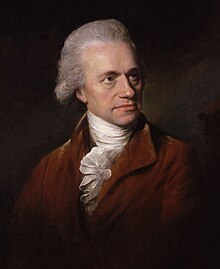 Merely saying the name of the 7th planet in our solar system risks provoking adolescent snickers. Especially when you add a moon or two of… Uranus. There. Now that we’ve disposed of that issue I’d like to raise a glass, carefully ground for optimum magnification, to William Herschel.
He it was who first discovered that planet, the third-largest and fourth-heaviest in the Sol system, in 1781. Or rather, discovered that it was in fact a planet and not a comet or a star. Despite which he wanted to name it the "Georgian star" or "Georgian planet" which is only funny in a sad way as it was an obsequious attempt to curry favour with King George III. I guess it worked, in that the German-born Herschel was appointed "The King’s Astronomer" by the German-descended king a year later. But the French were so unwilling to utter the name of the British king (I don’t see why; it’s not as though they were stuck with him) that they called it "Herschel" until the name Uranus was adopted after a long and on the whole civil debate of exactly the sort we don’t now have on the Internet. And by many people in whose language it wasn’t a double entendre, I might add.
As I might add that it was also Herschel who, on January 11 of 1787 discovered two moons of Uranus subsequently named Titan and Oberon by his son John. And it strikes me as worthy of commendation because it is so useless. To be sure, Herschel didn’t know it at the time. He was convinced the moon was inhabited, and that its settlements resembled the English countryside. (He was also certain Mars was inhabited, and the inside of the sun.)
If Uranus’ moons had been inhabited, perhaps we would have learned great scientific or cultural secrets from them. Like that the sun is extremely hot, say. Or that disinterested curiosity is a good thing. If they were even reachable, they might furnish thrill-seeking tourists with something special to do before you die like witness a methane waterfall. Right before you die, I mean.
Still, I feel that Hershel more or less stared into space because it was there, and found weird celestial bodies because they were. (While not composing one of his 24 symphonies along with many other musical works, in case you want to feel inadequate.) And he went right on finding cool things in space, like that the ice caps on Mars change with the seasons, that our solar system is moving through space and so forth. And to do something periodically without a covetous eye on the outcome is a good thing. As for his securing career advancement through it, well, it just shows a society exhibiting disinterested curiosity. And there are many worse qualities.
"If something cannot go on forever, it will stop." "Herbert Stein's Law" coined by economist and chair of the U.S. Council of Economic Advisors Herbert Stein; often rephrased as "Trends that can't continue, won't."