Here Comes The Flood… Again – It Happened Today, January 16, 2017

St. Marcellus English weather is proverbially lousy partly because it’s so wet all the time. But January 16 of 1362 was especially bad, the onset of the Grote Mandrenke which if your low Saxon is in good working order will alarm you because it means the "Great Drowning of Men".

Also known as the "Second St. Marcellus Flood" because it peaked on his feast day, January 17, the Grote Mandrenke took at least 25,000 lives in the British Isles and northern Europe from Denmark to the Netherlands. A previous "First St. Marcellus flood" had hit in 1219, drowning some 36,000 people in northern Europe, which surely indicates that extreme weather did not begin when Al Gore hit middle-age.

In fact the Grote Mandrenke was the result of a massive southwesterly Atlantic gale that sent a storm side surging far inland, sweeping away islands, cutting off parts of the mainland and wiping entire towns off the map to the point that some cannot now be located even through archeology. And it was, as the "Second St. Marcellus flood" business indicates, far from unusual in that period.

Wikipedia notes blandly that "This storm tide, along with others of like size in the 13th century and 14th century, played a part in the formation of the Zuiderzee, and was characteristic of the unsettled and changeable weather in northern Europe at the beginning of the Little Ice Age." But hang on. Doesn’t that sound exactly like "climate change"? But hardly "man-made" or, if you like long words, "anthropogenic."

OK then. If drastic, menacing climate change has been clearly happening since long before humans invented factory mass production, and has been known to have been happening, it tells you what?

The politically correct answer is nothing. Everybody contemplating any issue other than the current panic knows climate has always varied, often suddenly and with dramatic consequences, and says it openly. Glaciers suddenly advance and suddenly retreat. The Earth warms and cools repeatedly. But never mind. Pay no attention. The science is settled. It’s all our fault.

Except the science is no more settled than the climate itself. The famous "Little Ice Age" itself, which brought the Middle Ages to something of a screeching halt and lasted into Victorian times, was not caused by humans. But nor logically then was its end, which set off the warming trend that persisted through most of the 20th century. Indeed most of that warming awkwardly preceded the large increase in atmospheric CO2 to which it is attributed by those who do not believe that causes must precede effects for science, or life, to make any sense.

Blaming humans for unstable weather is about as rational as blaming St. Marcellus. Which people in the Middle Ages were too sensible to do, I might pointedly add.

Making a Fizzy Splash – It Happened Today, January 15, 2017

You know all those internet-era stories about if only I’d put a few hundred bucks into that garage venture by those two awkward jokers I used to know, I’d be a billionaire today? The problem being to figure out which jokers are actually Steve Jobs, Bill Gates or Mark Zuckerberg. Well, would you have gambled on the Pemberton Medical Company back in 1889?

If not, maybe stick to broad-based mutual funds. If so, you’re arguably just plain lucky. Because, you see, the PMC incorporated in Atlanta on January 15 of 1889 went on to become the Coca-Cola company. And obviously if a morphine-addicted Civil War veteran reacts to local Prohibition by removing the alcohol from his mixture of cola nut and cocaine extract into a gooey sweet brown health tonic and accidentally mixing it with soda water, you’ll make a fortune, right? Like a music player with no off switch or a Quick and Dirty Operating System. Can’t miss. (I should mention that Coca-Cola may not have contained much cocaine to begin with and certainly had only minute traces after 1891, and none after 1929.)

Like many giant purveyors of non-health food, the company has been battling economic headwinds recently. But it remains true that if you’d bought a single share in 1919 for $40 and reinvested the dividends, you’d have had $9.8 million by 2012, more than 10% a year real returns (that is, adjusted for inflation). Plus the company more or less gave us the modern image of Santa Claus, and his less famous helper Sprite Boy. No, really.

The point is, capitalism is wonderful at creation and its disquieting cousin creative destruction. The marketplace allows things to succeed that sound absurd or revolting at first blush, things that would never get a grant or the central planners’ stamp of approval. But that’s precisely why entrepreneurial success is inherently unpredictable, at times even inexplicable in retrospect (think pet rocks). So don’t kick yourself if you didn’t foresee that a web site where you could post every inane thing that drifted into your head for the benefit of hundreds of friends you don’t know and nothing was sold could make some guy so rich you couldn’t count all his money in a lifetime.

Or that business with the fizzy syrup.

Napoleon Not Blownapart – It Happened Today, January 14, 2017… or didn’t

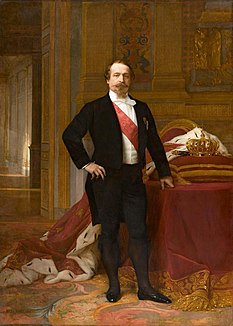
Can we just get back to assassinating politicians for a moment here? As a theoretical exercise, I hasten to add. For instance Napoleon III, the "French Emperor" in a rather comic opera sense from December 2, 1852 to September 4, 1870 after having been President from December 20, 1848 until he build himself a throne in a coup.

He was eventually overthrown in the aftermath of the humiliating French defeat in the Franco-Prussian war in which the Emperor himself was captured. D’oh. But years earlier, he was not blown up on January 14, 1858, unlike eight members of his escort and bystanders when would-be assassins threw three bombs at the royal carriage on its way to the opera. It was a pretty serious effort; over 100 people were also injured.

I have repeatedly quoted Disraeli’s dictum that "Assassination has never changed the history of the world." But for purposes of discussion not dogmatism because I’m far from certain that he is still right even if he was then. I’m not even convinced that assassination changed history on June 28, 1914, because Germany was bent on launching World War I anyway so the shooting of Franz Ferdinand was in many ways just a convenient occasion for doing so. But what about the people who were not assassinated but might have been?

Napoleon III was a vainglorious nit whose meddling in the conduct of the Crimean War by telegraph helped prolong that conflict. But assassinating him in 1858 wouldn’t have helped in that regard because it ended in 1856. And I don’t think history changed much because that war took longer than it might have; its major impact was its unsettling impact on Russia due to this unexpected defeat, at least unexpected in the eyes of the Tsarist regime, right in their breadbasket.

What, though, of the Franco-Prussian War? Might a better-led France, a less absurdly led France, either have avoided the war or fought it better, perhaps even with allies? And if they had, might the subsequent course of European history and the lessons drawn from the brief 1870-71 war have been sufficiently different to avoid or dramatically alter the course of World War I?

I’m not endorsing assassination even of people who put themselves outside the law by staging coups. And to give him as much credit as possible, at the possible expense of the French themselves, Napoleon III subsequently legitimized his seizure of power in a reasonably fair referendum. But if those bomb-throwers had had better aim, the world might be considerably different. Even better.

Of course, the result might also have been that Germany won the big European war that was probably brewing around the turn of the century. Or things might have unfolded much as they did. But Napoleon was an idiot. And even though fools are not in short supply including in positions of leadership, including in France, it’s hard to believe it didn’t matter at all that a major European power was ruled by one for almost a quarter-century ending in humiliating disaster for the man and his nation.