Bolting Elephants – It Happened Today, January 23, 2017

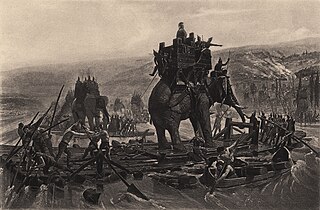
On this date, January 23, Song dynasty troops with crossbows decisively defeated the Southern Han war elephant corps at the battle of Shao in 971. Which might seem a hair-raising and messy irrelevancy. But I record it because I’ve always found it odd that the crossbow was such a mighty weapon with so little impact on military history, and considered elephants an absurd weapon that I can’t figure out what I’d do if the other side showed up with them.
The "mumakil" or "oliphaunts" are a significant problem at the Battle of the Pelennor Fields in the book version of the Lord of the Rings, and a ludicrously overblown one in the movie where they seem to kill about 63,000 of the Rohirrim before Legolas does them all in. But trying to devise a sensible strategy even for the more reasonably elephant-sized ones in the book is a puzzler. So having the Song riddle them with crossbow bolts fired with such incredible energy as to bring down even that big a target works for me.

As it did for them; elephants were then permanently dropped from the main Chinese order of battle. At which point they also started working on gunpowder weapons since once the elephants were gone, there wasn’t a lot the apparently super-cool crossbow could do. Despite at least a millennium and a half of military use of crossbows, this is the only battle I’m aware of where it was decisive.

As for elephants, they were used militarily in parts of Southeast Asia into the 19th century. Elsewhere it turned out they reacted even worse to cannonballs than crossbow bolts.

King Edward the Old – It Finally Happened Today, January 22, 2017

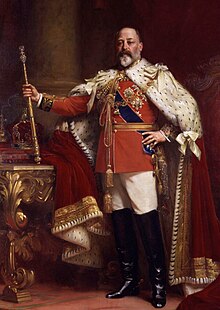
On this date in 1901, Edward VII was proclaimed king after about a million years as Prince of Wales. OK, not a million. But 60. Then he became king because Victoria died which left almost everybody heartbroken. And in 1910 he died after eight years on a throne he waited decades for.

His reign was not entirely uneventful. Nor indeed was his Princeship of Wales. Evidently "Bertie", as his family always called him, had a very good time indeed as heir to the throne, with actresses, noblewomen and professionals including at a Paris establishment with custom furniture now on display in a museum, which definitely did not amuse his mother, including the bit where he was almost named as respondent in a divorce suit by an MP and did have to testify in the case.

Victoria blamed her husband Albert’s rising from his sickbed in 1861 to visit and reprimand his son over a singularly indiscreet indiscretion with an actress for causing Albert’s death from typhoid just two weeks later, and once wrote to Edward’s older sister that "I never can, or shall, look at him without a shudder." But Edward also pioneered royal appearances doing things like opening the Thames Embankment and the Tower Bridge.

As King he not only presided over a widening of the social circle around the royals and a refurbishing of public ceremonies, and a needed modernization of the army and navy following the Boer War. He also supported and promoted a far-sighted rapprochement with France while distrusting his cousin Kaiser Wilhelm II, and gave his name to a languid but elegant era in which Britain’s decline from its once-unchallenged world dominance military, economic and cultural seemed only a gentle hint borne on a breeze rippling the leaves on stately oaks and beeches lining manor drives.

Then he died fairly young at 68, more than slightly unthin, and is remembered today as who was that guy after Victoria that wasn’t still king when the Great War started? To which the answer, surprisingly, is also that he was the guy saved from then generally fatal appendicitis right before his coronation by a pioneering and surprisingly modern-sounding surgical procedure of draining pus through a small incision.

Wish I'd said that - January 22, 2017

"Human nature demands ritual everywhere. Abolish your ritual, and you get an inferior ritual. Destroy your impressive ceremony, and all you get in return is an unimpressive ceremony." G.K. Chesterton in Illustrated London News March 17, 1906, quoted in Gilbert! Vol. 6 #3 (December 2002)

Church and Stake – It Happened Today, January 21, 2017

Francis I As a result of the "Affair of the Placards," six Protestants were burned at the stake in front of Notre Dame Cathedral in Paris on January 21, 1535. And while it’s fashionable to mock those WWJD bracelets as cloyingly sentimental, there are worse questions you could ask yourself. Especially if you’re, you know, a Christian cleric or would-be governmental defender of the faith.

When I say this grisly execution happened "as a result of" the Affair of the Placards, it might be more precise to say it happened afterward and on the ostensible basis of it. The Affair itself was the scandalous posting of a series of aggressive protestant posters in Paris and other French cities denouncing the Catholic mass. They were intended to be offensive, and it worked. But the total number of people killed during their production and display was zero. Not even the King of France.

Here I say "not even" because one of the placards was actually put on his bedroom door in Ambois. It was not merely an affront but a pointed demonstration that had they chosen to they could have gone in and killed him. But they did not, nor did they try to. So he responded with a big public show of affirming his Catholic faith, reversed his earlier policy of trying to protect French Protestants from their more aggressive Catholic countrymen.

Bear in mind that France was dangerously riven by religious sentiment at this point, and a very great distance indeed from any real conception of separation of Church and State. Indeed they still have issues with it, being militantly secular. (I know it has been said that atheism is a religion in the same sense that not collecting stamps is a hobby. But I disagree. Atheism offers equally firm answers to the same full range of metaphysical questions, and to enforce it through the state is not religious neutrality.) So I have to ask two key questions.

First, did either side gain anything by being deliberately obnoxious? I grant the Protestant grievance at being silenced on theological questions and living in perpetual fear of extreme mob violence. (In the wake of the Placards a number of leading Protestants pre-emptively fled France including John Calvin.) But to have posted reasonable comments on the advantages of free discussion of religion would have been a better move, surely, than to put up something highly likely to provoke Catholics into measures that further inflamed feelings in ways that reduced the likelihood of their acting with genuine charity.

As for the Catholics, to respond with extra-legal violence and state murder could not have been better calculated to reinforce their non-co-religionists’ worst suspicions about their motives and the need to arm against them. So everybody lost, and France spiraled into religious wars, intolerance and intellectual stagnation.

Among those who lost most, surely, are the self-proclaimedly Catholic king and the clergy who said there’s probably nothing Jesus would like better, nothing he’d be more likely to do if he were here, than to destroy some fellow human beings as horribly, painfully and messily as possible right at our best church. Oh yeah. I’m sure that’s in the Sermon on the Mount somewhere.

Ask the Professor, January 20

The audio-only version is available here: [podcast title="Ask the Professor, January 20"]http://www.thejohnrobson.com/podcast/John2017/January/Ask_Professor_75.mp3[/podcast]

PodcastJohn Robson
When Simon Met Populace – It Happened Today, January 20, 2017

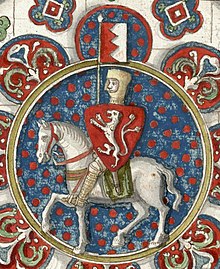
An event on January 20, by contrast with much of the rubbish cluttering up the pages of history, was no mere incident. On this date Simon de Montfort, leader of a baronial revolt against the hapless profligate King Henry III of England, summoned a parliament to legitimize his claim to control England. And to strengthen his position against his fellow barons as well as that of the rebels generally, he brought in the common people as full participants.

They were not, perhaps, equals in every sense early on. But they sat alongside the nobles and clerics and took part in the debates and the votes. And what is remarkable is that over the next couple of centuries instead of being squeezed out they continued to gain power and respect, including getting their own separate house within a century with control of its own affairs and primacy on money bills. And people mock the Middle Ages.

The nobles and clerics may generally have been displeased to find knights and burgesses tramping mud into the place. But as the various parliament-like entities throughout Europe succumbed to absolutist monarchs over the next three centuries, the wiser among them must have reflected that the deep roots of the English parliament among the actual people of England were a major reason it, and it alone, survived and flourished, becoming ultimately more powerful than the monarchs as the commons chamber came to dominate the lords.

There is much more to be said about it, including the possibly happy chance that early on the English parliament divided not into three estates as in France, with separate noble and clerical houses, but into two, the mucky-mucks and the ordinary Joes and eventually Janes. And that Montfort’s own motives may have been less than entirely pure, as his conduct was (not least in his vicious anti-Semitism, at once opportunistic and apparently heartfelt). But he deserves respect for what he did.

So does the political culture of the English, and the habits and actions of countless English men and women great and small, through which liberty under law went from success to success despite its challenges. Indeed, though Montfort himself perished horribly later in 1265 at the battle of Evesham where his corpse was nastily dismembered, when his conqueror Edward succeeded his father Henry III and became Edward I, he himself summoned parliaments to which he too invited commoners and to which he reluctantly but decisively surrendered power over taxation.

The history of mankind would be enormously different had representative government not taken hold in England. It is far from established universally and faces challenges even in its Anglosphere heartland. But it is a standing example, invitation and sometimes reproach to all regimes and people everywhere that lack it. And while a great many things contributed to its remarkable history, including the countless again great and small who made Magna Carta a reality and defended it down through the years, Montfort’s innovation of including the common people as full members of Parliament was an important turning point.

Without it things would almost certainly have been different and worse, then and later, there and elsewhere including of course in Canada.