Castro came and stayed – It Happened Today, February 16, 2017

In what seems truly a bygone era, Fidel Castro seized power in Cuba on February 16 of 1959. Yes, 58 years ago. And a Castro is still in power in this ghastly real-life Autumn of the Patriarch.

I could say a lot of things about Fidel Castro without getting to anything nice. Like how revealing it is that he would have switched jobs repeatedly while still being the guy you got shot for disobeying. And how typical it is of a regime that for all its yapping about true democracy had no legitimacy that it became dynastic like North Korea. (Mind you his own daughter, from one of his many infidelities, fled the island prison in disguise in 1993 and his own sister opposed him from American exile.) But never mind him.

What I want to do on this dismal anniversary is insult all the leftists who placed such high hopes on him to begin with and then somehow insisted despite everything that he really was a good man and a liberator. Anybody can make a mistake. Even the New York Times in originally hailing him as "the Robin Hood of the Caribbean". But to persist in one, to speak of democracy and human rights and peace in a sanctimonious tone while siding with this seedy brutal villain and denying repeatedly that he was a Communist, or in case he was denying that it mattered if he was one, surely indicates grave defects in judgement.

Especially as it is a habit of the left, from Stalin through Castro to Mugabe and beyond; as Jay Nordlinger memorably put it in National Review back in 1994, "Like an adolescent girl on holiday, the radical Left is always falling in love with some unsuitable foreigner..."

To do it and learn nothing is to double down on nasty folly. Why have so many done it, and not just on the radical left, including our own Prime Minister Justin Trudeau?

For that matter, why are there still Che T-shirts?
 

Fame you wouldn’t want – It Happened Today, February 15, 2017

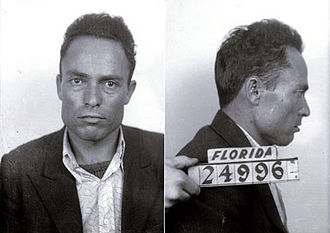
There are a lot of ways to get into the history books. But here’s one you wouldn’t want. On February 15 of 1933, Giuseppe Zangara tried to assassinate president-elect Franklin Roosevelt. Had he succeeded, it would have been the first time anyone was elected president and then died before taking office.

It didn’t happen then, and it hasn’t happened since, something I refrain from mentioning between any election and inauguration lest I should be suspected of trying to jinx the president-elect. As a matter of fact, no one has ever died between being nominated by a major party and the election either. Leaving aside violence, you’d think simply by the odds it would have happened to somebody. (Democratic lion Stephen A. Douglas, one of Lincoln’s opponents in the 4-way 1860 election, did die suddenly less than three months after his victorious rival was inaugurated.)

As for getting into the history books anyway, a dismal footnote to Zangara’s failed attempt is that in the process, standing on a wobbly folding chair and fighting a crowd trying to subdue him, he managed to shoot four other people including Chicago mayor Anton Cermak, who died of his wounds on March 6, two days after Roosevelt’s inauguration. So Cermak becomes "Who was that guy shot by mistake next to FDR?"

Meanwhile Zangara was executed in "Old Sparky," the Florida State Prison’s electric chair, on March 20, justice being swifter in those days. (For what it’s worth, the judge who sentenced him to death called for a complete handgun ban.) And in the process Zangara did make a sort of history.

You see, the rules said prisoners could not share a cell prior to execution but as someone else was awaiting capital punishment he obliged them to expand the "death cell" into the now proverbial "Death Row". It’s not exactly what you put down as your ambition in your high school yearbook. But it beats being the guy assassinated by mistake while the real target wasn’t becoming the first ever president-elect not to make it to Inauguration Day.

When Polk met lens – It Happened Today, February 14, 2017

Ah, the wonders of the steam age. Including that on February 14 back in 1849, James Knox Polk became the first sitting president of the United States to have his photograph taken.

If you’re wondering why he was in office on that date, it’s because prior to the New Deal with its air of constant crisis there was a four-month period between an election and the swearing in of the new president.

Oh, you didn’t mean it that way? You were wondering why somebody called James Polk was ever President? And in his defence I should note first that Polk was elected in 1844 in something of an upset, both as Democratic nominee and then as president, on the pledge to serve only a single term. So he did not run in 1848. (He then enjoyed the shortest retirement of any president, dying of cholera on June 15, 1849.)

Can I say anything else nice about him? Well, he was also elected in part on his pledge to annex Texas which he did, and the United States has generally been better for it. And historians generally credit him with having been a very successful president for having managed to garner support for and pass virtually everything on his agenda. On the other hand, like every other president between roughly John Tyler and James Buchanan, he stands indicted of having failed to halt the drift into bloody civil war.

As for his photo, it’s a somewhat grim affair. But in addition to the expectation that statesmen would look vaguely statesmanlike back then, there was the need to sit very still while primitive film gradually absorbed your image.

It’s a long way from the modern selfie. But in some sense the journey began with Polk.

As I said, the wonders of the steam age.

Your Lovely Spire is Toppling – It Happened Today, February 13, 2017

To me, gothic architecture is proof that modernity is too smug by half. Nothing we have built is remotely as beautiful as this pinnacle of medieval artistry and engineering, and very little even tries. Which is especially amazing given the advanced materials and techniques we possess that means very little of our construction falls down through overly ambitious design. Unlike, say, the spire of Ely Cathedral which bit the mud on February 13, 1322.

Many years ago I read a splendid engineering book for the lay person called Structures, or, Why Things Don’t Fall Down. And I can honestly say I have never looked at the world the same way since. I have been evaluating everything from bridges to docks to sausages and blades of grass differently since reading James Edward Gordon’s 1978 classic. And it helped me appreciate how in the high Middle Ages clerics, builders and designers overcame the natural tendency of stone to sit in sturdy piles including in the early medieval Romanesque style, and sent it soaring into the heavens through innovations critically including the flying buttress.

Mind you, I have also never forgotten his statement that as builders became more and more ambitious, the question with the cathedrals was increasingly not whether the nave collapsed but when. There are things you just can’t do with stone. Including our Peace Tower, incidentally. Much as I like it, there’s an element of deceit there because it relies on steel to assume a shape stone cannot take or, more precisely, cannot retain.

Back to Ely Cathedral, a Saxon abbey from 672 AD subject to such unwelcome attention of various Vikings that it had to be refounded in 970, and was then gradually demolished and rebuilt by the Normans. (Oh, and can I mention that Abbot Simeon, put in charge of the major Norman project, was 89 when he took the abbot’s job and 90 years old when the work began? Not everybody died young and squalid in those days.) Meanwhile the church just kept getting more and more magnificent as the years went by, beginning Romanesque and ending Gothic, and eventually they overreached. But the result can teach us a lot.

The original plan was for a "cruciform" tower like that at Winchester. But a lot of things can happen in a couple of centuries especially if you’re building a vast stone cathedral in damp wet fenlands. Like the ground settling ominously as you go. And then your crucial cruciform tower tumbling down in ruins. Which it did beginning late on February 12.

After various observations not all of which may have conformed to the ideal of monastic life, those in charge decided rather than putting it up again and warning people not to linger in it they would instead create a unique octagonal tower that is not just broader and stronger but also a spectacular achievement that still draws visitors seven centuries later.

So yes, the Middle Ages had spectacular artistic vision and a bold willingness to experiment, to dare, and to adapt in response to failure with yet more brilliant innovation. I do not think anything we build today will even be around in 700 years, let alone be worth looking at if it is.

Let us not jeer lightly at this magnificent civilization and its sublime buildings from our office cubicles, brutalist concrete highrises and plastic suburbs.