Posts in Constitution
Church and Stake – It Happened Today, January 21, 2017

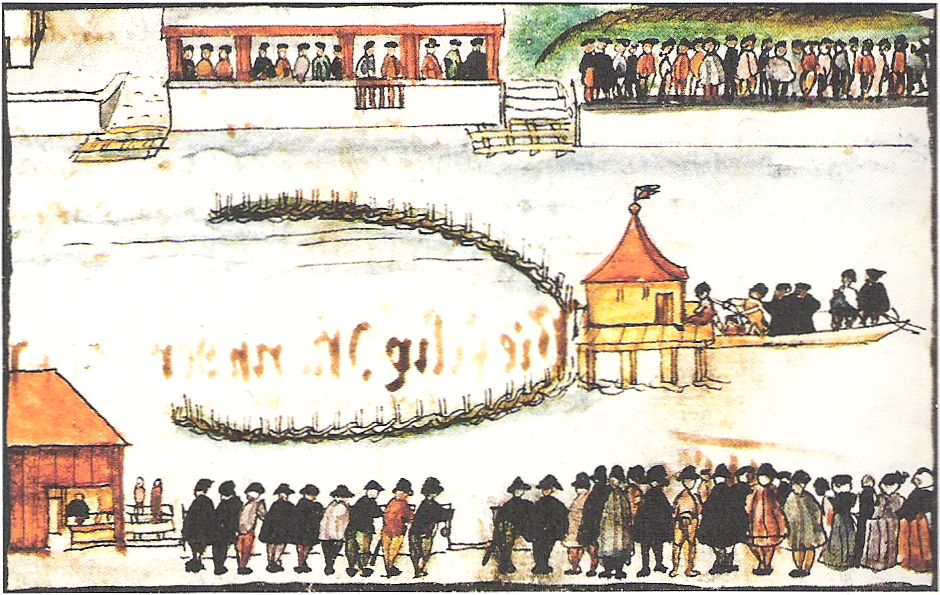
Francis I As a result of the "Affair of the Placards," six Protestants were burned at the stake in front of Notre Dame Cathedral in Paris on January 21, 1535. And while it’s fashionable to mock those WWJD bracelets as cloyingly sentimental, there are worse questions you could ask yourself. Especially if you’re, you know, a Christian cleric or would-be governmental defender of the faith.

When I say this grisly execution happened "as a result of" the Affair of the Placards, it might be more precise to say it happened afterward and on the ostensible basis of it. The Affair itself was the scandalous posting of a series of aggressive protestant posters in Paris and other French cities denouncing the Catholic mass. They were intended to be offensive, and it worked. But the total number of people killed during their production and display was zero. Not even the King of France.

Here I say "not even" because one of the placards was actually put on his bedroom door in Ambois. It was not merely an affront but a pointed demonstration that had they chosen to they could have gone in and killed him. But they did not, nor did they try to. So he responded with a big public show of affirming his Catholic faith, reversed his earlier policy of trying to protect French Protestants from their more aggressive Catholic countrymen.

Bear in mind that France was dangerously riven by religious sentiment at this point, and a very great distance indeed from any real conception of separation of Church and State. Indeed they still have issues with it, being militantly secular. (I know it has been said that atheism is a religion in the same sense that not collecting stamps is a hobby. But I disagree. Atheism offers equally firm answers to the same full range of metaphysical questions, and to enforce it through the state is not religious neutrality.) So I have to ask two key questions.

First, did either side gain anything by being deliberately obnoxious? I grant the Protestant grievance at being silenced on theological questions and living in perpetual fear of extreme mob violence. (In the wake of the Placards a number of leading Protestants pre-emptively fled France including John Calvin.) But to have posted reasonable comments on the advantages of free discussion of religion would have been a better move, surely, than to put up something highly likely to provoke Catholics into measures that further inflamed feelings in ways that reduced the likelihood of their acting with genuine charity.

As for the Catholics, to respond with extra-legal violence and state murder could not have been better calculated to reinforce their non-co-religionists’ worst suspicions about their motives and the need to arm against them. So everybody lost, and France spiraled into religious wars, intolerance and intellectual stagnation.

Among those who lost most, surely, are the self-proclaimedly Catholic king and the clergy who said there’s probably nothing Jesus would like better, nothing he’d be more likely to do if he were here, than to destroy some fellow human beings as horribly, painfully and messily as possible right at our best church. Oh yeah. I’m sure that’s in the Sermon on the Mount somewhere.
When Simon Met Populace – It Happened Today, January 20, 2017

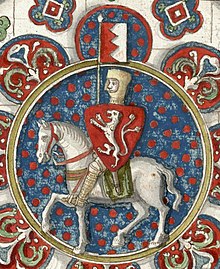
An event on January 20, by contrast with much of the rubbish cluttering up the pages of history, was no mere incident. On this date Simon de Montfort, leader of a baronial revolt against the hapless profligate King Henry III of England, summoned a parliament to legitimize his claim to control England. And to strengthen his position against his fellow barons as well as that of the rebels generally, he brought in the common people as full participants.

They were not, perhaps, equals in every sense early on. But they sat alongside the nobles and clerics and took part in the debates and the votes. And what is remarkable is that over the next couple of centuries instead of being squeezed out they continued to gain power and respect, including getting their own separate house within a century with control of its own affairs and primacy on money bills. And people mock the Middle Ages.

The nobles and clerics may generally have been displeased to find knights and burgesses tramping mud into the place. But as the various parliament-like entities throughout Europe succumbed to absolutist monarchs over the next three centuries, the wiser among them must have reflected that the deep roots of the English parliament among the actual people of England were a major reason it, and it alone, survived and flourished, becoming ultimately more powerful than the monarchs as the commons chamber came to dominate the lords.

There is much more to be said about it, including the possibly happy chance that early on the English parliament divided not into three estates as in France, with separate noble and clerical houses, but into two, the mucky-mucks and the ordinary Joes and eventually Janes. And that Montfort’s own motives may have been less than entirely pure, as his conduct was (not least in his vicious anti-Semitism, at once opportunistic and apparently heartfelt). But he deserves respect for what he did.

So does the political culture of the English, and the habits and actions of countless English men and women great and small, through which liberty under law went from success to success despite its challenges. Indeed, though Montfort himself perished horribly later in 1265 at the battle of Evesham where his corpse was nastily dismembered, when his conqueror Edward succeeded his father Henry III and became Edward I, he himself summoned parliaments to which he too invited commoners and to which he reluctantly but decisively surrendered power over taxation.

The history of mankind would be enormously different had representative government not taken hold in England. It is far from established universally and faces challenges even in its Anglosphere heartland. But it is a standing example, invitation and sometimes reproach to all regimes and people everywhere that lack it. And while a great many things contributed to its remarkable history, including the countless again great and small who made Magna Carta a reality and defended it down through the years, Montfort’s innovation of including the common people as full members of Parliament was an important turning point.

Without it things would almost certainly have been different and worse, then and later, there and elsewhere including of course in Canada.

Across the River and Into the Italy – It Happened Today, January 10, 2017

On this date, January 10, back in 49 B.C., Julius Caesar crossed the Rubicon, cast the die, and waded into an unending series of metaphors as well as a civil war that he won unless you count the bit where he was assassinated.

Especially in an era where cultural literacy is being lost, if not actively buried, it’s important to remember what crossing the Rubicon meant technically. The Rubicon is a shallow river in northeastern Italy, the crossing of which is not necessarily memorable as a rule. But (assuming the name has not wandered in the last 2000 years, which is a matter of some dispute) crossing it was a very big deal back in Caesar’s day because it was the frontier between the conquered Roman province of Cisalpine Gaul, and Italy proper. And while appointed governor held military authority ("imperium") in the provinces, only elected magistrates could do so within Italy itself given its proximity to Rome on which, just possibly, a man with soldiers under his command might suddenly march to seize power or some such.

For instance Julius Caesar. Caesar led his 13th legion ("Gemina") into Italy for the specific purpose of seizing power. And when he did so, he uttered the once-famous phrase "alea iacta est" ("the die is cast") meaning he had gambled everything and it was now too late to turn back because for an appointed governor to bring soldiers into Italy was open revolt and a capital offence.

Generally speaking if we use the metaphor today with any concept of its meaning, we refer simply to a decisively bold act. But there is a bit more to it, and it is less unequivocally praiseworthy. The reason crossing into Italy, over the Rubicon or any other otherwise insignificant marker, was a capital offence was that it was an attack on established authority and moreover in Caesar’s day, as Rome was still a Republic albeit very rickety by that point, an attack on civilian rule by those meant to be defending it instead.

The crucial political problem, then, now and always, has been to create a government able to protect liberty without being able to threaten it. It is by no means a simple problem or it would have been solved more often including in Rome. But Caesar’s contribution was to shove it aside in favour of the question of which strongman should rule, whose answer is far simpler but far less satisfactory.

The main difficulty through history is that most governments have been too weak to sustain themselves against invasion or upheaval even when plenty strong enough to oppress their citizens in the average course of events. You could not solve the former problem by further strengthening it without making the latter even worse. And you could not solve the latter without making the former worse.

The Romans did better than a lot of people, sustaining a Republic for nearly five hundred years. It had its flaws, both in its internal law and in its tendency to expand without regard for the niceties of law or justice, although it was on the whole a great deal better than its rivals in foreign as in domestic policy. But it caromed between anarchy and tyranny until the latter finally prevailed decisively, alternating the two problems rather than finding a solution that transcended them.

Not until medieval parliaments, backed by an alert and armed citizenry, did a more stable and attractive solution emerge, one we still enjoy today although its foundations are showing worrisome cracks and signs of crumbling. And so when we recall that in crossing the Rubicon Caesar cast the die once and for all, we should recall not merely his admirable boldness and directness but also his understandable but regrettable determination to bury popular government which, after the conspirators buried him, did succeed in the persons of Augustus, Tiberius and on down through the imperial centuries.

Like a few other great conquerors, such as Alexander and Napoleon, Julius Caesar has always seemed to me to combine military genius and political adroitness with a curious vagueness about what it was all for. And while it takes nerve to cross the Rubicon and courage is in principle a virtue, it was not in Caesar’s case directed to a praiseworthy end.

A Load of Bull on Slavery – It Happened Today, January 8, 2017

Nicholas V January 8 was not a good day for the Papacy, Portugal or Africa. At least not if you mean January 8 of 1454. For on that date Nicholas V confirmed that Portugal owned all of Africa south of Cape Bojador and could enslave the inhabitants.

OK, perhaps "confirmed" isn’t quite the right word, since Portugal did not actually own that part of the world and nobody has the right to enslave anyone. And while you might expect an assertion to the contrary from some cackling old reprobate hunched over his ill-gotten gains, there’s this general idea out there that the Pope’s job when it comes to worldly matters is to be so unworldly that, in upholding high ideals, he sometimes gives advice that is almost wilfully useless. That trap at least Nicholas avoided.

Instead he issued this bull from concern that without it, other European nations would start horning in on Portugal’s "right" to grab large tracts of land because its inhabitants were not Christian, and demonstrate the virtues of the true faith by brutally mistreating them and denying their humanity. I can think of better plans.

I bring this up because I entirely reject ludicrous PC versions of history in which only Europeans were bad, basically the white serpents invading various gardens of Eden around the world. The inhabitants of Africa before the coming of European domination were up to the usual human tricks, sometimes in remarkably horrible ways. As were the inhabitants of the Americas. And I believe that on balance, the spreading particularly of the ideals and practices of the Anglosphere has brought great benefit to mankind. But it will not do, in rejecting one fairy tale, to substitute another.

At times, European conduct was so loathsome as to invite despair at humanity’s fallen condition. Especially when the worst practices were endorsed by those entrusted with recalling us to our moral senses when we went wrong. And so it is also important to note here that opposition to slavery and mistreatment of colonized people generally arose soonest and most strongly among professed Christians including Catholic clergy in the Spanish empire.

Still, we should pause on January 8 and reflect on the casual manner in which the papacy put its seal of approval on all that was worst about European colonization.

Manz Drowned in Zurich – It Happened Today, January 5, 2017

On January 5 Felix Manz was drowned. Which might seem like bad luck and maybe the occasion for a safety campaign. But I’m afraid it’s considerably more unpleasant than that. You see, he was drowned on purpose, in Zurich, on January 5 of 1527, as what I can only assume is a grimly ironic punishment for advocating and practising adult baptism.

Manz was an Anabaptist, part of an extreme wing of the Protestant Reformation, theologically speaking. Among other things they argued that infant baptism was just wetting a baby and that the ceremony could only have spiritual effect if performed on someone who understood it and did it willingly.

I grant that they could be annoying in a mild way, because they also tended to refuse to take oaths, defend the state or go along with civil authorities. They based this conduct on a very literal reading of the Sermon on the Mount and what strikes me as a wilful disregard of the injunction to render unto Caesar that which is rightly Caesar’s in this troubled and sinful world.

However that may be, Manz was not drowned for refusing to take an oath. He was drowned by the state because on March 7, 1526 the very Protestant Zurich council, whose members included the leading theologian Huldrych Zwingli whose ideas had a major influence on John Calvin, had declared adult rebaptism punishable by drowning. Which ought at least to dispel any notion that Protestants were better than Catholics on the topic of freedom of conscience and on separating Church and state. In fact Zwingli himself was killed in battle trying to force Protestantism on Catholic parts of Switzerland.

I’m not very sympathetic to Anabaptist doctrine or behavior in a lot of areas. I And I can see legitimate grounds for jailing people who will not pay a parking ticket because Jesus told them not to. But it’s the behaviour, not the belief, that matters, and it’s the behaviour of refusing to do something necessary to public order.

I don’t have freedom of conscience to run a red light or refuse to testify truthfully in court about seeing someone else do it. But holding a man under water until he dies for wanting to be held under water until God is happy is surely so grotesque that it’s hard to believe anyone would do it, let alone do it proudly.

Wish I'd said that - January 5, 2017

"There are few words which are used more loosely than the word 'Civilization.' What does it mean? It means a society based upon the opinion of civilians. It means that violence, the rule of warriors and despotic chiefs, the conditions of camps and warfare, of riot and tyranny, give place to parliaments where laws are made, and independent courts of justice in which over long periods those laws are maintained. That is Civilization— and in its soil grow continually freedom, comfort, and culture. When Civilization reigns, in any country, a wider and less harassed life is afforded to the masses of the people. The traditions of the past are cherished, and the inheritance bequeathed to us by former wise or valiant men becomes a rich estate to be enjoyed and used by all." Winston Churchill in 1938, quoted in Daniel Hannan Inventing Freedom: How the English-Speaking Peoples Made the Modern World