Posts in Government
The Treaty of We Stole Your Land – It Happened Today, February 24, 2017

To say that we cannot undo history is not to say that we should not recall genuine injustices. For instance the Treaty of Dancing Rabbit Creek, signed on September 27, 1830 but proclaimed on February 24, 1831. The first "removal treaty" under the Jackson-era Indian Removal Act, between the Choctaw and the United States Government, it traded some 11 million acres of fertile land in what is now Mississippi for 15 million acres of barren scrub in Oklahoma. Or else.

Now the Treaty did give those Choctaw who chose to remain in Mississippi U.S. citizenship, the first significant non-European group to receive it. And that is a path that should have been taken far more, and with far better goodwill on the part of citizens and governments in the United States and Canada. But it would also have been essential to leave the Choctaw, as citizens, in possession in fee simple of the land they had once held traditionally. And that was not something the American government was willing to do. Instead, each Choctaw who remained where he or she was got one "section" of 640 acres, plus a half section for older and a quarter for younger children. The rest of the land was, well, stolen.

The Choctaw were the first of the "Five Civilized Tribes" to be subjected to this unfair process and sent along the "Trail of Tears" to Oklahoma where, of course, the land was not of equivalent quality in any case. (The other four were the Creek, Cherokee, Chickasaw, and Seminole.) Around 15,000 of them went to Oklahoma, which is actually a Choctaw word (it means "red people"). And there the Choctaw were promised in the treaty "Autonomy of the Choctaw Nation (in Oklahoma) and descendants to be secured from laws of U.S. states and territories forever" which of course did not happen either. As to the roughly five to six thousand who stayed, they were harassed, abused, and encouraged to move to Oklahoma into the early 20th century.

I believe the rise of the United States to superpower status militarily, economically and culturally has been an enormous boon to the world and to Canada. But there were aspects of it, from slavery to foreign policy misdeeds to the "Indian removal policy", that remain wrong even as part of a story that turned out very well.

One Choctaw chief, George W. Harkins, wrote a letter to the American people that included the poignant phrase "Much as the state of Mississippi has wronged us, I cannot find in my heart any other sentiment than an ardent wish for her prosperity and happiness." I share his sentiment. But surely one should also wish that for the descendants of those who were dispossessed.

Not by restoring conditions of life as they had been in 1830 or 1430, but by compensation to individuals for wrongs to their direct ancestors that can reasonably be demonstrated in court, full citizenship without social prejudice, and frank recognition of the historical wrong as an outrage not only to those directly affected, but to all decent people.
Time for Canadians to have free trade with... Canadians

Past time, actually. Long past. So I'm delighted to see that, to mark the 150th anniversary of Confederation, the Macdonald-Laurier Institute has just reissued the paper Citizen of One, Citizen of the Whole that Brian Lee Crowley, Bob Knox and I wrote back in 2010. Perhaps it is the mark of an unredeemable nebbish to be proud of a paper on such a topic as free internal trade. But with governments including our federal one struggling with difficult policy choices to increase economic growth, it continues to amaze me that this juicy low-hanging fruit has gone unpicked.

In the paper, to which Brian has added a new introduction, we argue that it is not just economically sensible for the federal government to fulfill our Founders' vision by using their clear Constitutional authority to strike down petty protectionist interprovincial trade barriers. It is also a moral obligation.

What a great way to celebrate Canada's 150th birthday.

Remedy the Alamo? – It Happened Today, February 23, 2017

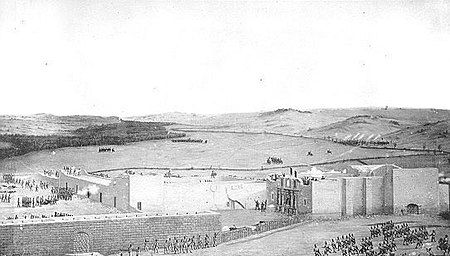
Back in 1836 the Battle of the Alamo began on February 23. It was a Pyrrhic victory for the Mexican government, because after a 13-day siege they stormed the Alamo Mission and killed everybody inside, prompting outrage, a surge of enlistments in the "Texian" army and a decisive victory for the latter at San Jacinto in April that secured Texas independence. And a lot of people are still bitter.

There are seriously people in the United States who dream of restoring much of the southwest to Mexico, to say nothing of Mexicans who want back what they believe was "stolen" from them in 1836 and then in 1848. Germany even used it as bait to try to lure Mexico into World War I in the middle of its own brutal civil war, which Mexico's government at the time was at least too intelligent to fall for. But I cannot understand the appeal of getting Texas back inside Mexico.

In the first place, can anybody seriously claim that Texans would be better off if the place had remained Mexican, that they would be freer or wealthier? And the United States as a whole would have been diminished without Texas, even if it did fight on the wrong side in the Civil War. But on the whole both Texas and the world are better off for the outcome in 1836.

Ah but, say some, these "Texans" were interlopers, white people who moved in in large numbers after 1821. Which may be true, but they were invited in by the Mexican government and if they then decided they did not like that government, anyone who believes in the consent of the governed must concede that they had a right to do something. And anyone who believes their discontent with the Mexican government was unfounded knows little of the history of Mexico. (Though it must be conceded that the Mexican government did prohibit slavery, something many immigrants flagrantly ignored.)

There’s another point here, even more fundamental. If we are to deny Texans the right to inhabit Texas in 1836, we must surely also deny Mexicans the right to inhabit Mexico, which was acquired from the "indigenous" occupants by Imperial Spain in a manner even less attractive than the settlement of North America. Now it would be quite a feat to undo that injustice, particularly as a large part of the population of Mexico has both European and aboriginal ancestry and you cannot really tell someone their left leg can stay but the rest of them has to go "back" to a place their last ancestor left in the 17th century. And then… and then… it gets worse.

You see, the Aztecs who occupied much of Mexico when the Spaniards showed up were warlike, aggressive and in many ways horrible including their ritual human sacrifice of their enemies on a spectacular scale. They too have no right to the land which they stole, even if it’s very hard to return it to the descendants who were never born of people whose hearts they ripped out of their living chests and sometimes then ate their flesh and made their skin in to ceremonial robes.

The same problem arises, if slightly less starkly, with almost every revisionist attempt to undo some particular injustice in history real or imagined. It triggers a domino effect that only stops once records are not available, in which in any case we are compelled to take from the blameless to give to the nonexistent.

To say so is not to excuse injustice or aggression. But it is to say that our duty is to try to prevent them in the present, not to seek to remedy the real past in imaginary ways.

So yes, remember the Alamo. But do not try to put it back into Mexico. It does not belong there.

Le Roi de Naples? – It Happened Today, February 22, 2017

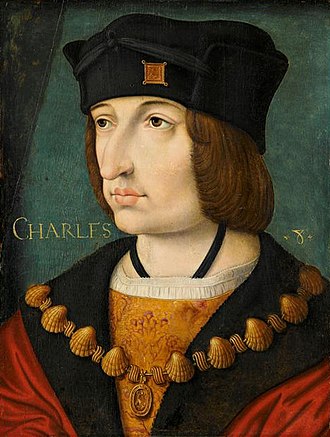
In a sign of a more cosmopolitan era, on February 22 Charles VIII "the Affable" of France marched into Naples to claim its throne. It didn’t work, as the grand schemes of Kings of France often did not. But it’s interesting to reflect on a period in which neither the French nor the Italians would regard it as in principle offensive to have a French king on an Italian throne, whatever they thought of the actual claimant.

In fairness, Charles did rather better in boldly marrying Anne of Brittany in 1491. It was bold because technically she had already married Habsburg Holy Roman Emperor Maximilian I, by proxy and possibly not properly. By bagging Brittany instead of the Hapsburgs getting it he did help France avoid Hapsburg encirclement and emerge as a great power. The same is not true of his Italian venture.

Having somehow inherited a legally, morally and practically dubious claim to the throne of Naples, reinforced by a somewhat cynical Pope Innocent VIII, he made various deals with other important monarchs and then conquered Italy without much apparent difficulty in late 1494 and early 1495, to the joy of Savonarola but the concern of many other players including a new Pope, Alexander VI. His enemies created the League of Venice against him and he was more or less driven out of Italy in 1495, a great deal poorer but apparently no wiser. And wars would continue over Italy for 50 years, convulsing Western European geopolitics to no good purpose at much cost especially to Italians.

As for Charles, who if he was affable was so largely on the surface, he banged his head on a doorframe in 1498 and fell down dead. (OK, he fell into a coma and died nine hours later but as banging your head on a door and perishing at age 27 goes it was pretty quick.) He left France, his dynasty and Italy in a right mess. So on the whole not a good king.

Still, I do find it odd that we pride ourselves on our cosmopolitan, tolerant and multicultural attitudes. Yet we retain a kind of Wilsonian fascination with ethnic states to the point that it seems strange, even perverse, to have a French King seeking the throne of Naples, an Austrian Hapsburg seeking to rule Brittany and so on.

There were good reasons why they should not have done so, primarily that this particular French King should also not have ruled France, nor the profligate Habsburg Maximilian I of Austria, who stuck the Holy Roman Empire with a debt it took a century to pay off. But ethnicity seems to me to have nothing to do with it.


Aye, and Cheap Too – It Happened Today, February 20, 2017

What could be more quintessentially Scottish than the Shetland and Orkney Islands? Bleak, remote, picturesque, the ideal location for a hardy folk and their hardy ponies. By reputation the Scots won’t go rock climbing unless they have "full conditions" namely rain and wind that deter even other people crazy enough to rock climb. Och aye mon.

It is therefore a bit surprising to learn that both these island chains, which to my shame I hadn’t realized were northeast of John o’ Groats in the ancestral county of Caithness to which I have not been, itself allegedly more than a little remote, belonged to Norway until the 15th century.

Of course a lot of things "belonged" to Norway in the sense of having been seized by ferocious Vikings over the previous millennium or so. (And parenthetically I often wonder how those who feel that within North America we should do a kind of ethnic reset of landholdings to 1500 think we should undo the impact of those raids, invasions and random chaos.) But these two island chains, it turns out, wound up in Scottish hands via a pawn shop.

Perhaps you don’t fancy your chances of wandering into such an establishment with "Mainland" and its cousins (yes, "Mainland" is the largest of the Shetlands) under your coat and hoping the man at the desk will advance some money without a lot of questions about provenance. But it actually is what happened on February 20 of 1469 when Christian I of Norway put them up as security because he was having trouble scraping together a dowry for his daughter Margaret to marry James III of Scotland in what I suppose was regarded on both sides as a shrewd dynastic move.

It wasn’t. James III’s grandiose European schemes were of no benefit to Norway or his own people who he didn’t bother trying to govern well. And like so many of the Stuarts’ cunning plans James III’s ended badly, with his death in battle against rebellious nobles in 1488. (His son James IV was killed in the disastrous defeat by the English at Flodden. His son James V died shortly after the disastrous defeat by the English at Solway Moss. But I digress.)

The point is that Christian I pawned the islands and never redeemed them, Norway apparently becoming less interested in these picturesque rocks after unifying with Denmark which was bigger, warmer and less inaccessible. In 1472 they were officially annexed to the Scottish crown.

So what could be more quintessentially Scottish than the Shetland and Orkney Islands? I’ll tell you. Getting them in a pawn shop for a bargain price.

Oh yeah, that Vermont – It Happened Today, February 18, 2017

Vermont is not all that controversial. Is it? No. It’s just this rather pleasant New England state with the odd distinction of being among the most Democratic in the United States and the most heavily armed. But precisely because it does not arouse strong passions, it’s interesting to reflect on its admission to the Union on February 18 of 1791.

Interestingly, that decision was controversial, because Vermont was on land ceded by the French after the Seven Years’ War and at one point New York, Massachusetts and New Hampshire all claimed some of it. By 1770 it was basically New York versus the local staid pious New England rowdies, especially Ethan Allan and his "Green Mountain Boys" who were frankly rather scary vigilantes against New York authority.

Until, of course, the British decided to suppress liberty in their colonies at which point everybody decided to forget their old quarrels and go get George III even though Ethan Allan continued to contest New York’s authority. So here’s the interesting thing.

In the general uprising against British authority, a group of Vermonters gathered in convention declared themselves a sovereign state in 1777. Then they named themselves Vermont, and adopted the first constitution in North America to ban adult slavery. (Eighty-one years later, in 1858, Vermont banned slavery altogether.)

For fourteen years people tried to avoid the awkward topic of whether there was or was not a "Vermont" even though it issued its own money, had a postal service and elected governors. And Congress could not act without New York’s consent under Article IV, Section 3 of the constitution. Finally New York threw in the towel and, after successful negotiations over where exactly the border lay and what compensation was due to New Yorkers whose land titles had been ignored in Vermont, Vermont became the 14th state and (duh) the first new one after the original 13.

What’s interesting here is that Vermont’s claim to statehood rested on two key points. First, the people who then lived there wanted it. And second, they had successfully acted as a state in fact. In short, people bowed to reality.

I’m not saying might makes right. The origins of many nations and subnational jurisdictions give serious pause on grounds of legitimacy, especially in a world that no longer recognises the "Doctrine of Discovery" of places that already had people in them, and is distinctly uneasy with the "Doctrine of Conquest". But the simple fact is that as far back as you can find anything resembling reliable records, land is in possession of those who took it from others including the aboriginals who were in Vermont when Europeans showed up. And sometimes de facto is the best basis you can find for de jure, that is, you agree that Vermont should be accepted as existing essentially because it does exist.

We still hope for perfect justice. We cannot do less. But at times we admit that things are what they are and we must make the best of them.

I do not think a great many people, even in New York, go about today saying Vermont is a fraud and an imposition. But precisely because it does not arouse strong passions, it’s a good test case of our willingness to defy, or accept, what actually does exist in favour of what we wish existed or feel might perhaps have existed under other circumstances.