Posts in History
When Simon Met Populace – It Happened Today, January 20, 2017

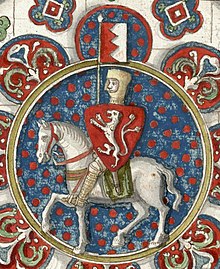
An event on January 20, by contrast with much of the rubbish cluttering up the pages of history, was no mere incident. On this date Simon de Montfort, leader of a baronial revolt against the hapless profligate King Henry III of England, summoned a parliament to legitimize his claim to control England. And to strengthen his position against his fellow barons as well as that of the rebels generally, he brought in the common people as full participants.

They were not, perhaps, equals in every sense early on. But they sat alongside the nobles and clerics and took part in the debates and the votes. And what is remarkable is that over the next couple of centuries instead of being squeezed out they continued to gain power and respect, including getting their own separate house within a century with control of its own affairs and primacy on money bills. And people mock the Middle Ages.

The nobles and clerics may generally have been displeased to find knights and burgesses tramping mud into the place. But as the various parliament-like entities throughout Europe succumbed to absolutist monarchs over the next three centuries, the wiser among them must have reflected that the deep roots of the English parliament among the actual people of England were a major reason it, and it alone, survived and flourished, becoming ultimately more powerful than the monarchs as the commons chamber came to dominate the lords.

There is much more to be said about it, including the possibly happy chance that early on the English parliament divided not into three estates as in France, with separate noble and clerical houses, but into two, the mucky-mucks and the ordinary Joes and eventually Janes. And that Montfort’s own motives may have been less than entirely pure, as his conduct was (not least in his vicious anti-Semitism, at once opportunistic and apparently heartfelt). But he deserves respect for what he did.

So does the political culture of the English, and the habits and actions of countless English men and women great and small, through which liberty under law went from success to success despite its challenges. Indeed, though Montfort himself perished horribly later in 1265 at the battle of Evesham where his corpse was nastily dismembered, when his conqueror Edward succeeded his father Henry III and became Edward I, he himself summoned parliaments to which he too invited commoners and to which he reluctantly but decisively surrendered power over taxation.

The history of mankind would be enormously different had representative government not taken hold in England. It is far from established universally and faces challenges even in its Anglosphere heartland. But it is a standing example, invitation and sometimes reproach to all regimes and people everywhere that lack it. And while a great many things contributed to its remarkable history, including the countless again great and small who made Magna Carta a reality and defended it down through the years, Montfort’s innovation of including the common people as full members of Parliament was an important turning point.

Without it things would almost certainly have been different and worse, then and later, there and elsewhere including of course in Canada.

When Kucha Met Tang – It Happened Today, January 19 2017

Tarim Basin (Wikipedia) Am I allowed to mention that on January 19 of 649 AD the forces of Kucha surrendered to general Ashina She’er, giving the Tang control of the northern Tarim Basin? Or would I just be wasting your time?

Lists of historic events tend to contain such things, partly perhaps to illustrate the vanity of much worldly ambition as readers go "I thought Tang was bad-tasting orange juice substitute that emerged from the Apollo moon program" and partly, I think, to be politically correct and avoid charges of "Eurocentrism". But seriously, folks, would the world be different if this one hadn’t happened? Before you answer, close the book, step away from the keyboard and tell me where the northern or any other bit of the Tarim Basin is.

Exactly. So now let me dive deep into the pool of political correctness to fish out Hendrik van Loon’s sweeping 1921 The Story of Mankind, a panoramic history especially for children of the sort people tend not to write any more because it all makes sense and has heroes and villains. At one point in the book he says that when deciding what to include "There was but one rule. ‘Did the country or the person in question produce a new idea or perform an original act without which the history of the entire human race would have been different?’ It was not a question of personal taste. It was a matter of cool, almost mathematical judgement. No race ever played a more picturesque rôle in history than the Mongolians, and no race, from the point of view of achievement or intelligent progress, was of less value to the rest of mankind."

In fact I would quibble a bit with his remark about the Mongols, whose impact on Russia I consider to have been disastrous for that country and, by extension, for the world because of the malevolent role an anti-Western Russia has played including in its time as the Soviet Union. (To be more exact, a half-Western Russia conflicted about its identity and rarely more vigorous than when rejecting the side of its heritage it desperately needs to embrace for its own sake and ours.) But I agree with van Loon about the larger point. A great many "historical" events are nothing of the sort, in that they contribute nothing good or even bad to the state of the world, merely perpetuating patterns harmful and repetitive wherever they occur.

OK, you could try to make a case that if China had been less or indeed more successful in its military campaigns against the various Turkic statelets in its northwest, including Kucha in Xinjiang (yes, I Googled it) its own history might possibly have been different. But it’s hard to see how, or how such a result might have occurred, let alone how the specific case of Kucha mattered either way. It was just a bunch of rhubarb on the borders of a large, somewhat amorphous civilization involving convoluted politics and chaotic military actions on behalf of dynasty that later collapsed.

It did happen on January 19. But if it hadn’t, pace van Loon, nobody would know the difference. Not even people who now live there.

When York Met Lancaster – It Happened Today, January 18, 2017

The Tudor Rose: a combination of the Red Rose of Lancaster and the White Rose of York (Wikipedia) Does a wedding bring tears to your eyes? Well, here’s one that should. On January 18 of 1486 Henry VII married Elizabeth of York, uniting the Houses of York and Lancaster, ending the Wars of the Roses, and cementing the Tudor claim to the throne. Romantic, no?

No indeed. It was apparently in fact a happy marriage whose members grew to love one another. But it was initially all about politics, from Henry’s pledge to marry her in 1483 to his efforts to weasel out to his reluctant agreement to go ahead. Henry was an intelligent and affable man, but clever, devious and ruthless. (When his son Arthur died in his teens, Henry was evidently at least as upset about the prospects for his dynasty as for the death of his child.)

Also, he had no real claim to the throne unless you count his own assertion "by right of conquest" from, characteristically, the day before he won the Battle of Bosworth field in which Richard III was killed, thus retroactively making everyone who had fought for the rightful king a traitor. He didn’t kill them all at once. But with Henry you never knew.

Except this thing that you did know. He was only a "Lancaster" in a tenuous sense on his mother’s side and a fraudulent one on his father’s. His mother was a great-granddaughter of Edward III’s brother John of Gaunt, founder of the Lancaster dynasty, but via John’s mistress not his wife (and to be very pedantic, Richard II had legitimized those children by Letters Patent but Henry VI had then declared them ineligible for the throne using the same device, so surely either both count or neither). Meanwhile Henry’s grandfather Owen Tudor had secretly married the French widow of Henry V but was not thereby catapulted into the legitimate line.

In fact Henry’s wife had a far better claim to the throne than he did as a daughter of Richard III’s brother Edward IV even if Richard was a usurper. Yet Henry deliberately had himself crowned before their marriage, and she was not invited to be queen regnant as she had an almost incontestable claim to do though perhaps not the desire, having seen various members of her family die or simply vanish to keep them from the throne or get them off it.

The one thing that really made Henry king was that, although no warrior himself, he cleverly managed his affairs so that those who opposed him were defeated in battle, executed or otherwise caused to become not alive. And though his dynasty did produce one outstanding if scary monarch in the person of Elizbeth I, the rest were scary without being outstanding or, in the case of Edward VI, ineffectual.

England being England, they found a way to make it all work. But I’m still a fan of Richard III, and Henry VII’s marriage does nothing to change that view.

Goodbye and Good Luck, Rome – It Happened Today, January 17, 2017

Theodosius I There’s this joke in a book we bought at the Roman Baths in Bath this summer that goes "How do you divide the Roman Empire? With a pair of Caesars." And it’s a good January 17 joke (no, really) because it was on that date in 395 that the heirs of Theodosius I permanently split it into the Eastern Empire under Arcadius and the short-straw crumbling Western bit given to the hapless Honorius.

I can sort of imagine the meeting where they said look, everything’s falling apart, barbarians are everywhere hacking and slaying, we were world beaters a century ago and now we can’t cope, what should we do? And some smart-aleck says maybe admit defeat, sort of, and hack off that bit of the Roman Empire with whatchamacallit in the middle, you know the place I mean, a pretty famous city, I think it’s, um, Rome, that’s it, Rome. Let’s… ditch Rome. It’s probably on fire anyway. And everybody looks at him funny and then there’s an awkward pause and the chair says "Has anybody got a better idea?" and nobody has so they do it.

It sounds like a counsel of despair. Surely they needed a bold stroke, something to fix the problem, not give in to it. But in fact it was a counsel of wisdom, following a rule that’s easy to state but hard to implement in the press of events: Reinforce success not weakness.

In statecraft, in military matters, and in business it’s far too easy to deal with a problem in the short term by drawing away resources from something that’s working to prop up something that’s not. But the more you do it, the fewer resources you devote to things that are working and the more you devote to those that are not and you spiral downward into defeat, bankruptcy or whatever particular form of ruin you were trying to stave off in the first place.

In fact the result of amputating the rotting western bit was that the Eastern Empire, later Byzantium, lasted more than 1,000 more years though the last four centuries were ignominious and those that preceded it were often squalidly magnificent, with intrigue and decadence behind a shimmering façade. The East badly missed the political and civil culture of the West once it was gone. On the other hand, refusing to face facts would probably have dragged the East down far faster without doing as much for the west as the separation did.

In the short run, the Eastern Empire was able to regroup, husband its resources, and make several determined efforts to recover the West after the Fall of Rome. In the second, the West liquidated its failing arrangements and rebounded dramatically.

I’ve often thought the Fall of Rome was much more of a political and headline event than a truly major historical development. The rule of law remained stronger there than even in Byzantium, let alone elsewhere, Charlemagne did resurrect the Holy Roman Empire by 800 AD and while there is much to criticize about the nature of government even in Western Europe after the 5th century, and many waves of barbarians difficult to stop, it’s hard to think of anywhere you’d rather have lived even then. Especially if you pick the right part, Britain, an important part of the Western Empire for almost four centuries, where humanity later got both Parliamentary self-government and the slow but increasingly effective separation of Church and State in practice that have both eluded almost everyone else to this day.

So take another page from the Romans’ playbook and reinforce success not failure. Mind you, even in the failing enterprises you’d ideally put someone less useless than Honorius in charge.

Here Comes The Flood… Again – It Happened Today, January 16, 2017

St. Marcellus English weather is proverbially lousy partly because it’s so wet all the time. But January 16 of 1362 was especially bad, the onset of the Grote Mandrenke which if your low Saxon is in good working order will alarm you because it means the "Great Drowning of Men".

Also known as the "Second St. Marcellus Flood" because it peaked on his feast day, January 17, the Grote Mandrenke took at least 25,000 lives in the British Isles and northern Europe from Denmark to the Netherlands. A previous "First St. Marcellus flood" had hit in 1219, drowning some 36,000 people in northern Europe, which surely indicates that extreme weather did not begin when Al Gore hit middle-age.

In fact the Grote Mandrenke was the result of a massive southwesterly Atlantic gale that sent a storm side surging far inland, sweeping away islands, cutting off parts of the mainland and wiping entire towns off the map to the point that some cannot now be located even through archeology. And it was, as the "Second St. Marcellus flood" business indicates, far from unusual in that period.

Wikipedia notes blandly that "This storm tide, along with others of like size in the 13th century and 14th century, played a part in the formation of the Zuiderzee, and was characteristic of the unsettled and changeable weather in northern Europe at the beginning of the Little Ice Age." But hang on. Doesn’t that sound exactly like "climate change"? But hardly "man-made" or, if you like long words, "anthropogenic."

OK then. If drastic, menacing climate change has been clearly happening since long before humans invented factory mass production, and has been known to have been happening, it tells you what?

The politically correct answer is nothing. Everybody contemplating any issue other than the current panic knows climate has always varied, often suddenly and with dramatic consequences, and says it openly. Glaciers suddenly advance and suddenly retreat. The Earth warms and cools repeatedly. But never mind. Pay no attention. The science is settled. It’s all our fault.

Except the science is no more settled than the climate itself. The famous "Little Ice Age" itself, which brought the Middle Ages to something of a screeching halt and lasted into Victorian times, was not caused by humans. But nor logically then was its end, which set off the warming trend that persisted through most of the 20th century. Indeed most of that warming awkwardly preceded the large increase in atmospheric CO2 to which it is attributed by those who do not believe that causes must precede effects for science, or life, to make any sense.

Blaming humans for unstable weather is about as rational as blaming St. Marcellus. Which people in the Middle Ages were too sensible to do, I might pointedly add.