Posts in History
The Endless Siege Ended – It Happened Today, January 27, 2017

While I’m on the subject of St. Leninsburg it is fitting to note that today marks the end of the brutal 872-day Nazi siege of what was then Leningrad between 8 September 1941 and January 27, 1944. Whatever one thinks of the regime and the name, it was an astonishing demonstration of tenacity under circumstances that literally defy belief.

It cost an estimated 580,000 German and three and a half million Soviet military casualties and a million civilians, over 600,000 during the siege and an astounding 400,000 in the evacuation (which gives you some idea of the efficiency and compassion of Bolshevism). The inhabitants were menaced, obviously, not only with death by bombardment or bombing but also and primarily by starvation.

Among the siege tales of horror were several thousand arrests for cannibalism, mostly of those already dead of natural causes although more than 10% involved deliberate killing of humans for food, and literally thousands of cases of murdering people for their ration cards. Not that there was much to be had even with a card; during the siege people ate their pets, often touchingly trading with a neighbour so as not to eat their own. There are even statues to two hero cats from the siege, Elisey and Vasilisa, though they turn out to be celebrated not for being food but for what they ate, being part of a shipment of cats delivered from Yaroslavl to help deal with the overwhelming plague of rats in the shattered city.

There are two stories I find uplifting about the resilience of the human spirit under such ghastly conditions. One is that the authorities had created an air raid system involving a metronome broadcast over the radio that speeded up if German bombers were approaching. After air raids became less frequent the radio station often broadcast music instead. But during breaks in the music the metronome resumed to assure listeners the city’s resistance had not collapsed, and apparently hungry, cold, lonely, frightened people would huddle by the radio and draw strength from the steady unquenchable tick tock tick tock. And the Monument to the Heroic Defenders of Leningrad includes an underground museum whose only sounds are emergency broadcasts and the ticking of a metronome. (Horribly, an earlier Leningrad Defence Museum and many of its exhibits were destroyed in a fit of Stalin’s jealousy that saw the heroic siege declared a myth and many who had led the defence of the city purged by kangaroo courts and sent to Siberia or shot.)

The other is a soldier’s story. Kenneth Adelman, a top U.S. arms control negotiator under Ronald Reagan, tells of meeting Soviet Marshal Sergei F. Akhromeyev at the 1987 Reykjavik summit and learning that as a young man Akhromeyev had been tasked with defending a road outside Leningrad during the siege and that for 18 months including harsh Russian winters he never set foot inside a building. "'Never?' I asked. 'No. We were told to stay there. We stayed there.'" (Akhromeyev also told Adelman that only two of 32 boys in his high school class survived the war and that indeed eight of 10 males born in the Soviet Union in 1923, as he was, died during the conflict.)

Such heroism deserved a better cause than Stalinism, even in opposition to Naziism. But it is heroism all the same. And while I wish it had never been necessary, I do recognize and am inspired by their capacity to persevere through conditions unbelievable even to hear about, let alone endure.

Saint Leningrad – It Happened Today, January 26, 2017

On January 26 of 1924 the Soviet government renamed the former St. Petersburg "Leningrad." It was an ominous move though not as ominous as moving the capital to Moscow on March 12 1918, a dramatic symbol of its rejection of Russia’s always uneasy membership in Western civilization. But it also led to one of those great jokes Soviet oppression engendered.

By way of background, the tsars had already changed the somewhat Germanic-sounding "St. Petersburg” to Petrograd (Петроград) on the outbreak of World War I. So after World War II, the authorities are processing all sorts of displaced persons and the bureaucrats ask this somewhat baffled old guy "Where were you born?" "St. Petersburg." "Where did you live before the Revolution?" "Petrograd." "Where did you live before the Great Patriotic War?" "Leningrad." "Where do you want to live now?" "St. Petersburg."

Sadly, had he been younger and lived a long life he might have got his wish insofar as Leningrad was renamed St. Petersburg in 1991. But the spirit of openness and affiliation with the West that had never been sufficiently embraced before 1914, including by the towering Peter the Great himself, was neither understood nor accepted after the fall of Communism particularly by the Russian political elite. Under Putin in particular it’s still really Leningrad and the capital is still in the inward-looking Moscow not Russia’s window on Europe and the free world beyond.

It’s a great pity, for the Russian people and for us.

Marry Me and Schtum – It Happened Today But Nobody Knew, January 25, 2017

To return to the topic of weddings that bring tears to your eyes, and again a royal one, would you cry if the king insisted on marrying you without telling anyone? Or might you just flee instead?

I have a feeling Anne Boleyn did neither on November 14, 1532 when she tied the knot surreptitiously with the dreadful Henry VIII. Anne was clearly in over her head, an ominous phrase in this context. But the young woman (we aren’t sure how young; she may have been born in 1501 or 1507) appears to have been a clever and confident schemer who wrongly thought she knew exactly what she was doing.

They were publicly married on January 25, 1533, leading to a ruckus of which you may have heard. The new Archbishop of Canterbury Thomas Cranmer, formerly the Boleyn family chaplain, declared the marriage null and void on May 23 of that year and, five days later, mysteriously changed his mind. Henry VIII could do that to you.

And to himself; when Anne proved unable to give him male heirs he had her convicted of high treason, as well as adultery and incest and perhaps witchcraft, by a jury that included her own uncle who lived to tell the tale largely, one suspects, because she did not (along with five men framed as her lovers). Cranmer then conveniently realized Anne’s marriage had been invalid after all. Gosh.

Henry had married Anne secretly because the Pope was still trying to figure out whether to annul his marriage to Catherine of Aragon. (And when it became public excommunications flew.) So he wanted to have things both ways. And Anne ought to have realized that when Henry VIII thinks he’s using you and you think you’re using him, he’s right.

So I don’t have a lot of wedding advice to offer women other than don’t make the bridesmaids wear seafoam green. (They don’t have to look awful for you to look nice and nobody will ever wear that outfit again.) But I would urge you to reject any suitor who proposes that you marry him and move into his bed without mentioning it to anybody.

Especially, and I cannot stress this too strongly, if his surname is Tudor and his title is King.

The Great War Remembered - and printed

With the 100th anniversary of Canada's great victory at Vimy Ridge fast approaching, I'm delighted to announce that the book version of my documentary The Great War Remembered is now available for purchase.

The First World War was the defining event of the 20th century, shaping the modern world in ways we still feel very strongly today. Modern technology and logistics created unprecedented slaughter, and partly as a result the long, bitter, bloody conflict undermined faith in Western civilization. But it was a necessary war and the Allies did win it, with pivotal contributions from Canada, which "found itself" in the war and especially at Vimy, not just as a nation, but as a free nation determined to defend liberty under law.

It is appropriate that we remember the costs of the war and lament the loss and the missed opportunities. But we should also remember, and celebrate, the determined spirit that stood up to aggression on behalf of a way of life well worth defending even at this terrible cost.

Order your copy today and take a timely, fresh look at an often misunderstood conflict central to the modern world.

p.s. American and international shoppers should purchase directly through Amazon.

p.p.s. We also have the Kindle version available, here.

A Stiff Upper Neckerchief – It Happened Today, January 24, 2017

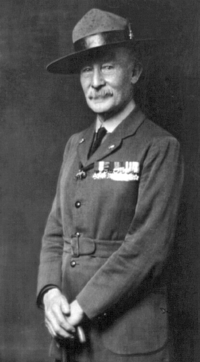
On January 24 of 1908, in what does seem a vanished era of tranquility and earnestness, Robert Baden-Powell organized the first Boy Scout troop. But those days were not as tranquil as they seem, the Boy Scouts and Girl Scouts are still enormously popular, and the mission of forming character is not as obsolete as some might suppose.

To begin with, Baden-Powell formed the Scouts in the wake of the (Second) Boer War, which had proved far more challenging for the British army than anticipated and which concluded less than a decade and a half before the outbreak of World War One. During the conflict then-Colonel Baden-Powell became a hero for his successful conduct of the defence of Mafeking, aided by the Mafeking Cadet Corps formed by Lord Edward Cecil.

Deeply impressed by the Corps, Baden-Powell wrote Scouting for Boys, based on his earlier Aids to Scouting, a brief guide to military scouting and wilderness survival that, he noticed, was exceptionally popular with boys. A huge success, currently the fourth best-selling book of all time, its tone might seem outdated. But the spirit of self-reliance, duty and cheerfulness it inculcated clearly helped Britain and Canada win World War I.

The scouts have changed enormously since 1908, mostly in good ways. Baden-Powell’s sister Agnes created the Girl Guides just two years later (after a group of girls showed up at the first Scout Rally in 1909 in uniform and informed Baden-Powell they were the "Girl Scouts," a commendable exhibition of initiative that evidently struck "B-P" as he is sometimes known as favourably as it does me. Agnes also created the Brownies (originally Rosebuds) for younger girls while Baden-Powell’s wife took over as president of the Girl Guides in 1920.

Among other changes, the uniform has been adapted over many decades for greater practicality as well as a not necessarily beneficial greater casualness. And at least some branches have dropped God from their pledge. But while one must I suppose move with the world, not too far or too fast. And sometimes one must stand against the world.

So it is worth reading the words of Baden-Powell, then nearly 80, at the Scouts’ 1937 World Jamboree, in the shadow of Hitler in a world in which racial prejudice was taken to be so normal one faced ostracism for not sharing it. The Scout uniform, B-P declared proudly, "hides all differences of social standing in a country and makes for equality; but, more important still, it covers differences of country and race and creed, and makes all feel that they are members with one another of the one great brotherhood".

Surely that surprisingly modern sentiment casts a different and more favourable light on the supposedly stuffy, naïve, chauvinistic and even jingoistic "stiff upper lip" tally ho chaps ambiance of Edwardian England. Just as the scouts’ methods for promoting self-reliance and cooperation simultaneously is strikingly up-to-date for something from that vanished era.

So here’s a confession. I have never read Scouting for Boys. But I think I’m the worse for it, and intend to track down a copy.