"The real index of civilization is when people are kinder than they need to be." British author Louis de Bernières, quoted as "Thought du jour" in Social Studies in Globe & Mail August 27, 2009
"The real index of civilization is when people are kinder than they need to be." British author Louis de Bernières, quoted as "Thought du jour" in Social Studies in Globe & Mail August 27, 2009
 On January 26 of 1924 the Soviet government renamed the former St. Petersburg "Leningrad." It was an ominous move though not as ominous as moving the capital to Moscow on March 12 1918, a dramatic symbol of its rejection of Russia’s always uneasy membership in Western civilization. But it also led to one of those great jokes Soviet oppression engendered.
By way of background, the tsars had already changed the somewhat Germanic-sounding "St. Petersburg” to Petrograd (Петроград) on the outbreak of World War I. So after World War II, the authorities are processing all sorts of displaced persons and the bureaucrats ask this somewhat baffled old guy "Where were you born?" "St. Petersburg." "Where did you live before the Revolution?" "Petrograd." "Where did you live before the Great Patriotic War?" "Leningrad." "Where do you want to live now?" "St. Petersburg."
Sadly, had he been younger and lived a long life he might have got his wish insofar as Leningrad was renamed St. Petersburg in 1991. But the spirit of openness and affiliation with the West that had never been sufficiently embraced before 1914, including by the towering Peter the Great himself, was neither understood nor accepted after the fall of Communism particularly by the Russian political elite. Under Putin in particular it’s still really Leningrad and the capital is still in the inward-looking Moscow not Russia’s window on Europe and the free world beyond.
It’s a great pity, for the Russian people and for us.
A story in The B.C. Catholic describes my Jan. 14 speech to POGG Canada upholding freedom, including freedom of speech, as a founding Canadian principle. P.S. If you're interested in booking me for a speaking engagement contact Robert Abrams at Big Idea Speakers Bureau or email me at jr- at – johnrobson – dot – ca.
 With the 100th anniversary of Canada's great victory at Vimy Ridge fast approaching, I'm delighted to announce that the book version of my documentary The Great War Remembered is now available for purchase.
The First World War was the defining event of the 20th century, shaping the modern world in ways we still feel very strongly today. Modern technology and logistics created unprecedented slaughter, and partly as a result the long, bitter, bloody conflict undermined faith in Western civilization. But it was a necessary war and the Allies did win it, with pivotal contributions from Canada, which "found itself" in the war and especially at Vimy, not just as a nation, but as a free nation determined to defend liberty under law.
It is appropriate that we remember the costs of the war and lament the loss and the missed opportunities. But we should also remember, and celebrate, the determined spirit that stood up to aggression on behalf of a way of life well worth defending even at this terrible cost.
Order your copy today and take a timely, fresh look at an often misunderstood conflict central to the modern world.
p.s. American and international shoppers should purchase directly through Amazon.
p.p.s. We also have the Kindle version available, here.
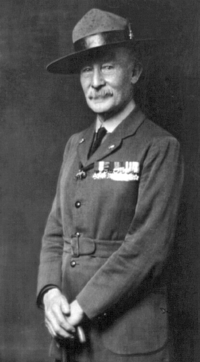 On January 24 of 1908, in what does seem a vanished era of tranquility and earnestness, Robert Baden-Powell organized the first Boy Scout troop. But those days were not as tranquil as they seem, the Boy Scouts and Girl Scouts are still enormously popular, and the mission of forming character is not as obsolete as some might suppose.
To begin with, Baden-Powell formed the Scouts in the wake of the (Second) Boer War, which had proved far more challenging for the British army than anticipated and which concluded less than a decade and a half before the outbreak of World War One. During the conflict then-Colonel Baden-Powell became a hero for his successful conduct of the defence of Mafeking, aided by the Mafeking Cadet Corps formed by Lord Edward Cecil.
Deeply impressed by the Corps, Baden-Powell wrote Scouting for Boys, based on his earlier Aids to Scouting, a brief guide to military scouting and wilderness survival that, he noticed, was exceptionally popular with boys. A huge success, currently the fourth best-selling book of all time, its tone might seem outdated. But the spirit of self-reliance, duty and cheerfulness it inculcated clearly helped Britain and Canada win World War I.
The scouts have changed enormously since 1908, mostly in good ways. Baden-Powell’s sister Agnes created the Girl Guides just two years later (after a group of girls showed up at the first Scout Rally in 1909 in uniform and informed Baden-Powell they were the "Girl Scouts," a commendable exhibition of initiative that evidently struck "B-P" as he is sometimes known as favourably as it does me. Agnes also created the Brownies (originally Rosebuds) for younger girls while Baden-Powell’s wife took over as president of the Girl Guides in 1920.
Among other changes, the uniform has been adapted over many decades for greater practicality as well as a not necessarily beneficial greater casualness. And at least some branches have dropped God from their pledge. But while one must I suppose move with the world, not too far or too fast. And sometimes one must stand against the world.
So it is worth reading the words of Baden-Powell, then nearly 80, at the Scouts’ 1937 World Jamboree, in the shadow of Hitler in a world in which racial prejudice was taken to be so normal one faced ostracism for not sharing it. The Scout uniform, B-P declared proudly, "hides all differences of social standing in a country and makes for equality; but, more important still, it covers differences of country and race and creed, and makes all feel that they are members with one another of the one great brotherhood".
Surely that surprisingly modern sentiment casts a different and more favourable light on the supposedly stuffy, naïve, chauvinistic and even jingoistic "stiff upper lip" tally ho chaps ambiance of Edwardian England. Just as the scouts’ methods for promoting self-reliance and cooperation simultaneously is strikingly up-to-date for something from that vanished era.
So here’s a confession. I have never read Scouting for Boys. But I think I’m the worse for it, and intend to track down a copy.
"He was ruled by a sense of duty, but one cannot touch tar without getting one’s hands dirty." John Lawrence, A History of Russia (re Felix Dzerzhinsky)
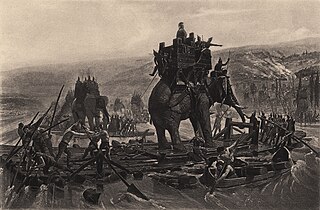 On this date, January 23, Song dynasty troops with crossbows decisively defeated the Southern Han war elephant corps at the battle of Shao in 971. Which might seem a hair-raising and messy irrelevancy. But I record it because I’ve always found it odd that the crossbow was such a mighty weapon with so little impact on military history, and considered elephants an absurd weapon that I can’t figure out what I’d do if the other side showed up with them.
The "mumakil" or "oliphaunts" are a significant problem at the Battle of the Pelennor Fields in the book version of the Lord of the Rings, and a ludicrously overblown one in the movie where they seem to kill about 63,000 of the Rohirrim before Legolas does them all in. But trying to devise a sensible strategy even for the more reasonably elephant-sized ones in the book is a puzzler. So having the Song riddle them with crossbow bolts fired with such incredible energy as to bring down even that big a target works for me.
As it did for them; elephants were then permanently dropped from the main Chinese order of battle. At which point they also started working on gunpowder weapons since once the elephants were gone, there wasn’t a lot the apparently super-cool crossbow could do. Despite at least a millennium and a half of military use of crossbows, this is the only battle I’m aware of where it was decisive.
As for elephants, they were used militarily in parts of Southeast Asia into the 19th century. Elsewhere it turned out they reacted even worse to cannonballs than crossbow bolts.
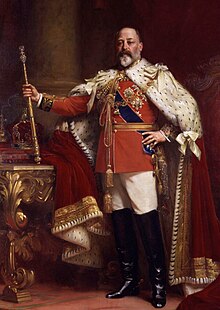 On this date in 1901, Edward VII was proclaimed king after about a million years as Prince of Wales. OK, not a million. But 60. Then he became king because Victoria died which left almost everybody heartbroken. And in 1910 he died after eight years on a throne he waited decades for.
His reign was not entirely uneventful. Nor indeed was his Princeship of Wales. Evidently "Bertie", as his family always called him, had a very good time indeed as heir to the throne, with actresses, noblewomen and professionals including at a Paris establishment with custom furniture now on display in a museum, which definitely did not amuse his mother, including the bit where he was almost named as respondent in a divorce suit by an MP and did have to testify in the case.
Victoria blamed her husband Albert’s rising from his sickbed in 1861 to visit and reprimand his son over a singularly indiscreet indiscretion with an actress for causing Albert’s death from typhoid just two weeks later, and once wrote to Edward’s older sister that "I never can, or shall, look at him without a shudder." But Edward also pioneered royal appearances doing things like opening the Thames Embankment and the Tower Bridge.
As King he not only presided over a widening of the social circle around the royals and a refurbishing of public ceremonies, and a needed modernization of the army and navy following the Boer War. He also supported and promoted a far-sighted rapprochement with France while distrusting his cousin Kaiser Wilhelm II, and gave his name to a languid but elegant era in which Britain’s decline from its once-unchallenged world dominance military, economic and cultural seemed only a gentle hint borne on a breeze rippling the leaves on stately oaks and beeches lining manor drives.
Then he died fairly young at 68, more than slightly unthin, and is remembered today as who was that guy after Victoria that wasn’t still king when the Great War started? To which the answer, surprisingly, is also that he was the guy saved from then generally fatal appendicitis right before his coronation by a pioneering and surprisingly modern-sounding surgical procedure of draining pus through a small incision.